A rental bathroom is the room that costs the most to keep. The slow leak, the grout that never looks clean, and the swollen vanity top all end up as work orders. Bathroom remodeling in Phoenix for a rental property is a different job from remodeling your own home. The goal is a bathroom that survives tenants, hard water, and desert heat with the fewest repairs and the shortest vacancy.
This guide walks through how to size the scope, which materials earn their keep, what the cost tiers look like, and how to time the work and choose a crew. It covers owners with one unit and owners with several, and it says when a full project isn’t worth it.
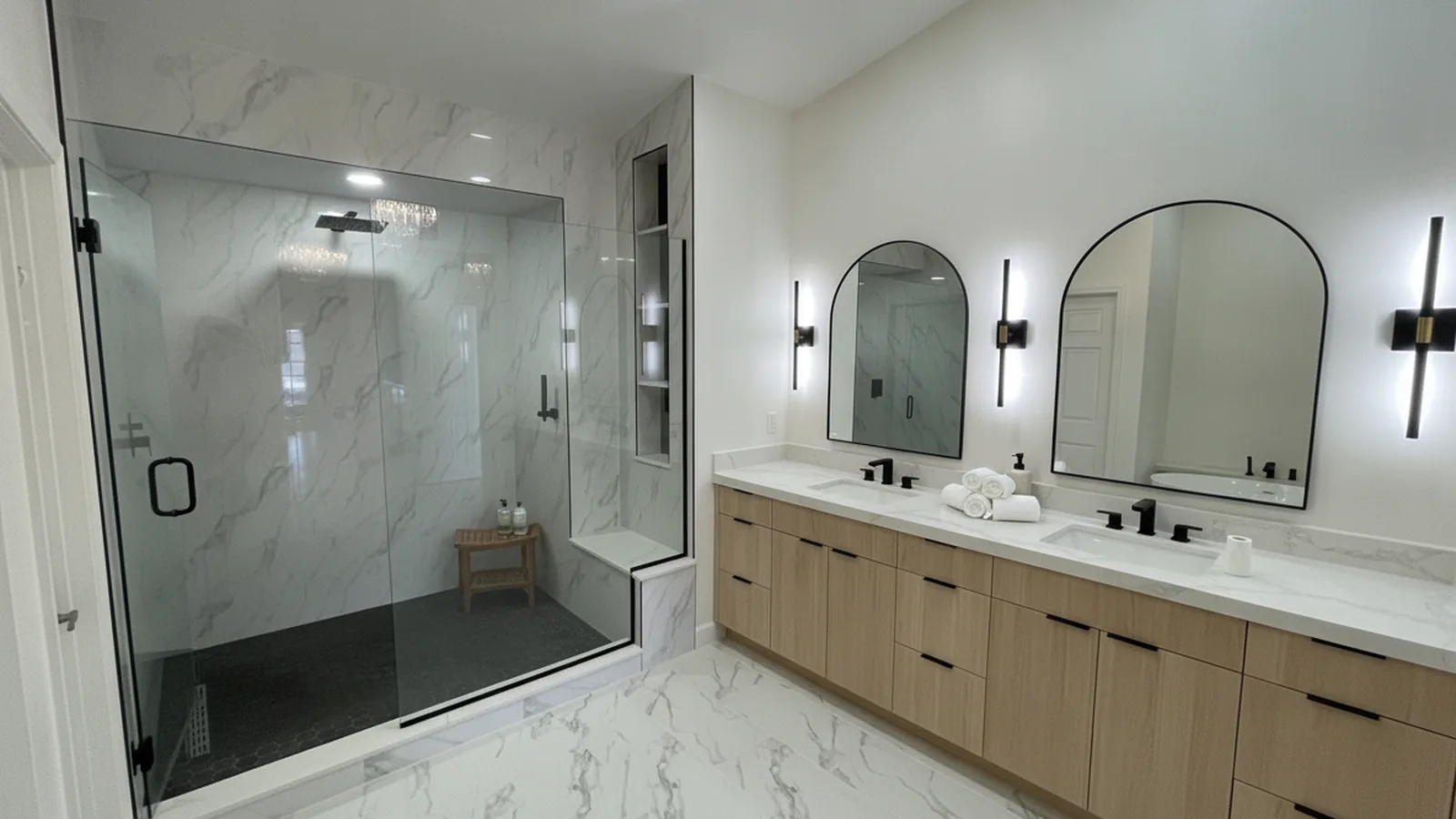
Quick answer: For most Phoenix rentals, a mid-scope upgrade is the best fit. Replace the surfaces water touches (shower walls, floor, vanity top), add a good exhaust fan, and skip anything that exists only to impress. A refresh is enough when plumbing and waterproofing are sound, and a full gut only makes sense when they aren’t.
Key takeaways
- Set the scope by your hold period and tenant type.
- In hard water, the usual culprits are grout, frameless glass, and unsealed natural stone, so plan around them.
- Do the work between tenants, and order glass and stone before the move-out date.
- Keep itemized invoices, because the split between repairs and improvements affects your taxes.
- Verify the license and compare bids against one written scope.
What is bathroom remodeling for a rental property?
Bathroom remodeling for a rental property is a renovation planned around durability and fast turnover instead of personal taste. The room faces the same plumbing and code requirements as any other, but the spec list changes: standard sizes, replaceable parts, neutral colors, and surfaces that tolerate a tenant who will never baby them.
The budget is judged differently, too. A homeowner asks whether they’ll enjoy the room for ten years. A landlord asks what it does to maintenance calls, vacancy days, and deposit disputes. Whether the property is a condo in Phoenix Arizona or a ranch house in Peoria, the owners who search this topic usually fall into three groups:
- Long-term landlords want finishes that last through several tenants and need no cleaning skill.
- Accidental landlords who kept a former home want something clean and neutral without over-investing in a house they don’t live in.
- Short-term rental hosts care more about photos and guest impressions, within city and HOA rules.
What makes a Phoenix rental bathroom different?
Three local conditions, hard water, heat, and house age, explain most rental-bathroom failures in the Valley.
Hard water is the daily grind. Scale builds on glass, chrome, and tile, clogs aerators and showerheads, and etches polished or soft stone. Tenants rarely squeegee a shower, so whatever you install has to look acceptable with minerals on it. Dry air and big swings between summer heat and cool nights are hard on caulk, which shrinks and cracks. The joint where a tub meets tile, or a vanity top meets the wall, is where most leaks begin.
House age sets the surprises. The Phoenix Valley’s rental stock runs from 1960s and 70s ranch homes in established areas like Sun City to newer production builds around Desert Ridge, North Scottsdale, and Anthem. Older houses tend to reveal their problems once the walls are open. Newer ones usually come with builder-grade fiberglass and thin finishes that are cheap to improve.
People run showers without turning on the fan and leave wet towels on vanity edges. A properly sized, quiet exhaust fan vented outdoors (not into the attic) is the cheapest insurance in the project, because tenants will run one that isn’t loud.
Where AZ Granite & Remodeling fits for a landlord
AZ Granite & Remodeling is a good example of the one-team approach to this kind of job. It is a design-build remodeling contractor and in-house stone fabricator that has served the Phoenix Valley for over 20 years and is 5.0-star rated. The shop is its only location, at 1923 W. Cheryl Dr, Suite 2, Phoenix, AZ 85021.
For a landlord, the practical benefit is fewer handoffs. You work one-on-one with a designer, the stone for your vanity top is fabricated in the company’s own shop, and the same team handles installation. Because AZ Granite also does kitchens and flooring, a rental where the bathroom, counters, and floors are all tired can be scoped together instead of coordinated across three vendors. The bathroom remodeling service page lays out the full process. This guide covers whether to remodel and how far to go.
The materials list is wide: granite, marble, quartz, quartzite, dolomite, porcelain, onyx, and natural quartz. For a tenant-occupied property, quartz and porcelain are usually the most sensible, and the design conversation is the place to ask which of the others would be a headache in your particular house.
Estimates are free and no-pressure, and they happen in your home, so the person quoting sees the bathroom, the access, and the water. Work covers the Phoenix Valley, including North Scottsdale, Desert Ridge, Peoria, Sun City, and Anthem, plus the surrounding East and West Valley. If you own several units, say so when you request an estimate and ask how scheduling and material matching would work across them.
If all a unit needs is paint, caulk, and a new faucet between tenants, your regular maintenance person is the cheaper and more sensible call. A design-build firm earns its fee when the job involves a new shower, tile, stone, or any change to plumbing.
How much work does a rental bathroom actually need?
Most rental bathrooms fall into one of four scopes, and the right one depends on what is failing, since a dated look alone doesn’t call for more work.
| Scope | What changes | General cost tier | Best fit | Main risk |
|---|---|---|---|---|
| Refresh | Paint, caulk, regrout, new faucet, light, and mirror; sometimes a new vanity top | Low four figures | Sound plumbing and waterproofing with cosmetic wear only | Hides a slow leak instead of fixing it |
| Surface replacement | New shower walls or surround, floor, vanity and top, and fan; layout stays | Mid four to low five figures | Most long-term rentals with a worn but workable layout | Rot or water damage found behind old surrounds |
| Layout change | Tub-to-shower swap or moved fixtures, with new valve and drain work | Low five figures | A home with two baths, or a market that expects a shower | Plumbing changes raise cost and may need a permit |
| Full gut | Everything back to the studs, with new plumbing, waterproofing, and finishes | Low to mid five figures | Failing waterproofing, outdated plumbing, or an older home | Spending beyond what the rent can support |
These are general market tiers, not a quote. The swing factors are plumbing changes (moving a drain or valve costs far more than replacing in place), tile square footage and pattern, glass, vanity size and top material, and whatever demolition uncovers. For real ranges by scope, see this breakdown of what a bathroom remodel costs in Phoenix, and a free in-home estimate turns those ranges into a number for your unit.
To choose a row: if the existing waterproofing and plumbing are sound, a refresh or surface replacement is enough. If you find soft spots, stains around the tub, or a musty smell, price the full gut, because covering a failing shower is how a small repair turns into rot behind the wall.
Which materials hold up to tenants and Arizona water?
Choose materials that need no sealing, no special cleaners, and no skilled repair. The main surfaces compare like this for a rental:
- Shower walls: Large-format porcelain tile has fewer grout lines to scrub, and a stain-resistant grout helps further. Solid panels have no grout at all but cost more. Fiberglass surrounds are the cheapest and fastest, though they scratch, yellow, and crack over time.
- Floors: Porcelain tile (including wood-look) or waterproof vinyl plank. Skip natural stone floors that need sealing.
- Vanity top: Quartz is the easy default because it is non-porous and needs no sealing. Granite performs well but wants periodic sealing. Marble and onyx etch and stain, so save them for your own home.
- Vanity cabinet: Plywood boxes in standard sizes, not particleboard, because the sink cabinet is the part that gets wet.
- Fixtures: Common brands with widely stocked cartridges. Brushed nickel hides scale spotting better than matte black.
- Shower enclosure: A curtain rod or framed sliding door beats frameless glass, which looks great and then asks for a squeegee habit tenants don’t have. Think twice before converting the only tub in the house, since families with young children often look for one.
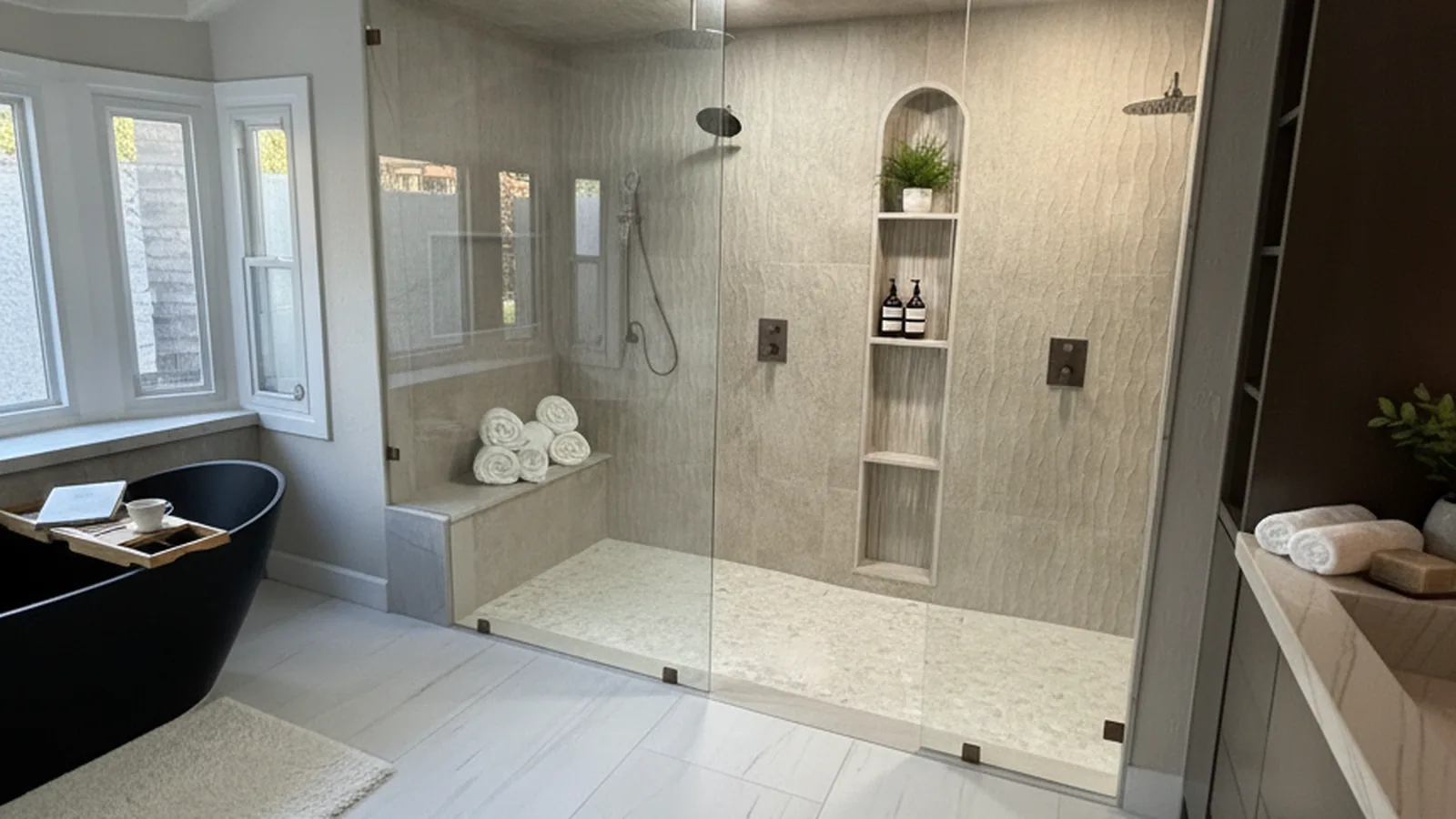
For a small vanity top, a stone remnant can be a smart way to save, since a 24 to 48 inch top uses very little material. Granite remnants at AZ Granite & Remodeling are offcuts from the shop’s own full-slab jobs, so the inventory rotates, each piece is one of a kind, and viewing is by appointment at the Phoenix shop. That makes them a great fit for a single bathroom and a poor fit for matching several units.
Jetted or soaking tubs, steam showers, heated floors, and vessel sinks (which splash and stain the top around the base) are features tenants rarely pay extra for and often damage. Leave them out.
Is a rental bathroom upgrade a repair or an improvement?
It depends on scope, and the distinction changes how the cost is treated at tax time.
Under the IRS rules for rental property, work is judged by what it does. Work that keeps the property in ordinary operating condition, such as regrouting or replacing a faucet, is generally deductible in the year you pay for it. Work that adds value or extends the useful life, such as replacing the shower walls or the whole vanity, is generally capitalized and depreciated over 27.5 years for residential rental property. IRS Publication 527 covers the details.
Most projects land somewhere in between, so ask the contractor for an itemized invoice that separates the work by task, and bring it to your CPA before filing. This is general information, not tax advice.
Should you renovate between tenants or with one in place?
Between tenants is almost always the better window, particularly when the home has a single bathroom.
Arizona’s landlord-tenant act requires landlords to keep plumbing and other essential systems in working order (A.R.S. 33-1324), and a gutted bathroom is not a working bathroom. Entry also requires advance notice, generally at least two days, so a project that needs a crew in and out for weeks is a strain on everyone.
The cost of waiting is a vacancy, so the goal is to shorten it. Line up the crew, tile, vanity, and anything custom before the tenant leaves. Lead times on fabricated stone and custom glass often run longer than the labor, and a late glass door can hold a finished bathroom hostage. With two bathrooms, a tenant can stay through a limited job if the schedule, water shutoffs, and dust control are written down in advance.
How do you choose a crew for rental work?
Check the license first, then compare scope and schedule before you compare price.
Arizona licenses contractors through the Registrar of Contractors, and all but very small jobs require a license. Look up the license number, confirm the classification fits the plumbing, tile, and other work, and check for complaints. Hiring unlicensed help to save money is how landlords end up paying twice.
Whoever you interview, ask for these in writing:
- An itemized scope, so bids can be compared line by line
- Who handles permits and inspections
- Who does the tile, plumbing, and stone, and whether they are employees or subcontractors
- How access works for a vacant unit, including keys and utilities
- How change orders are priced if demolition uncovers damage
Get at least two bids on the same written scope. A bid far below the rest has usually left something out.
Frequently asked questions
Do I need a permit to update a rental bathroom in Phoenix?
It depends on scope. Cosmetic work like paint, a new vanity top, or a faucet swap usually does not require a permit, while moving plumbing, changing electrical, or altering walls generally does. Ask your contractor who pulls permits, and confirm requirements with the City of Phoenix before work starts.
How long will the unit sit empty during the work?
A refresh can take a matter of days, while a full gut commonly runs a few weeks once demolition, plumbing, tile cure time, and material lead times are counted. The slowest items are usually custom glass and fabricated stone, so ask for a schedule that lists lead times before you set a move-out date.
Will a new bathroom let me raise the rent?
Sometimes, modestly. A bathroom rarely repays its cost through rent alone. The more reliable payoff is fewer maintenance calls, faster turns between tenants, and less damage claimed against deposits. Check current comparable listings in your neighborhood rather than assuming a specific increase.
Should I use the same finishes in every unit?
Yes, if you own more than one. One tile, one vanity size, and one faucet line means a single spare-parts bin, faster repairs, and no hunting for discontinued items. One-of-a-kind materials like remnants are the opposite strategy, so save them for a single-unit project.
What hidden problems should I budget for in an older Phoenix rental?
Budget a contingency of roughly 10 to 20 percent for surprises. Common finds behind old shower walls include failed waterproofing, rotted framing, corroded supply lines, and aging drains. A contractor who opens the wall during the estimate or flags these possibilities in writing is easier to plan around.
Does a short-term rental need a different approach?
Yes. Guests don’t care what a repair costs, so you can spend more on looks, such as lighting, a good mirror, and a nicer glass door. You still need surfaces that survive constant turnover and daily cleaning. Check city and HOA rules for short-term rentals before investing, since they vary.
What should I bring to a contractor’s estimate on a rental?
Bring the address and an access plan, photos or measurements of the bathroom, your target move-out and move-in dates, the number of bathrooms in the home, and any HOA constraints. Know your goal too, whether that is a durable turnover or an upgrade for a higher rent tier, so the estimate matches your plan.
The short version for Phoenix landlords
Bathroom remodeling in Phoenix for a rental property comes down to matching the scope to what is failing and the materials to the tenant you will have. Spend on waterproofing, a durable shower surface, a non-porous vanity top, and a fan that gets used. Skip the showpieces, and schedule the work so the unit isn’t empty any longer than it has to be.
If you want someone to look at the real bathroom, AZ Granite & Remodeling offers a free in-home estimate with no pressure. Call (602) 759-9000, email veny@azgranite.us, or use the contact page to get on the calendar.