Picking a countertop looks simple until you stand in a slab yard and realize “white quartz” comes in forty versions, each with a different price, pattern, and finish. If you’re figuring out how to choose quartz countertops in Phoenix, the honest answer is that the material almost never disappoints. Most mistakes happen around it: the wrong color for your light, a seam in a bad spot, or a fabricator who cuts corners you can’t see until install day.
This guide walks through what quartz actually is, the choices you’re really making, what drives cost here in the Valley, and how to tell a good fabricator from a middleman. AZ Granite & Remodeling shows up as one example of the local, in-house approach, but most of what follows applies no matter who ends up doing your job.
Quick answer: To choose quartz countertops in Phoenix, start with your daily use and your kitchen’s light, then narrow by color, pattern scale, and finish. Confirm the slab thickness and edge profile, view your actual slabs in person, and pick a local fabricator who templates and installs in house. Quartz needs no sealing and shrugs off hard water, which makes it a strong fit for desert homes.
Key takeaways
- Quartz is engineered stone, roughly 90% ground quartz bound with resin, so it’s nonporous and never needs sealing.
- In Phoenix, the deciding factors are usually light, hard water, and heat, not brand names.
- Lighter, low-movement patterns hide hard-water spots and dust better than dark, glossy slabs.
- Cost is driven by square footage, slab grade, edge work, and cutouts, so two “quartz” quotes can differ widely.
- The fabricator matters as much as the slab. Ask who templates, cuts, and installs.
What is quartz, and how is it different from granite or marble?
Quartz is an engineered surface, not a slab cut straight from the ground. Manufacturers grind natural quartz crystals, mix them with resin binders and pigment, then press and cure the result into slabs. That process is why quartz looks so consistent from sample to slab, and why it comes in colors nature never made.
The practical difference comes down to porosity. Granite, marble, and quartzite are natural stones with tiny pores that need periodic sealing. Quartz is nonporous, so it resists stains, bacteria, and etching without any sealer, according to the Natural Stone Institute. That’s the trade many Phoenix homeowners make happily: you give up the one-of-a-kind veining of real stone in exchange for a surface that’s low-maintenance and predictable. If you want to compare the full lineup side by side, AZ Granite’s materials overview lays out granite, quartz, quartzite, marble, and porcelain in one place.
One caveat worth knowing before you fall for a slab in a west-facing kitchen: the resin in quartz can be sensitive to prolonged, direct UV. It’s a real consideration for sunrooms and outdoor kitchens, and we cover it in depth in do quartz countertops fade in the sun.
What actually matters when choosing quartz in the Valley
Start with how a desert home treats a countertop, because that narrows your choices faster than any showroom brochure. Three Arizona realities shape a smart pick.
Hard water is the big one. Much of the Phoenix metro runs on very hard water, which the U.S. Geological Survey measures in dissolved calcium and magnesium. That’s what leaves chalky rings near your faucet. Quartz’s nonporous surface wipes clean, but a high-gloss dark slab shows every spot, while a matte or lightly textured finish forgives them.
Heat and light come next. Kitchens near big west windows or sliders get intense afternoon sun. Very dark quartz absorbs heat and reveals dust; lighter tones stay cooler-looking and hide the fine grit that blows in during monsoon season. Think about where your slab lives, not how it looks under showroom lighting alone.
Then there’s daily wear. A busy family kitchen in Peoria or Anthem asks more of a counter than a guest bath in Sun City. Quartz handles both, but the finish and color you choose should match the room’s real traffic, not the prettiest sample on the wall.
Working with a local fabricator: where AZ Granite fits
The single biggest quality variable in a quartz job is who fabricates and installs it, and a true in-house shop is where AZ Granite & Remodeling earns its place in this guide. Plenty of “countertop companies” in the Valley are really salespeople who broker your slab out to a third-party cutter you’ll never meet. When the template, the cut, and the install pass through separate hands, that’s where seams drift and edges get sloppy.
AZ Granite is a design-build remodeler and in-house stone fabricator that has served the Phoenix Valley for over 20 years, cutting countertops in its own Phoenix shop rather than farming the work out. You work one-on-one with a designer, the fabrication and installation happen under one roof, and the estimate is a free, no-pressure in-home visit. That single-team structure is what keeps a seam where you’d want it and an edge crisp on the finished counter.
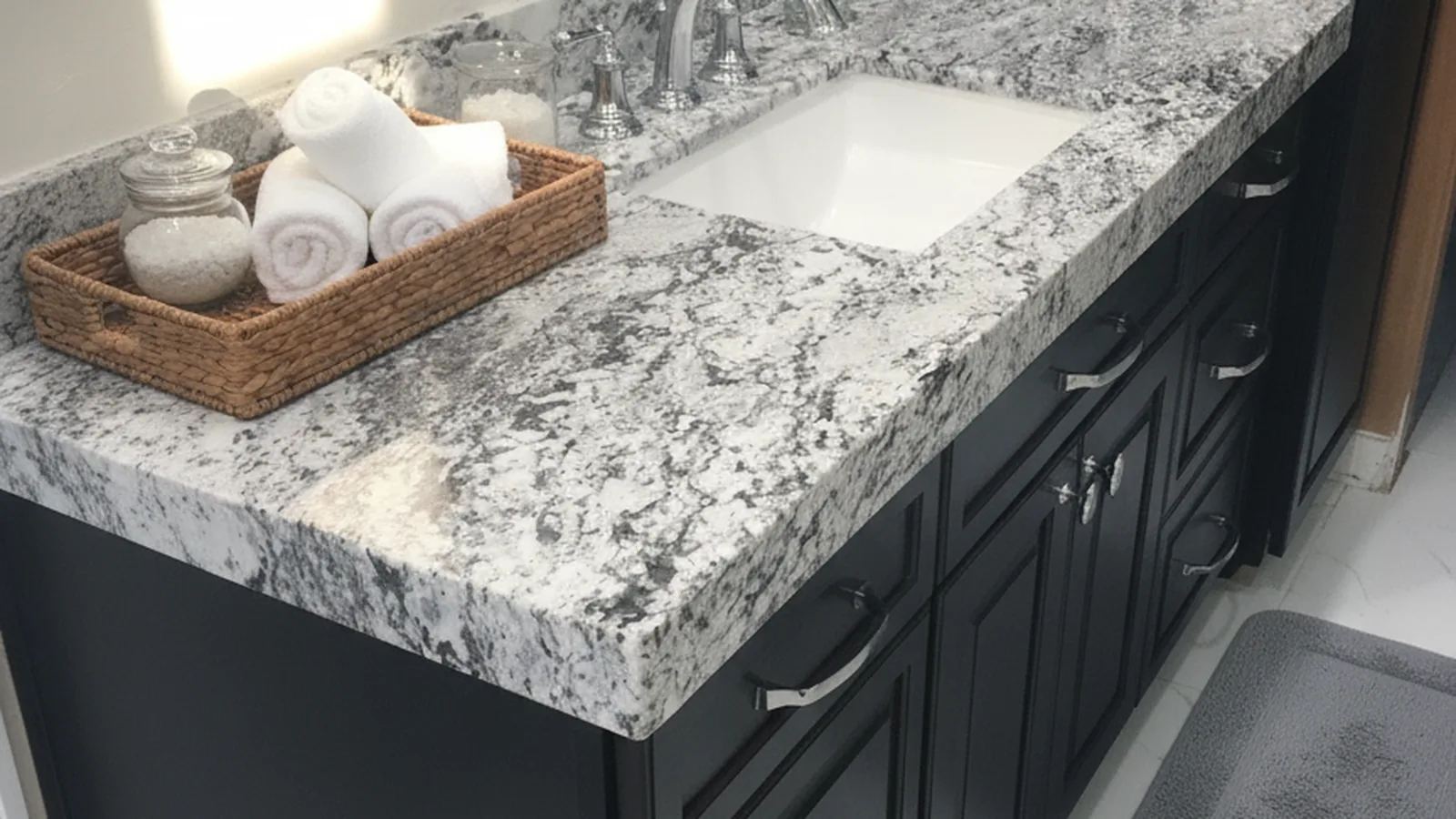
It also helps on the budget end. Because the full slabs are cut in house, the leftover pieces become granite remnants, a rotating inventory that can be a smart source for a small vanity or a coffee bar. When you’re ready to talk specifics, a free in-home estimate is the fastest way to get real numbers for your kitchen. The service area covers North Scottsdale, Desert Ridge, Peoria, Sun City, Anthem, and the surrounding East and West Valley. Everything past this section goes back to choosing well, whoever you hire.
Colors and patterns: what to actually pick
Choose your quartz color against your own cabinets and floor, in your own light, not on a showroom easel. Bring door and flooring samples to the slab yard, or better, get big samples home and look at them at morning and evening.
A few honest guidelines that hold up in Phoenix homes:
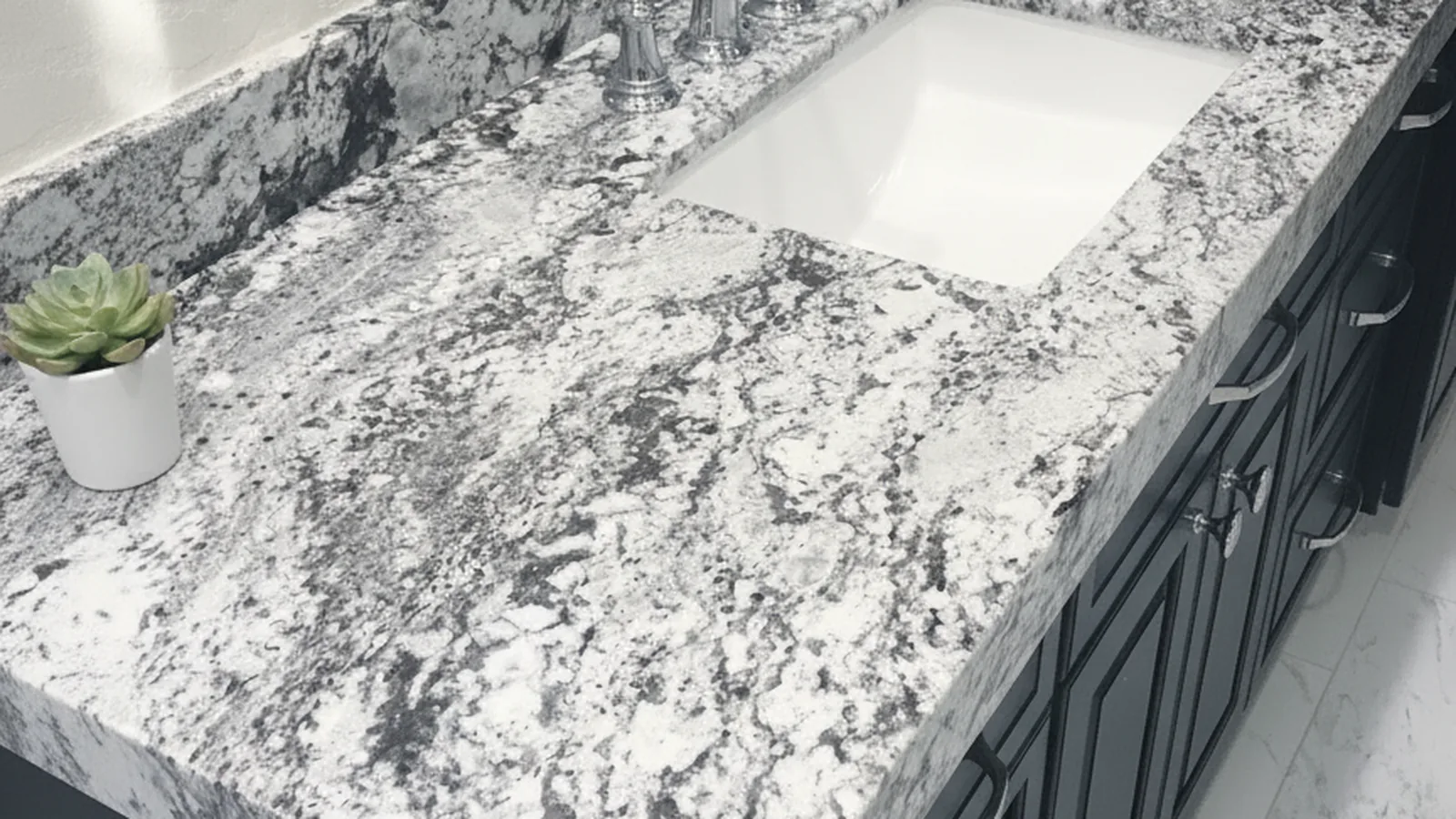
- Lighter, low-movement patterns (soft whites, warm greiges, subtle veining) hide dust and hard-water spots and keep a kitchen feeling open.
- Bold marble-look veining looks stunning on an island but can fight busy cabinetry or a patterned backsplash. Let one element be the star.
- Very dark, high-gloss slabs are dramatic and also the least forgiving of fingerprints, crumbs, and water spots in daily use.
- Pattern scale matters. A large-scale vein can get chopped awkwardly on a small counter, so ask to see the layout on your actual square footage.
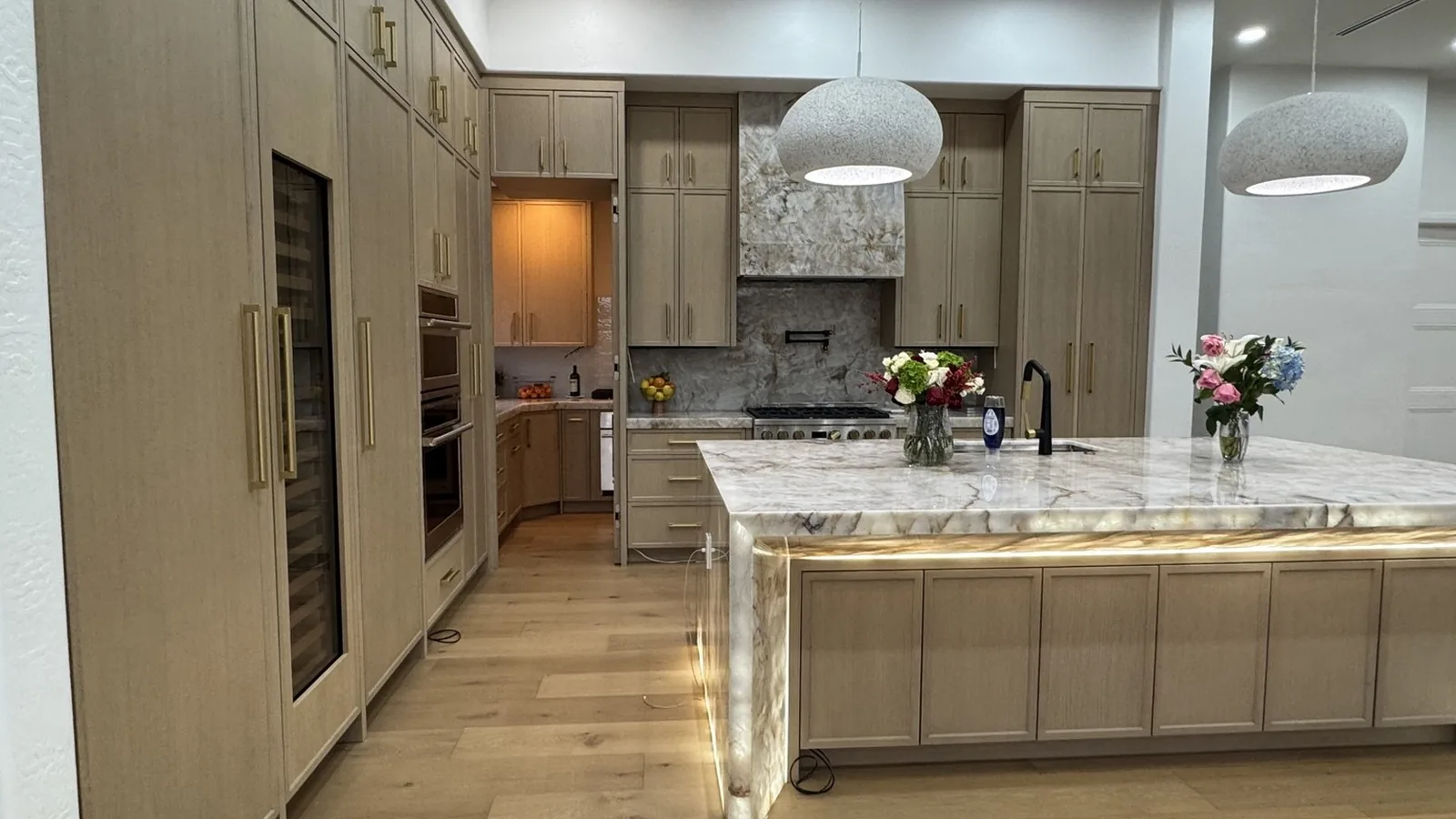
Browsing finished kitchens helps more than staring at chips. AZ Granite’s project gallery is a useful way to see how a color reads across a whole room instead of a two-inch sample.
Edges, finish, and thickness
These are the details that separate a counter that looks custom from one that looks builder-grade, and they’re easy to overlook until the quote arrives.
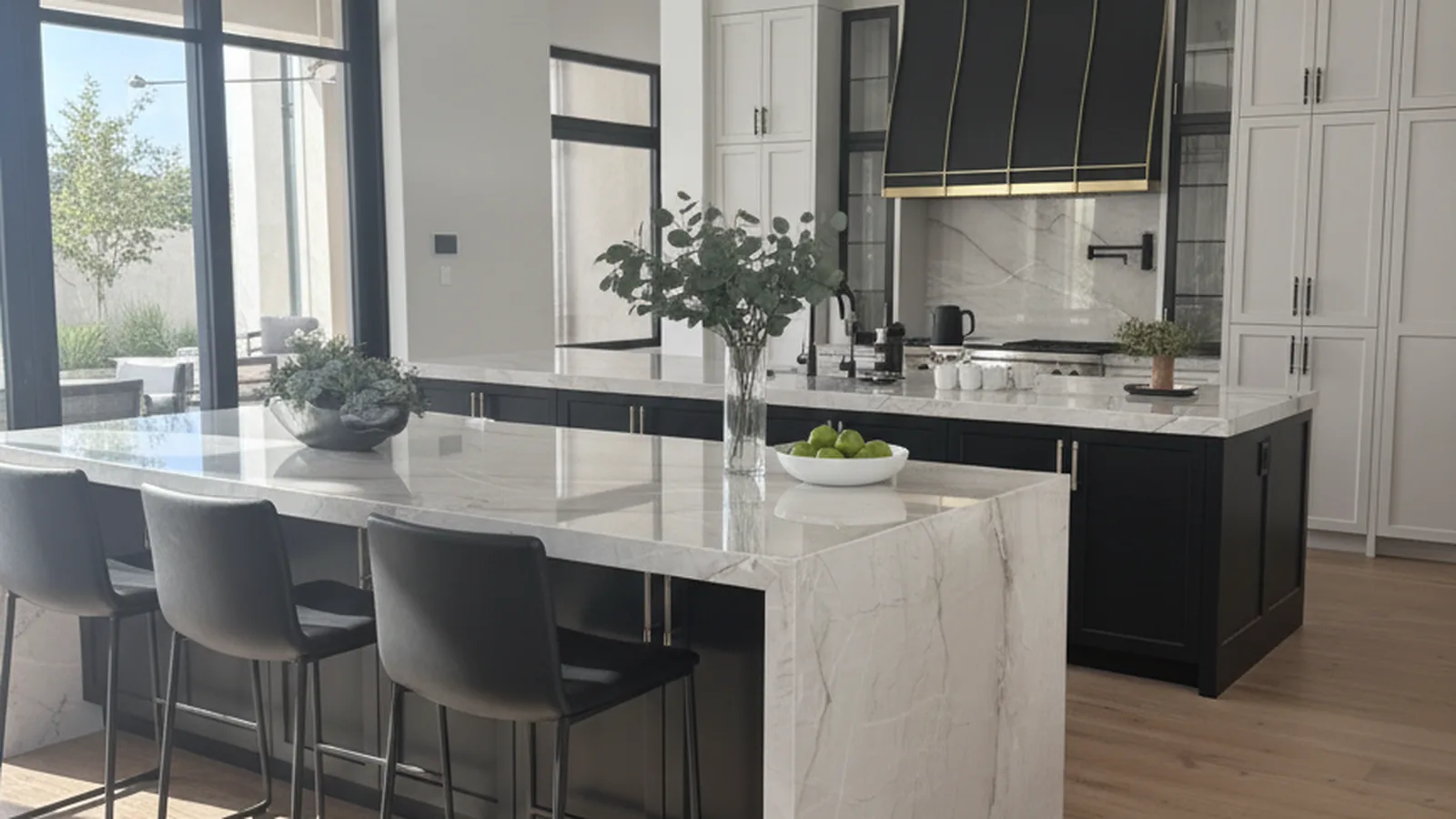
Edge profile sets the tone. A simple eased or square edge reads modern and costs the least. Fancier profiles like ogee or a mitered “thick” edge look richer and add labor. A waterfall edge, where the slab runs down the side of an island to the floor, is striking and uses noticeably more material.
Finish is a real choice now, and polished is only one option. Matte and honed finishes are increasingly popular in the Valley precisely because they downplay hard-water spots and fingerprints. Polished shows more shine and more smudging.
Thickness usually comes in 2 cm or 3 cm. Thicker 3 cm slabs feel more substantial and often need no plywood buildup at the edge. Confirm what’s included, because a “cheaper” 2 cm quote sometimes hides extra buildup labor to fake a thick edge.
What quartz countertops cost in Phoenix, and what drives the number
Quartz is typically a mid-to-upper-range countertop, and the reason two quotes can look so different is that price rides on several factors at once, not a single per-foot rate. Rather than a firm figure, focus on what moves the number:
| Cost factor | What pushes it up | What keeps it down |
|---|---|---|
| Square footage | Large kitchens, big islands | Compact layouts, fewer runs |
| Slab grade / brand | Designer lines, exotic looks | Standard color collections |
| Edge profile | Ogee, mitered, waterfall | Eased or square edge |
| Cutouts | Multiple sinks, cooktop, drain-board | Single undermount sink |
| Install complexity | Long seams, multiple levels | Simple single-level runs |
Because those factors stack, the only honest way to know your number is a measured, in-home look at your actual space. For a deeper cost and heat-myth breakdown, our guide on buying quartz countertops in Phoenix goes further, and the quartz countertops service page covers the material specifics.
Questions to ask before you sign
A short, direct list separates a solid fabricator from a middleman:
- Do you template, cut, and install in house? Farmed-out work adds handoffs where quality slips.
- Can I see and approve my slabs? Quartz is consistent, but you still want to sign off on the batch.
- Where will the seams go? A good shop plans seams around sinks and low-visibility runs.
- What’s the total, itemized? Edges, cutouts, sink, tear-out, and disposal should be spelled out.
- What warranty backs the material and the labor? You want both, in writing.
Frequently asked questions
Do quartz countertops need to be sealed in Arizona?
No. Quartz is nonporous, so it never needs sealing, unlike granite or marble. That’s a genuine advantage in hard-water areas of the Valley, where sealed natural stone needs upkeep to resist mineral staining. Day-to-day care is just soap and water.
Can I put a hot pan on quartz?
Not safely. Quartz resists heat better than most people expect, but the resin binder can scorch or discolor under a pan straight off the burner. Always use a trivet. If direct high heat near a cooktop worries you, that’s one spot where natural granite has an edge.
Is quartz a good choice for a Phoenix outdoor kitchen?
Usually not for full sun. Prolonged direct UV can fade or yellow the resin in some quartz over time, so it’s better kept indoors or in fully shaded patios. For a sun-exposed outdoor bar, natural stone or porcelain is generally the safer pick.
How many slabs will my kitchen need?
Most standard kitchens use one to two slabs, but it depends on your layout, island size, and how the pattern lays out. A fabricator confirms this at template. Larger islands or bold veining you want matched can push you into a second slab.
What thickness should I choose, 2 cm or 3 cm?
Choose 3 cm for most kitchen counters and islands; it feels substantial and often skips edge buildup. 2 cm is fine for vanities and lower-traffic spots, and it can trim cost. Just make sure any quote spells out whether buildup labor is included.
Does a matte quartz finish really help with hard water?
Yes, noticeably. Matte and honed finishes scatter light, so mineral spots and fingerprints are far less visible than on a high-gloss surface. In much of metro Phoenix, where water is very hard, that can mean less wiping and a counter that looks clean longer.
Is quartz good for bathroom vanities too?
Yes, and it’s often an easy win. Bathrooms see constant water and hard-water spotting, and quartz’s nonporous surface handles both with no sealing. A remnant piece can make a vanity top surprisingly affordable.
Ready to choose with real numbers?
The material is the easy part. The right color for your light, seams in the right places, and a crew that fabricates and installs its own work is what turns a good slab into a finished kitchen you love. If you’d like a straight, no-pressure conversation about your space, AZ Granite & Remodeling offers a free in-home estimate across the Phoenix Valley. Call (602) 759-9000 and bring your questions.