Type “bathroom and remodel” into a search bar and you get a firehose: glossy before-and-afters, national cost averages that may have nothing to do with Arizona labor, and a dozen contractors all promising the same thing. What most of those pages skip is the part you actually need before you spend a dollar. What the work involves, how much of it you truly need, and which choices hold up in a desert climate.
This guide walks through the real decisions in front of you: scope, cost drivers, materials that survive hard water and UV, and how to tell a solid crew from a risky one.
Quick answer: A bathroom and remodel project can mean anything from a weekend cosmetic refresh to a full gut down to the studs. Most Phoenix homeowners land somewhere in the middle, and the price is driven far more by whether you move plumbing and the finishes you pick than by the size of the room. Get a written scope and an in-home estimate before you commit.
Key takeaways
- The single biggest cost lever is moving plumbing or walls, not square footage.
- A cosmetic refresh can transform a bathroom for a fraction of a full remodel if the layout already works.
- In Arizona, hard water and UV should drive your material picks more than trends do.
- A clear written scope of work protects you more than any verbal promise.
- One team that handles design, fabrication, and install reduces the hand-off gaps where projects stall.
What is a bathroom remodel, exactly?
A bathroom remodel is any project that updates the fixtures, surfaces, or layout of a bathroom, ranging from swapping finishes to rebuilding the room entirely. The word “remodel” gets used for wildly different jobs, so the first thing worth doing is naming which one you mean.
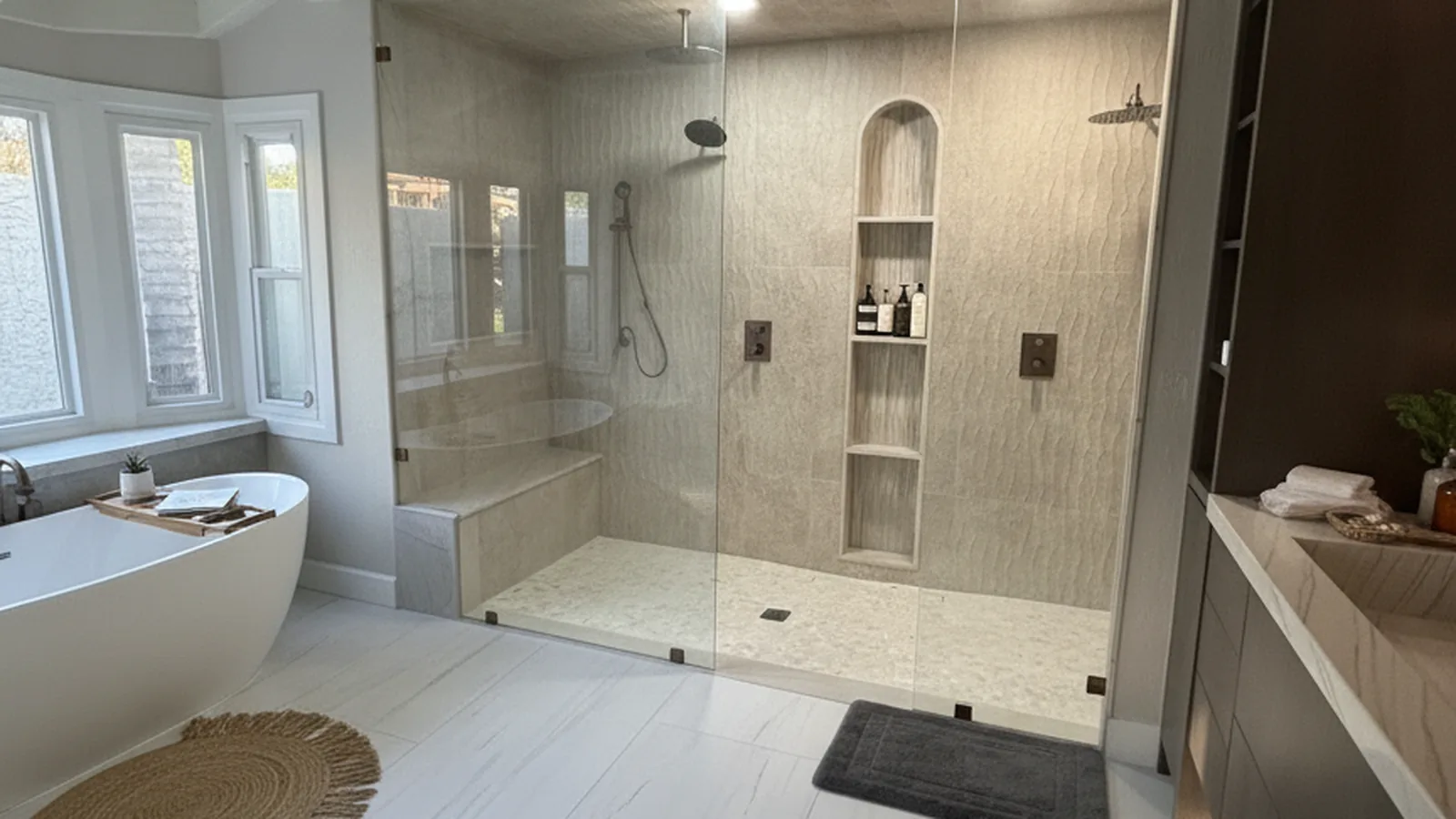
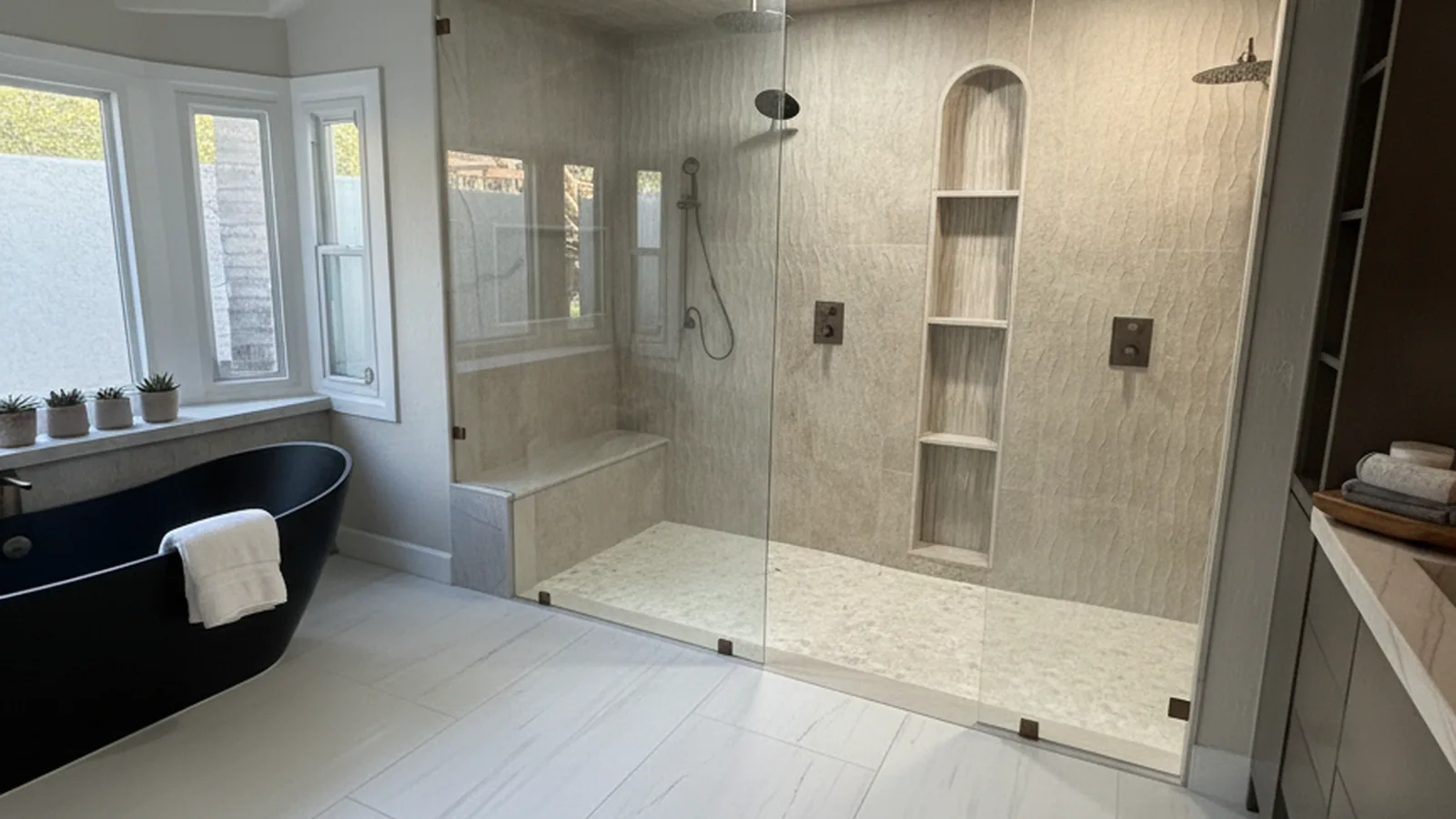
At the light end, you keep every fixture where it sits and update what shows: paint, a new vanity, a countertop, a mirror, lighting, and hardware. At the heavy end, you move the toilet, tub, or shower, which means opening walls and floors to reroute plumbing and electrical. Between those extremes sits the most common Arizona project: keeping the existing layout but replacing the shower, vanity, flooring, and fixtures for a fully updated look without the plumbing surprises.
Knowing your tier matters because it sets the budget, the timeline, and whether you need a permit. Fixture-in-place work is faster and cheaper. The moment you relocate water lines, you add labor, inspections, and risk.
The real range: refresh, mid-scope, or full remodel
Most bathroom projects fall into one of three lanes, and picking yours honestly is the fastest way to a realistic budget. A cosmetic refresh works when the layout already functions and you mostly dislike how it looks. A mid-scope remodel fits the dated-but-sound bathroom that needs a new shower and surfaces but not a new footprint. A full gut makes sense when the layout genuinely fights you, there’s water damage, or you’re reworking the plumbing anyway.
Here’s roughly how the three compare. Treat the dollar figures as general national and regional ranges, not a quote. Your actual number depends on your home, your finishes, and current Valley labor and material pricing.
| Scope | What changes | Plumbing moved? | Rough range | Typical timeline |
|---|---|---|---|---|
| Cosmetic refresh | Paint, vanity, countertop, fixtures, mirror | No | $3,000–$8,000 | 3–7 days |
| Mid-scope remodel | Shower, flooring, vanity, tile, fixtures | Usually no | $10,000–$25,000 | 2–4 weeks |
| Full gut remodel | Layout, plumbing, walls, everything | Yes | $25,000–$60,000+ | 4–8 weeks |
If you’re weighing where your project truly falls, our bathroom remodeling service page breaks down what each level involves in more detail.
Where AZ Granite & Remodeling fits in
A design-build contractor handles the whole project, design, fabrication, and install, under one roof. That’s the model AZ Granite & Remodeling has run in the Phoenix Valley for over 20 years. You work one-on-one with a designer, the stone is fabricated in the company’s own Phoenix shop, and the same team installs it. Fewer hand-offs is where a lot of the schedule slippage disappears.
Being an in-house stone fabricator matters most in a bathroom at the vanity. Rather than ordering a countertop through a middleman, the crew cuts your quartz, granite, quartzite, or marble to your exact vanity in the shop at 1923 W. Cheryl Dr. If your project is small, that same shop keeps a rotating stock of remnants, which is often enough stone for a single vanity at a lower cost. You can browse the full range of surfaces on the materials hub.
The company serves homeowners across the Valley, from North Scottsdale and Desert Ridge to Peoria, Sun City, and Anthem, plus the surrounding East and West Valley. Estimates are free, in-home, and no-pressure, which is the honest way to price a bathroom, since a designer standing in your actual space will catch things a phone quote never will. If you want a number for your project, request an estimate here. That’s the AZ Granite piece. Everything below applies no matter who you hire.
What actually drives the cost
The biggest cost driver in most remodels is the labor behind the walls, not the tile you see. Relocating plumbing is the most expensive single decision, because it turns a finish job into a construction job with inspections attached. Keep fixtures where they are and you often cut thousands.
After layout, the biggest levers are:
- Shower construction. A custom tile walk-in shower costs well above a prefab insert because of the waterproofing, setting, and labor involved. This is usually the priciest single element in a mid-scope job.
- Finish level. The gap between builder-grade and high-end fixtures, tile, and stone is enormous, and it’s entirely your call.
- Countertop material. Vanity tops are small, so upgrading to quartz or granite adds less than it would in a kitchen, which makes a bathroom a good place to get real stone.
- Hidden conditions. Older Valley homes turn up outdated wiring, water damage, or non-code plumbing once the walls open. A good contractor builds a contingency into the conversation.
For a deeper walk through the money side, our guide on how long a bathroom remodel takes near you covers how scope and scheduling interact.
Materials that survive an Arizona bathroom
The materials that last in an Arizona bathroom are the ones built to resist hard water and heat, the two forces a national buying guide won’t warn you about.
Phoenix tap water is genuinely hard. The USGS maps most of Arizona in the highest hardness bands, which means mineral scale builds fast on glass, chrome, and porous stone. That’s why quartz vanity tops are so popular here. They’re non-porous, sealing-free, and shrug off the etching and staining that plague more delicate surfaces. Our breakdown of what quartz actually holds up to in Phoenix gets into the specifics.
A few desert-smart choices:
- Quartz or quartzite for vanities, since both resist hard-water etching far better than soft marble.
- Larger tile with fewer grout lines in the shower, because grout is where mineral scale and mildew collect.
- Water-efficient fixtures. The EPA WaterSense program certifies faucets and toilets that cut water use, which matters in a state where every gallon counts.
- Porcelain or large-format tile flooring, which handles temperature swings without the cold-shock cracking cheaper materials can develop.
None of this means chasing the most expensive option. It means matching the material to the actual conditions your bathroom lives in.
How to choose a contractor without getting burned
The contractor decision shapes your experience more than any tile choice, so vet it like it matters. Start by confirming they are licensed, bonded, and insured in Arizona, and ask for the license number so you can verify it with the state Registrar of Contractors.
Then look for these signals:
- A detailed written scope of work, not a one-line price. Vague estimates hide the change orders that blow up budgets.
- Real project photos and references you can actually reach. Ask to see finished work in homes like yours.
- Clear ownership of who does what. A crew that manages plumbing, tile, and countertops together leaves fewer gaps than a patchwork of subs no one is coordinating.
- A written timeline with payment tied to milestones, never a large deposit for a distant start date.
A pushy quote that expires tonight is a warning sign. A good remodeler is confident enough to let you think.
How long does a bathroom remodel take?
A bathroom remodel takes anywhere from a few days to about two months, depending on scope. A cosmetic refresh can wrap in under a week. A mid-scope remodel usually runs two to four weeks once demolition starts, and a full gut with plumbing changes commonly stretches four to eight weeks plus inspection waits.
The clock also includes what happens before anyone swings a hammer: design decisions, material ordering, and for stone, fabrication. Building in a week or two of planning up front tends to shorten the messy part, because fewer decisions get made in a panic mid-project.
Frequently asked questions
How much does a bathroom and remodel cost in Phoenix?
Cost depends almost entirely on scope. A cosmetic refresh often runs a few thousand dollars, a mid-scope remodel commonly lands in the low-to-mid five figures, and a full gut with plumbing changes can climb into the mid-to-high five figures or beyond. Because Arizona labor and material pricing shifts, the only accurate number comes from an in-home estimate on your actual bathroom.
Is it cheaper to remodel or replace just the shower?
Replacing only the shower is far cheaper than a full remodel, and it’s one of the most popular Valley projects. If your layout works and you mostly want an updated, easier-to-clean shower, a targeted swap gives you most of the visual payoff for a fraction of a gut-job budget.
Do I need a permit for a bathroom remodel in Arizona?
Usually only if you move plumbing or electrical, alter walls, or change the footprint. Like-for-like finish swaps often don’t require one, but rules vary by city across the Valley. A licensed contractor will pull and manage any required permits as part of the job, which is one reason to hire one for structural work.
Should I choose quartz or granite for a bathroom vanity?
Both work well, and both beat soft marble against Phoenix hard water. Quartz is non-porous and needs no sealing, which makes it low-maintenance. Granite is natural stone with more variation and needs occasional sealing. Because vanity tops are small, the price difference between them is modest compared to a kitchen.
How do I remodel a bathroom on a tight budget?
Keep the layout, keep the plumbing where it is, and put your money into the surfaces you see and touch most. A new vanity top, updated fixtures, fresh paint, and refreshed tile deliver the biggest visible change for the least money. Stone remnants can also cut vanity-top cost significantly.
What adds the most value in a bathroom remodel?
A clean, modern walk-in shower and a durable, updated vanity are the two elements buyers and homeowners notice most. Neutral, low-maintenance materials that resist hard water tend to hold their appeal longer than trend-driven finishes, which date a room fast.
How long will my bathroom be out of use?
For a full remodel, plan to lose the room for several weeks, so having a second bathroom matters. Mid-scope projects are shorter, and a simple refresh may only take a few days. Ask your contractor for a milestone timeline so you know exactly which weeks the space is unusable.
Can I live in the house during the remodel?
Usually yes, especially if you have another bathroom. Expect dust, noise, and restricted access to the work zone. Discuss dust containment and daily cleanup with your contractor up front so the disruption stays contained to the one room.
Ready to price your project? AZ Granite & Remodeling offers free, no-pressure in-home estimates across the Phoenix Valley. Call (602) 759-9000 or reach the team here.