You typed “how long does a bathroom remodel take near me” because you want a real number, not a brochure. Maybe you have one bathroom and a family that still needs to shower. Maybe you are staging a house to sell before the fall market. Either way, the honest answer has two halves: the part where crews are actively working in your home, and the weeks of planning that happen before anyone swings a hammer. Most people only picture the first half, which is why timelines feel like they blow up.
Quick answer: A typical bathroom remodel takes 2 to 3 weeks of active on-site work for a standard hall or guest bath, and 3 to 6 weeks for a larger primary bath with a custom shower, moved plumbing, or stone finishes. Add 2 to 6 weeks of planning and material ordering before that work starts. So from “yes, let’s do it” to a finished room, plan on roughly 6 to 10 weeks total for most Phoenix projects.
Key takeaways
- Active construction is usually the shorter part. Design, ordering, and permitting are what stretch a project, and they happen before demo day.
- Standard bath: about 2 to 3 weeks on site. Primary bath with custom work: 3 to 6 weeks. Total calendar time, including planning, runs 6 to 10 weeks for most homes.
- Tile and countertop lead times drive the schedule. Special-order material can add weeks, while in-stock or in-house fabricated stone shortens the wait.
- One bathroom in the house changes the math. Talk to your contractor about sequencing so you are not without a working shower for the whole job.
- The fastest projects share one trait: every decision was made before demolition started.
What counts as a “bathroom remodel,” and why the range is so wide
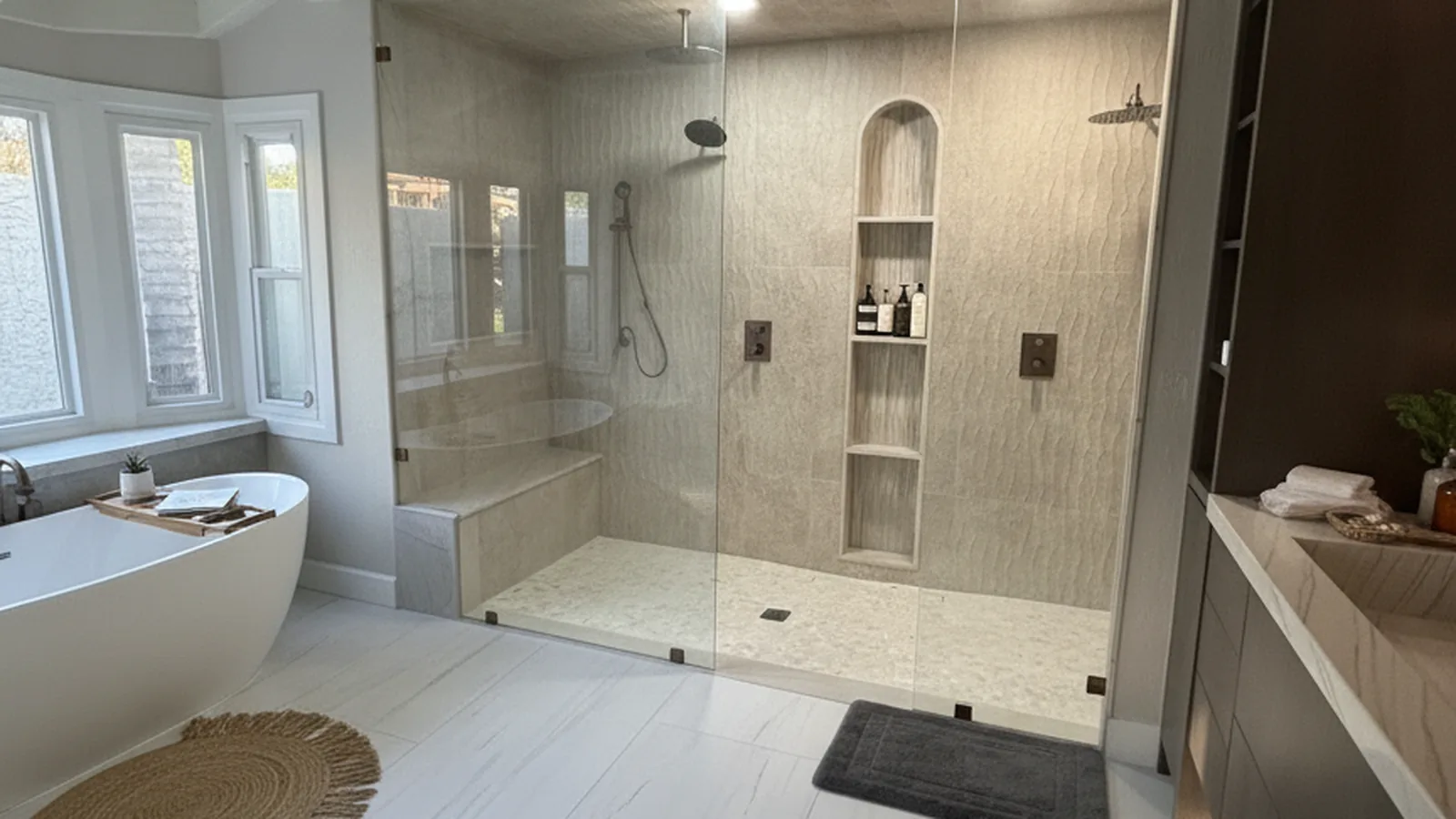
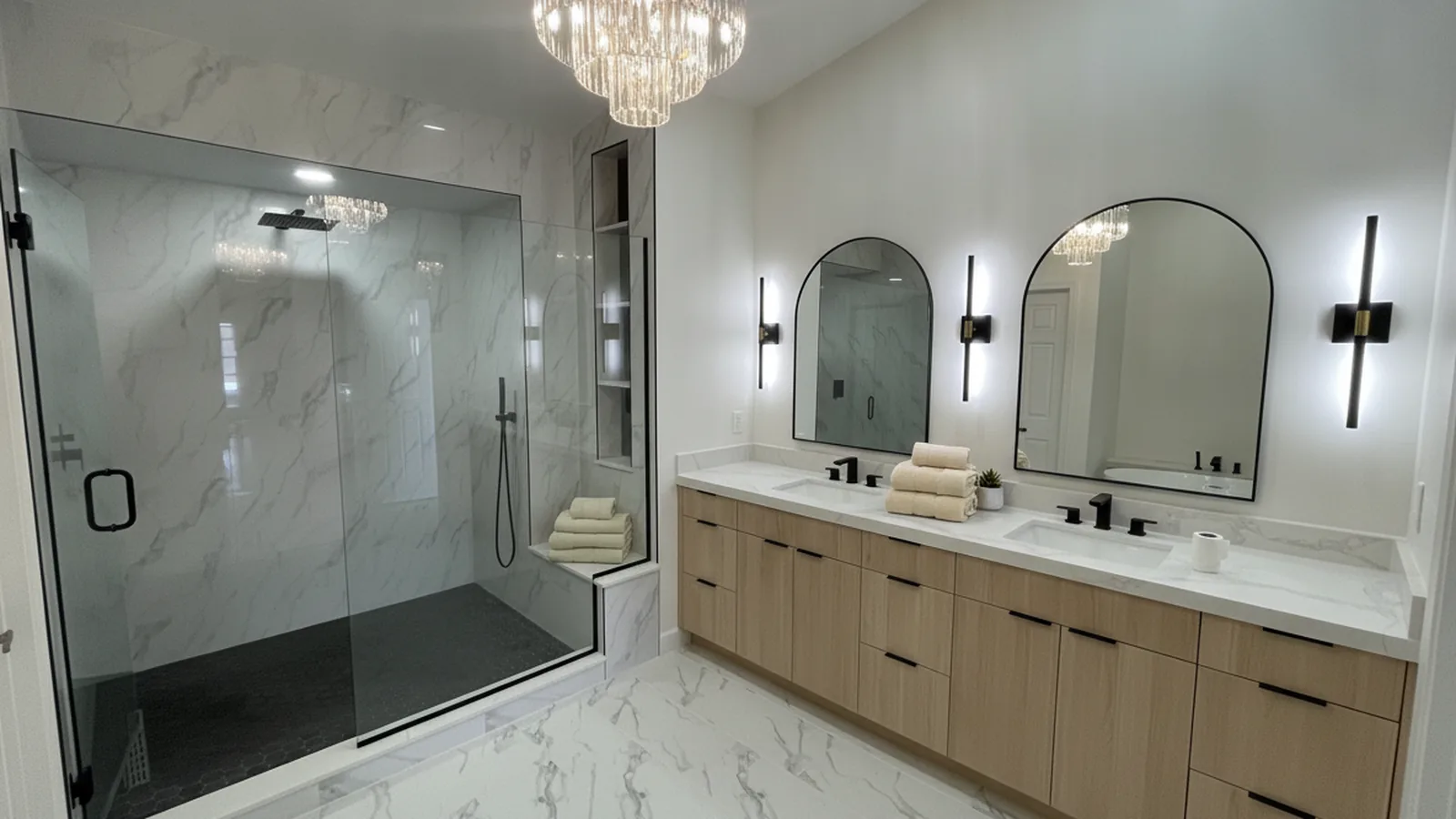
A bathroom remodel is any project that changes more than the surface, and the definition itself is why timelines vary so much. Swapping a vanity and repainting is a cosmetic refresh that can wrap in a few days. Gutting the room to the studs, relocating the toilet, building a curbless tiled shower, and installing a new stone-topped vanity is a full renovation with plumbing, electrical, waterproofing, and inspections stacked in sequence.
Three things set where your project lands on that spectrum:
- Scope. Are you keeping the existing layout or moving plumbing and walls? Moving a drain line is the single biggest schedule multiplier.
- Finish level. Prefab fixtures install fast. Custom tile patterns, natural stone, and built-in niches take skilled hands and curing time.
- Condition of what’s behind the walls. In older Phoenix-area homes, crews sometimes open a wall and find dated wiring, corroded galvanized pipe, or hidden water damage. Fixing it is the right call, and it adds days.
The National Kitchen & Bath Association’s remodeling planning resources make the same point professionals repeat: the more decisions you defer, the longer the job runs. Timeline is a function of clarity as much as square footage.
The realistic week-by-week timeline
Here is how a full remodel actually unfolds. Each stage has to finish, and sometimes cure or pass inspection, before the next begins. That sequence, not the labor itself, is what sets the pace.
Phase 1: Design and selections (1 to 4 weeks, before any work). You finalize the layout, pick tile, fixtures, paint, lighting, and the countertop. This phase has no crew on site, but it is the phase that decides whether the rest goes smoothly. Every “I’ll decide later” here becomes a stall later.
Phase 2: Ordering and permits (1 to 4 weeks, often overlapping Phase 1). Materials get ordered and permits get pulled. In-stock items arrive quickly. Special-order tile, glass shower enclosures, and custom vanities can take weeks. If your job moves plumbing or electrical, it likely needs a permit and inspections through City of Phoenix permit services or your local jurisdiction, and that adds scheduled checkpoints.
Phase 3: Demolition (1 to 2 days). The old room comes out. Fast and satisfying, and occasionally where hidden surprises appear.
Phase 4: Rough-in plumbing and electrical (2 to 4 days). New pipe, drains, and wiring go in while the walls are open. If an inspection is required, it happens at the end of this phase, before anything gets covered.
Phase 5: Waterproofing, backer board, and drywall (2 to 4 days). The shower gets waterproofed, walls get closed up. Shower waterproofing systems need proper installation and, in some cases, a cure or test period. Skipping this is how leaks start.
Phase 6: Tile (3 to 6 days). Floor and shower tile is set, then grouted. Thinset and grout need time to cure. Large-format tile and intricate patterns take longer.
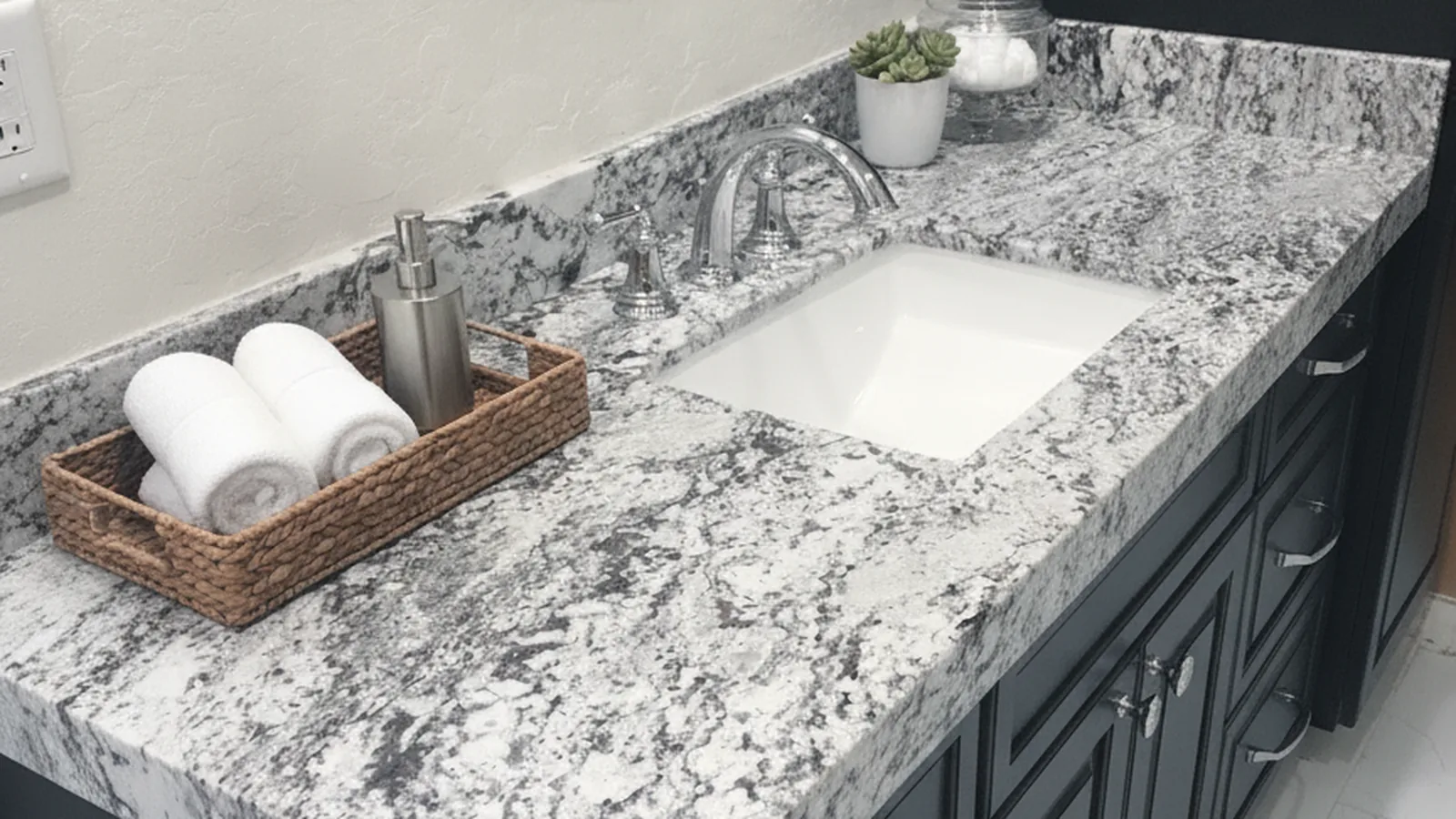
Phase 7: Fixtures, vanity, and countertop (2 to 4 days). Toilet, tub or shower glass, vanity, faucets, mirror, and the countertop go in. Template-to-install for a custom stone top is its own mini-timeline, which is why in-house fabrication matters (more on that below).
Phase 8: Paint, trim, and final details (1 to 2 days). Caulk, touch-ups, hardware, and the final walkthrough.
Phase 9: Final inspection (varies). If permits were pulled, a final inspection closes the job out. Scheduling depends on your jurisdiction’s queue.
Add those up and you can see why “2 to 3 weeks” is honest for a standard bath and why a custom primary bath reaches 6. The work is not slow. It is sequential, and several stages simply cannot be rushed without risking the result.
What speeds a remodel up, and what drags it out
The difference between a project that finishes on time and one that limps along usually comes down to a handful of factors. This table compares the two ends of the spectrum so you can see which side yours falls on.
| Factor | Speeds it up | Drags it out |
|---|---|---|
| Decisions | All selections locked before demo | Choices made mid-project |
| Layout | Keep existing plumbing locations | Moving toilet, shower, or walls |
| Materials | In-stock or in-house fabricated | Special-order, long lead times |
| Countertop | Local shop fabricates and installs | Outsourced slab, third-party wait |
| Behind the walls | Sound wiring and plumbing | Hidden rot, dated pipe, code issues |
| Crew structure | One team manages the whole job | Multiple uncoordinated subs |
| Permits | Filed early, inspections scheduled | Filed late, waiting on the queue |
The pattern is clear. Front-loaded decisions and a coordinated team keep things moving. Scattered choices and handoffs between separate contractors are where days disappear.
Rough cost and timeline expectations in the Valley
Cost and time tend to move together, because the features that add expense also add labor and lead time. A cosmetic refresh is the quickest and cheapest. A full primary-suite renovation with a custom shower and stone surfaces sits at the top of both scales. Rather than a single number, think in tiers: a light refresh, a standard full remodel, and a high-end custom build, each stepping up in both weeks and budget.
Arizona adds its own wrinkles. Hard water is tough on fixtures and glass, so many homeowners upgrade to finishes that shrug off mineral buildup. Summer heat and monsoon dust can affect delivery and scheduling. And HOA-era neighborhoods across the Valley sometimes have exterior or work-hour rules worth checking before you start. Because these variables are so specific to your home, the only accurate number comes from someone standing in your bathroom. A free in-home estimate is the honest way to get one, which is exactly what the AZ Granite & Remodeling contact page is for. No pressure, just a real look at your space and a real timeline.
Where a design-build team fits, using AZ Granite as one example
If you want the shortest realistic timeline, the structure of your team matters as much as the scope of the work. AZ Granite & Remodeling is a design-build remodeling contractor and in-house stone fabricator that has served the Phoenix Valley for over 20 years, and it is a useful example of why that structure helps.
Here is the practical difference. On many remodels, the designer, the general contractor, and the countertop shop are three separate companies. Every handoff between them is a chance for a delay: a missed measurement, a scheduling gap, a slab that has to travel to an outside fabricator and back. When one team designs the space, fabricates the stone in its own Phoenix shop, and installs it, those handoffs disappear. The countertop is measured, cut, and set by people who already know the project.
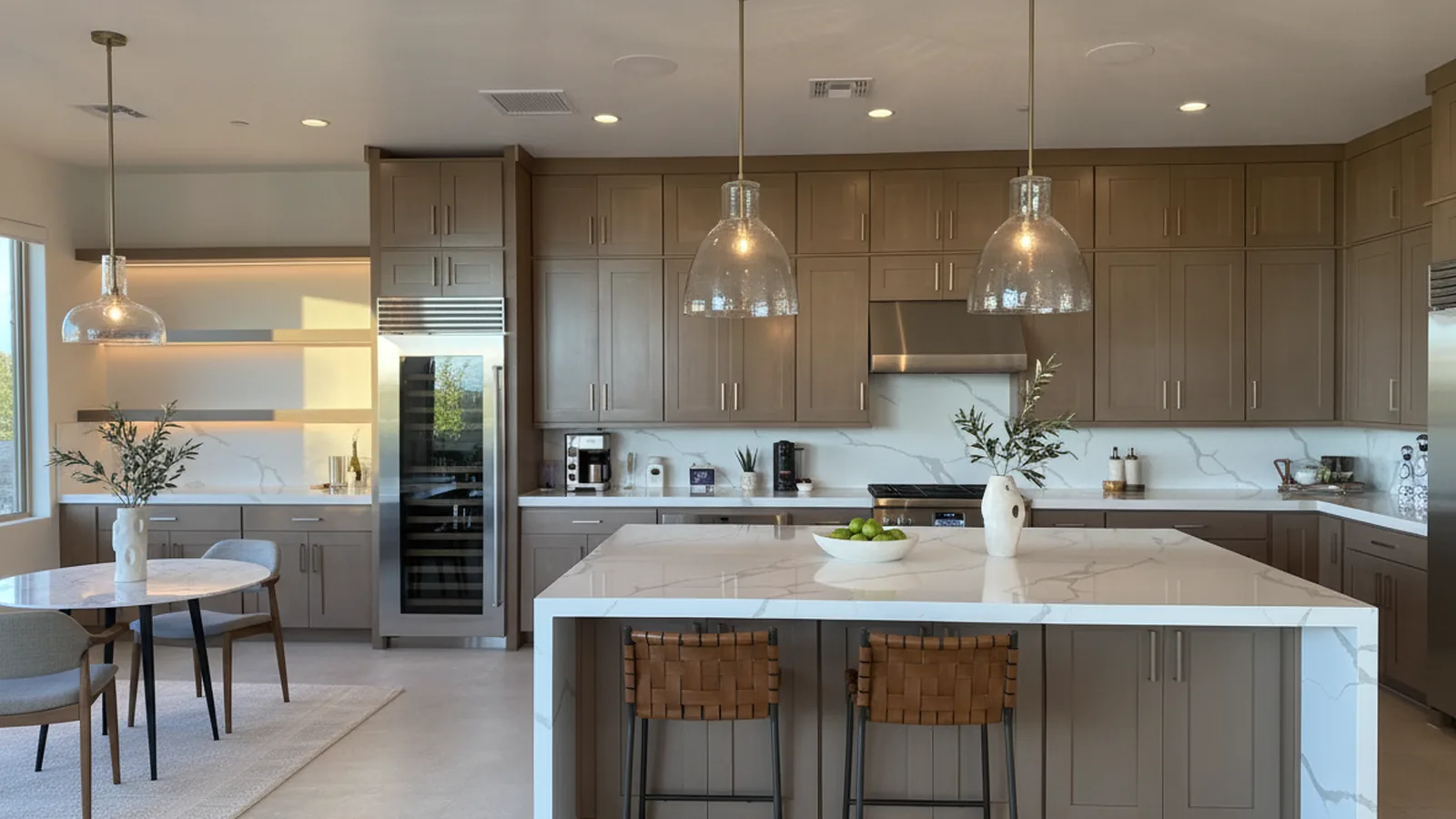
That in-house fabrication is the part homeowners underestimate. Custom stone is a common bottleneck, because a template usually has to go out to a third-party shop and wait in their queue. Fabricating on site keeps that step under one roof and on one schedule. You can see the surface options, from granite, quartz, quartzite, and porcelain to marble and onyx, and browse finished bathroom remodeling projects to get a feel for what different finishes look like installed. The project gallery is a good place to gather ideas before your design phase, since locking those decisions early is what keeps the whole timeline tight.
AZ Granite works one-on-one with a designer, does custom fabrication and installation in house, and offers free, no-pressure in-home estimates across the Valley, including North Scottsdale, Desert Ridge, Peoria, Sun City, Anthem, and the surrounding East and West Valley. It is one option among several a Phoenix homeowner might weigh. The reason it fits a “how long does it take” question is simple: fewer handoffs, fewer stalls.
How to plan so your remodel actually finishes on time
The single most effective thing you can do is make every decision before demolition day. Walk into the project with tile chosen, fixtures ordered, the countertop selected, and paint colors approved. A few more habits help:
- Order long-lead items first. Ask your contractor which materials take the longest and get those on order before anything else.
- Confirm the permit path early. If plumbing or electrical is moving, know what inspections are required and when.
- Plan for the one-bathroom problem. If it is your only bath, ask about sequencing so you keep a working shower for as much of the job as possible.
- Build in a buffer. Even a well-run remodel can hit a hidden surprise behind the wall. A few days of slack in your expectations prevents a lot of stress.
- Keep decisions rare during construction. The fewer choices left mid-project, the faster the crew moves.
Frequently asked questions
How long does a small bathroom remodel take?
A small or guest bathroom remodel usually takes about 2 to 3 weeks of on-site work if the layout stays the same. Cosmetic-only refreshes, like a new vanity, mirror, paint, and fixtures with no plumbing changes, can finish in several days. Planning and ordering still happen before that, so budget a few extra weeks on the front end.
How long does a master bathroom remodel take?
A primary or master bathroom typically takes 3 to 6 weeks of active construction because of the larger footprint, custom showers, double vanities, and stone finishes. Moving plumbing or walls pushes it toward the longer end. Including design and material lead time, the full calendar span is often 6 to 10 weeks.
Why do bathroom remodels take longer than people expect?
Because the stages are sequential and some require curing or inspection before the next can start. Waterproofing, tile setting, grout curing, and inspection scheduling each add time that cannot be safely compressed. The active labor is not slow. The order of operations is what sets the pace.
Can I use my bathroom during the remodel?
Usually not the one being renovated, since it will be without fixtures, water, or floors for much of the job. If it is the only bathroom in the home, ask your contractor about sequencing the work to minimize downtime, or plan for a temporary alternative. This is worth raising before the project starts, not during.
What causes the biggest delays in a bathroom remodel?
The three most common are decisions made mid-project, special-order materials with long lead times, and hidden conditions found after demolition, like dated wiring or water damage. Moving plumbing to a new location also adds significant time. Locking selections early and ordering long-lead items first prevents most avoidable delays.
Does moving the plumbing add a lot of time?
Yes. Relocating a toilet, shower, or sink drain is one of the biggest schedule multipliers in a bathroom remodel. It adds rough-in labor, often triggers a permit and inspection, and requires opening more of the floor or walls. Keeping fixtures in their existing locations is the fastest and least expensive path.
Do I need a permit for a bathroom remodel in Phoenix?
Often, yes, if the work involves moving or adding plumbing, electrical, or structural elements. Simple cosmetic swaps typically do not. Requirements vary by jurisdiction across the Valley, so confirm with your contractor and your local building department early, since permit and inspection scheduling affects your timeline.
How far in advance should I book a contractor?
Reputable remodelers often book weeks out, so reach out well before your ideal start date. Use that lead time productively by finalizing your design and selections, which is the work that has to happen before construction anyway. Starting the conversation early with a free in-home estimate lets you lock a realistic date and get long-lead materials on order.
The bottom line on your timeline
Most Phoenix bathroom remodels run 2 to 6 weeks of active work, with a total calendar span of roughly 6 to 10 weeks once you count design, ordering, and permits. The projects that finish fastest are the ones where every choice was made before demolition and one coordinated team handled the work. If you want a real timeline for your specific bathroom, the next step is a free, no-pressure in-home estimate. Call AZ Granite & Remodeling at (602) 759-9000 or request an estimate online, and you will get an honest schedule for your space instead of a guess.