You save the photo because the bathroom looks good. The floating vanity, the big shower, the warm light on stone. Then the saved folder hits forty images and none of them tell you what your bathroom should actually be. That gap between a pretty picture and a buildable plan is where most remodels get stuck, and it is exactly the gap this guide is built to close.
A good bathroom ideas photo gallery is a research tool, not a shopping cart. Used well, it tells you what you actually respond to, which choices repeat across the rooms you love, and which of those choices survive Arizona’s hard water and desert light. Here is how to read one like a designer instead of a scroller.
Quick answer: A bathroom ideas photo gallery is most useful when you stop collecting whole rooms and start isolating the three or four decisions each photo is really making: layout, the main surface, the fixtures, and the light. Save images for the specific element you like, note what they have in common, and pressure-test those choices against Arizona hard water, UV, and dust before you commit. That turns a mood board into a plan a contractor can price.
Key takeaways
- A photo gallery is best used to isolate decisions, not copy whole rooms.
- The images you save usually share a hidden pattern; naming it is half your design brief.
- Arizona conditions (hard water, strong light, dust) quietly rule out some trend finishes that photograph beautifully.
- Rough bathroom budgets swing widely by scope, so use photos to define scope before chasing a price.
- The fastest way to test whether an idea is buildable in your room is a free in-home estimate.
What is a “bathroom ideas photo gallery,” and how do you actually use one?
A bathroom ideas photo gallery is simply a curated collection of finished-bathroom photos, whether that is a Pinterest board, a magazine feature, or a contractor’s real project archive. Its job is to move you from “I want a nicer bathroom” to “I want these specific things.”
The trick is to look past the room and at the individual decisions inside it. Almost every bathroom photo is answering four questions at once:
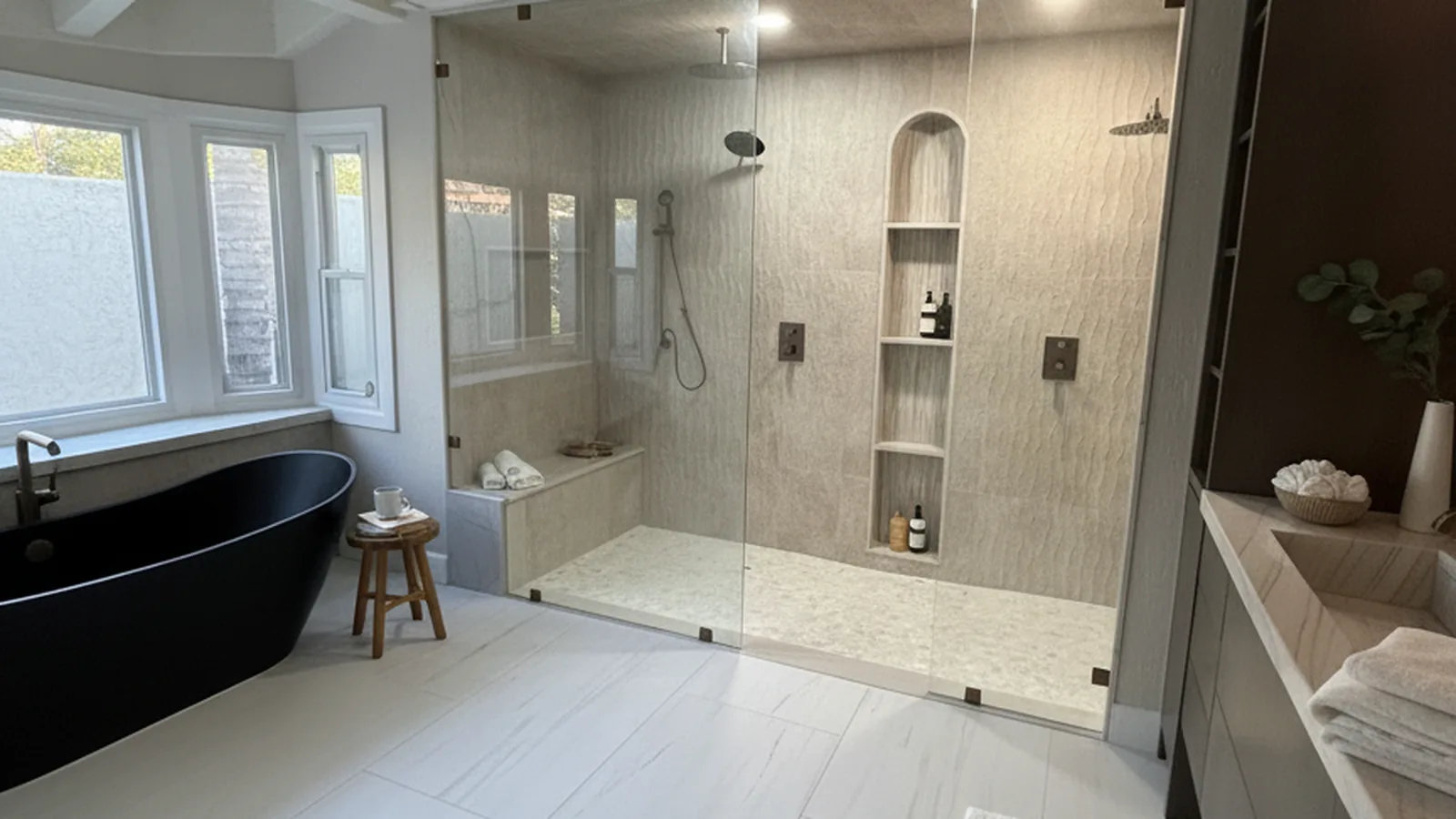
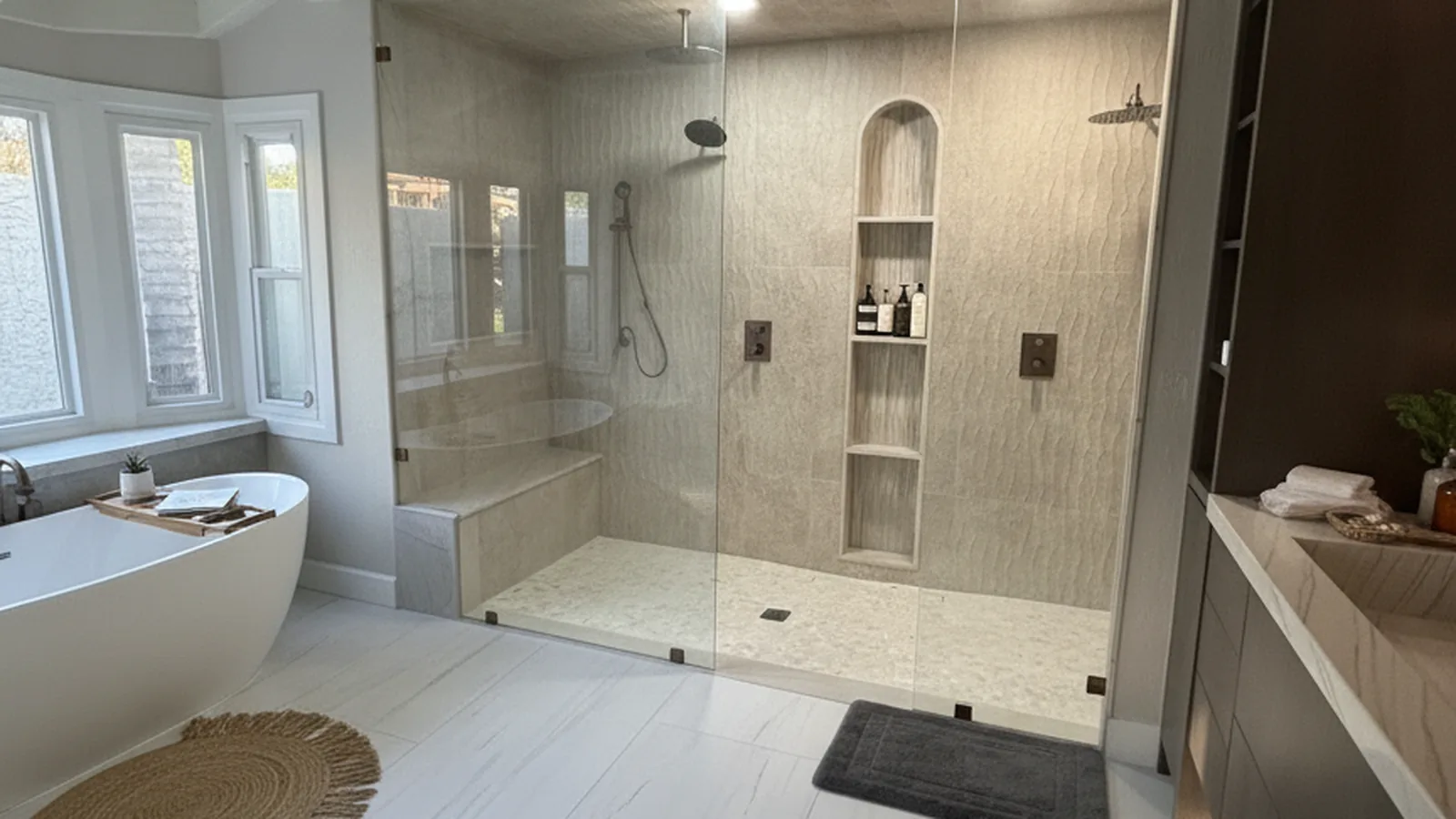
- Layout: where the shower, tub, toilet, and vanity sit, and how much floor stays open.
- The hero surface: usually the vanity top, shower walls, or a feature wall that carries the whole look.
- Fixtures and hardware: faucet style, finish (matte black, brushed nickel, brass), and the shape of sinks and tubs.
- Light: how much daylight comes in, and how warm or cool the fixtures read.
When you save an image, tag why. “I like the tile,” “I like the open floor,” “I like the warm light.” After twenty photos, the pattern jumps out. Maybe you keep saving curbless walk-in showers and warm wood-look tone, and you have quietly decided you want an open, spa-feeling room. That named pattern is your brief, and it is what a designer needs before anything else.
Reading the trade-offs a photo won’t tell you
The thing a gorgeous photo hides is upkeep. A room styled for a camera has no water spots, no toothpaste, and no morning rush. Before you fall for a look, ask what it costs to keep looking that way, because that is where a lot of Arizona bathrooms disappoint their owners a year later.
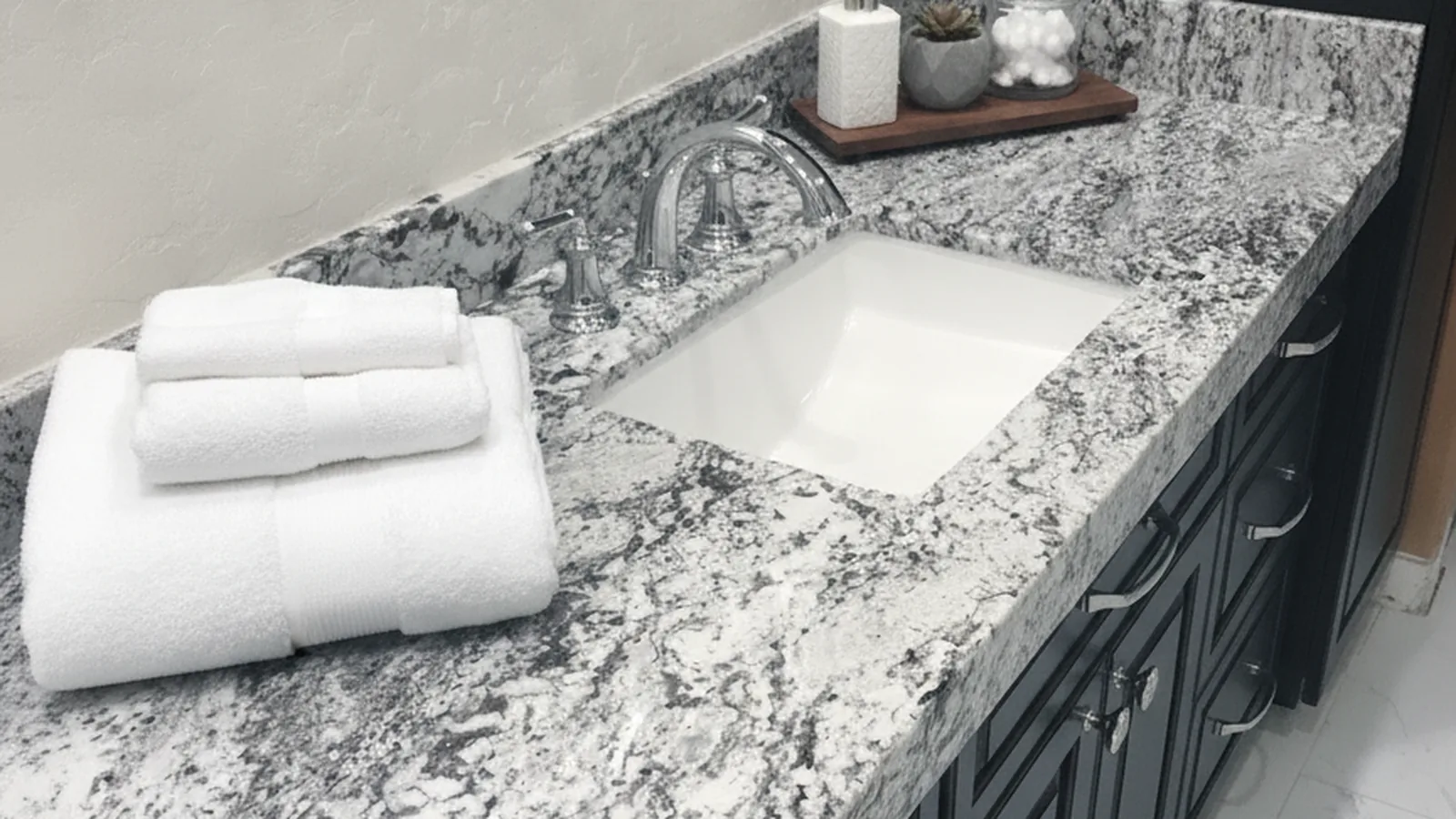
A few honest examples. Polished marble vanity tops and shower walls photograph like nothing else, but marble is soft and reacts to acids, and in a hard-water region it shows etching and mineral film faster than most people expect. Matte black fixtures look sharp in a showroom and then wear white water spots that stand out on the dark finish here. Big open frameless glass showers are stunning and also the surface your hard water will fight you on the hardest. None of these are wrong. They just carry a maintenance bill the photo doesn’t mention, and knowing that up front is how you choose on purpose instead of by accident.
This is also why desert light matters. Arizona daylight is strong and warm, and it can make a cool gray tile you loved on a screen read flat or even slightly green on your actual wall. Whenever you can, judge a finish with a real sample, in your own bathroom, at the time of day you use the room most.
How AZ Granite & Remodeling turns saved photos into a buildable plan
This is where a real project archive beats a generic feed. AZ Granite & Remodeling is a design-build remodeler and in-house stone fabricator that has worked on Valley bathrooms for over 20 years, and the useful part for someone holding a folder of screenshots is that every photo in the project gallery is a bathroom that was actually built here, in this climate, with surfaces the crew cut and installed themselves.
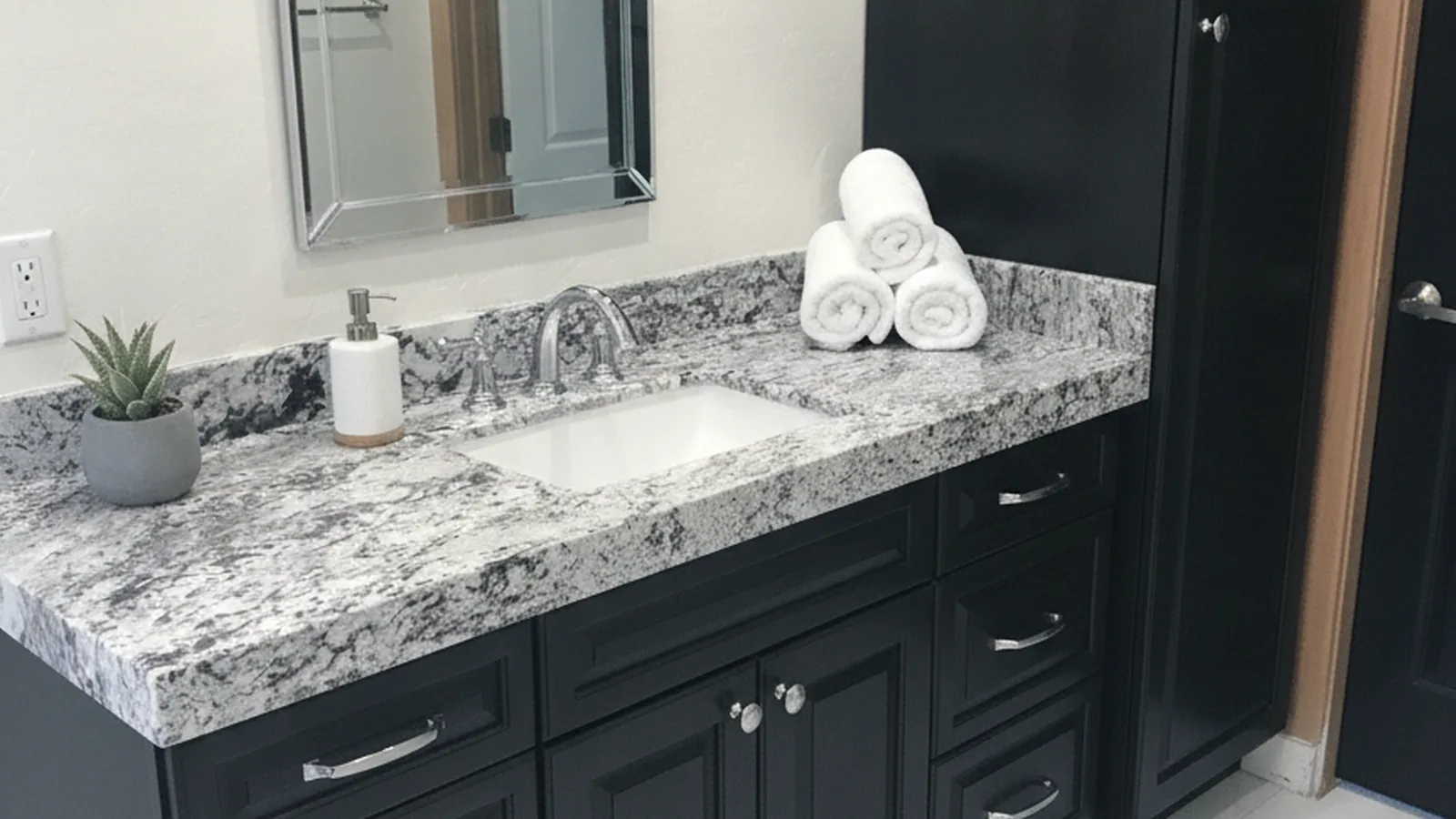
That changes what the images can tell you. A generic gallery shows a look. A local project archive shows what that look costs to keep, how the stone was seamed, and how it held up in a real Arizona home. Because the fabrication happens in the Phoenix shop rather than being subcontracted out, a homeowner can bring in the exact photo that started everything and get a straight answer about whether that vanity top is granite, quartz, or quartzite, what a similar slab runs, and whether the veining in the picture can be matched from current inventory.
The workflow is built for people who arrive with ideas, not specs. You sit down one-on-one with a designer, sort your saved photos into decisions, and the team handles design, custom fabrication, and installation as one crew instead of three vendors pointing at each other. The estimate is free, in-home, and no-pressure, which matters when you are still figuring out scope. AZ Granite serves the greater Phoenix Valley, from North Scottsdale and Desert Ridge out to Peoria, Sun City, and Anthem across the East and West Valley. It is one option among several good remodelers, and it fits especially well when stone surfaces are the centerpiece of the look you keep saving.
Matching your saved photos to a real scope
Photos rarely map to a single price because they rarely map to a single scope. The same “nice bathroom” image could mean a light refresh or a full gut, and those are very different projects. Sorting your inspiration into one of these tiers is the single most useful thing you can do before asking anyone for numbers.
| Scope | What changes | Best photos to save | Rough budget signal |
|---|---|---|---|
| Cosmetic refresh | Vanity top, faucet, mirror, paint, lighting | Close-ups of surfaces and fixtures | Lowest; surface-and-fixture driven |
| Mid-range remodel | New vanity, tile, shower surround, flooring | Whole-wall and shower-detail shots | Moderate; tile and labor heavy |
| Full remodel | Moved plumbing, new layout, tub-to-shower conversion | Wide room shots showing layout | Highest; structural and plumbing driven |
Once you know your tier, your photo folder gets sharper. If you are refreshing, you only need surface and fixture close-ups. If you are moving plumbing, wide layout shots matter more than any finish. For a deeper walk through Arizona-specific choices and costs, our guide to bathroom remodel ideas that hold up in the desert breaks down materials and real cost ranges by scope.
Choosing surfaces that photograph well and hold up
The surfaces you keep saving are usually the emotional center of the room, so it is worth knowing how the popular options behave in a Phoenix bathroom.
- Quartz is engineered, non-porous, and does not need sealing, which makes it forgiving against hard water and daily use. It is the low-maintenance default for a busy vanity.
- Granite is a natural stone that handles heat and wear well and gives you real, one-of-a-kind veining. It needs occasional sealing.
- Quartzite looks strikingly like marble but wears far harder, so it is the honest answer for anyone in love with a marble photo who does not want the upkeep.
- Porcelain large-format slabs work beautifully for shower walls and floors and shrug off water and UV.
If a specific saved image is driving the whole project, bring that photo to a fabricator and ask which of these it actually is. People are often surprised that the “marble” they pinned is really quartzite or a quartz pattern. For fixtures, look for the EPA WaterSense label on faucets and showerheads. It signals efficient water use, which is worth having in a state where every gallon counts, and it does not compromise the look.
Turning inspiration into a plan without overbuilding
The last trap is the endless folder. At some point, collecting has to become deciding. A useful rule from the design world, echoed by the National Kitchen & Bath Association, is to lock your layout and your one hero surface first, then let everything else support those two choices. When your fixtures, paint, and lighting all serve the same decision, the room reads intentional instead of busy, which is exactly the quality that made you save the photo in the first place.
When you are ready to test your ideas against your actual room, budget, and plumbing, that is what an in-home walkthrough is for. You can request a free, no-pressure estimate and get a real answer about what your saved photos would take to build.
Frequently asked questions
How many photos should I collect before planning a bathroom?
There is no magic number, but the useful signal is repetition, not volume. Once the same layout, surface, or color keeps reappearing across your saves, you have enough to name a direction. Twenty to thirty tagged images usually surfaces a clear pattern; hundreds of untagged ones just create noise.
Why do my saved bathroom photos never look right in my actual room?
Usually it is light and scale. Staged photos use flattering light and wide lenses that make rooms feel larger and finishes read differently. Arizona’s strong, warm daylight can shift a cool tile toward flat or green on your wall, so always judge a real sample in your own bathroom at the time of day you use it most.
Can I just show a contractor a photo instead of a full design?
Yes, and it is often the best starting point. A photo tells a designer what you respond to faster than a written brief. A design-build team can look at your saved images, identify the real decisions inside them, and tell you which are buildable in your space and budget before drawing anything.
Which bathroom trends photograph well but disappoint in Arizona?
Polished marble, matte black fixtures, and expansive frameless glass all shine on camera and then fight the local climate. Marble etches and shows hard-water film, matte black shows white mineral spots, and large glass panels are the surface hard water clouds fastest. They are all workable with the right care, just know the upkeep before you commit.
Do I need to match the exact materials I see in a photo?
No, and often you should not. The look you love can usually be reached with a more practical material, such as quartzite or quartz standing in for high-maintenance marble. Bring the photo to a fabricator and ask what would give you that appearance while surviving daily Arizona use.
How does climate change which bathroom ideas actually last here?
Arizona adds three stresses a generic gallery ignores: hard water that leaves mineral deposits, intense UV that can fade some finishes, and fine dust. Those favor non-porous surfaces, sealed or naturally durable stone, and finishes that hide water spots. An idea that lasts in a humid coastal climate is not automatically the right call in the desert.
Where can I see real remodeled Arizona bathrooms instead of stock photos?
Look at a local contractor’s finished-project archive rather than a national feed. Those photos show bathrooms built in this climate with real homeowners’ choices, which is far more predictive than a styled catalog image. AZ Granite’s project gallery is one example of a Valley-specific archive you can browse.
Ready to build the bathroom you keep saving?
The photos got you excited. The plan is what gets it built. If your inspiration folder has started to point in one clear direction, the next step is seeing what it takes in your actual room. AZ Granite & Remodeling offers a free, no-pressure in-home estimate across the Phoenix Valley, and you can call (602) 759-9000 or reach the team here to talk it through.