If you’re shopping for low-maintenance granite countertops in Phoenix, the real question underneath is simple: how much fussing will this stone actually ask of you once it’s installed? Granite has a reputation for being needy, but a lot of that reputation is outdated. With the right slab and a sane care routine, most Phoenix kitchens spend only a few minutes a month on upkeep.
The catch is that “low-maintenance” isn’t a single grade you buy. It’s a combination of the stone’s density, its finish, and how our desert conditions treat it. Get those three right and granite is genuinely easy to live with. Get them wrong and you’ll be wiping haze and resealing more than you’d like.
Quick answer: Granite is a low-maintenance countertop for most Phoenix homes when you pick a dense, tight-grained slab and reseal roughly once a year. Daily care is soap and water. The desert’s real challenge is not the heat, it’s hard-water mineral spots, which wipe away with a little routine attention rather than special products.
Key takeaways
- Most granite in Phoenix needs sealing about once a year, and some dense slabs go longer.
- The biggest desert upkeep issue is hard-water buildup, not staining or fading.
- A denser, less porous slab and a polished finish are the two choices that most reduce future work.
- Daily cleaning is mild soap and water; skip vinegar, bleach, and abrasive pads.
- If you want near-zero sealing, compare granite against quartz before you commit.
What is a low-maintenance granite countertop?
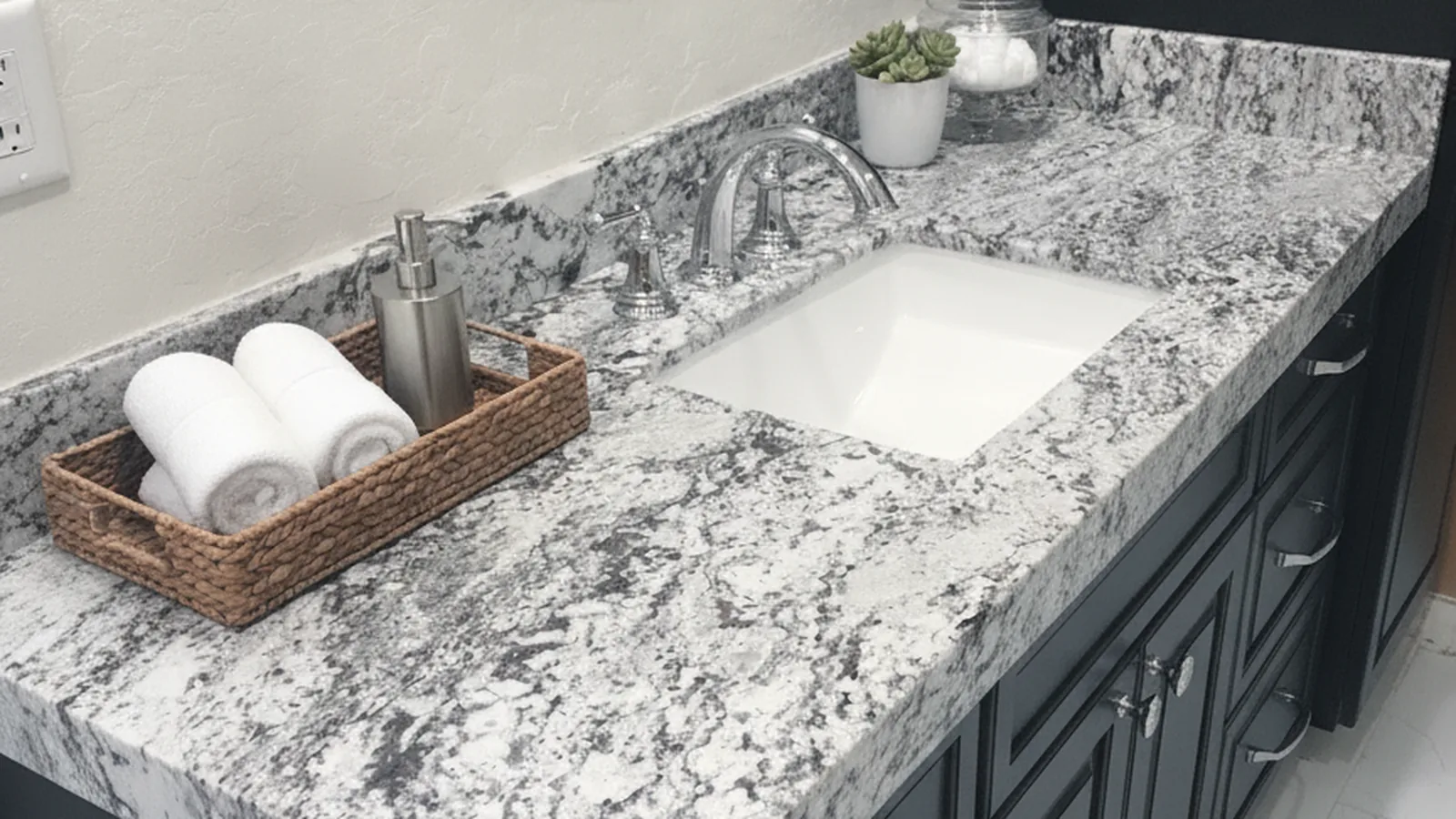
A low-maintenance granite countertop is one that resists absorbing liquids, holds its finish, and cleans up with ordinary products. The single most important factor is porosity, or how much water and oil the stone will soak in. Denser granites with a tight mineral structure absorb very little, so they stain less and need sealing less often.
Two other things matter. Finish comes first: a polished surface sheds spills and shows fewer marks than a honed (matte) one, which is why most Phoenix kitchens go polished. Second is fabrication quality. A slab that arrives resin-treated from the quarry and is cut and sealed properly behaves far better than one that’s rushed. The granite as a natural surface starts the job, but the fabricator finishes it.
You can get a rough sense of a slab’s porosity before you buy. Ask the fabricator to drip water on a sample: if it beads and sits, the stone is dense and low-fuss. If it darkens and soaks in within a few minutes, that slab will want more frequent sealing. The Natural Stone Institute’s care guidance is a solid, non-commercial primer on how sealing and cleaning actually work.
Why upkeep is a little different in the Valley
Granite care in Phoenix is shaped less by heat and more by water. Our tap water is hard, meaning it’s loaded with dissolved calcium and magnesium. When it evaporates on a countertop, and in our dry air it evaporates fast, it leaves behind chalky mineral spots and a faint film around the sink and faucet.
According to the U.S. Geological Survey, most of the Southwest sits in the “hard” to “very hard” range, and the Phoenix area is no exception. That buildup is cosmetic, not damage, and it wipes off. But it’s the thing you’ll actually notice, so a low-maintenance routine here targets water spots more than stains. Monsoon dust and big indoor-outdoor temperature swings add a little cleaning, but granite shrugs those off.
Sunlight is the one myth worth clearing up. Natural granite is formed under heat and pressure and does not fade in UV, so a slab next to a big desert-facing window is safe. If sun exposure is a worry for you, that concern usually points toward a different material question, which we’ll get to in the comparison.
Where AZ Granite & Remodeling fits in
For homeowners who’d rather not gamble on which slab holds up, working with a design-build fabricator takes the guesswork out. AZ Granite & Remodeling is a Phoenix contractor and in-house stone fabricator that has served the Valley for over 20 years, and because the same team designs, cuts, and installs, the low-maintenance decision gets made where it counts: at the slab.
That in-house shop matters for upkeep specifically. When fabrication happens under one roof, the crew can steer you toward denser slabs, seal edges and cutouts properly, and tell you honestly which stone in the yard will need attention and which won’t. You work one-on-one with a designer, and the in-home estimate is free and no-pressure, which means you can talk through maintenance realistically before spending anything.
It’s also a practical option for smaller or budget projects. A bathroom vanity or a small island can often be cut from granite remnants, which are one-of-a-kind offcuts from the shop’s full-slab jobs, viewed by appointment at the Phoenix location on W. Cheryl Dr. The crew serves North Scottsdale, Desert Ridge, Peoria, Sun City, Anthem, and the surrounding East and West Valley. That’s the AZ Granite piece. The rest of this guide is about getting the care right no matter who fabricates your counters.
How often granite really needs sealing in Arizona
Most granite in a Phoenix home needs resealing about once a year, and dense slabs can go two or three years between coats. The old advice to seal every few months applies to a handful of very porous, light-colored stones, not to the tight granites most kitchens choose today.
Sealing is quick. You wipe on an impregnating sealer, let it sit per the label, then buff off the excess. The whole kitchen takes under an hour. The point isn’t to coat the surface, it’s to fill the microscopic pores so liquids sit on top long enough to wipe up. Use the water-drop test to decide timing: reseal when a few drops start darkening the stone within about 10 to 15 minutes rather than beading.
Signs you’ve waited too long are subtle. A darkening ring around a coffee cup that fades slowly, or a spot near the stove that looks perpetually damp, both mean the sealer has worn thin. Catch it early and there’s no harm done. If you’d like a fuller walkthrough of choosing a slab that stays easy, our guide to choosing granite in the desert covers finishes and durability in more depth.
Daily care and beating hard-water spots
Day-to-day, granite asks for mild dish soap and warm water on a soft cloth, and that’s it. Wipe spills when you see them, dry the area around the sink, and the surface stays clear. What granite does not want is acid or abrasion. Vinegar, lemon, bleach, and glass cleaners can dull the polish or degrade the sealer over time, and scouring pads scratch it.
For the mineral spots our hard water leaves, keep a stone-safe spray or just soap and water near the sink and give the faucet area a quick wipe-down after heavy use. Once in a while a buildup ring around the tap needs a gentle nonabrasive cleaner made for stone. Skip the descaling products you’d use on a shower door, since those are usually acidic.
One habit does more than any product: dry the wet zones. In dry desert air, standing droplets evaporate before you’d expect and leave their minerals behind. A ten-second wipe after doing dishes prevents most of the spotting people blame on the stone itself.
Granite vs. other low-maintenance surfaces
Granite is easy, but it isn’t the only low-fuss option, and honesty helps here. If sealing bothers you at all, quartz skips it entirely. If you love a marble look, quartzite gets you close with far less babysitting. Here’s how the common Phoenix choices compare on upkeep.
| Surface | Sealing | Hard-water resistance | Heat tolerance | Daily care |
|---|---|---|---|---|
| Granite | ~1x/year, less for dense slabs | Good; spots wipe off | High, natural stone | Soap and water |
| Quartz | Never (non-porous) | Excellent | Moderate, use trivets | Soap and water |
| Quartzite | Roughly yearly | Good | High | Soap and water |
| Marble | Frequent; etches from acids | Fair | High | Needs the most care |
If a no-sealing surface sounds appealing, it’s worth reading our honest quartz vs. granite comparison for Arizona before deciding, since the two trade off differently on heat, look, and cost. The short version: granite handles a hot pan better, quartz handles forgetfulness better.
What drives the cost of a low-fuss granite install
The price of a low-maintenance granite job comes down to a few factors, not one sticker number. Slab rarity and color band are the biggest: dense, dramatic stones cost more than common ones. Beyond that, the square footage, the number of cutouts and seams, edge profile, and how much demo and plumbing work the install requires all move the total.
Choosing a lower-maintenance slab doesn’t automatically cost more. Plenty of affordable granites are dense and easy to care for, and remnants can make a small project very reasonable. Because these variables are so project-specific, the only honest way to get a real figure is a measured, in-home look. A design-build shop like AZ Granite offers that estimate free, and it’s the right moment to ask which slabs in the yard will need the least upkeep for your particular kitchen.
Frequently asked questions
How often do I need to seal granite countertops in Phoenix?
About once a year for most granite, and less often for dense, dark slabs that can stretch to two or three years. Test it with water: if drops darken the stone within 10 to 15 minutes instead of beading, it’s time to reseal. The job takes under an hour for a full kitchen.
Does Phoenix hard water damage granite?
No, it doesn’t damage granite, but it leaves cosmetic mineral spots and a faint film around the sink. Those wipe off with soap and water or a stone-safe cleaner. Drying the wet areas after dishes prevents most of it, which is the single best habit for desert granite care.
Will granite fade or crack in Arizona sun and heat?
No. Granite forms under intense natural heat and does not fade from UV, so a sunny window won’t hurt it, and it tolerates a hot pan better than most surfaces. Cracking comes from unsupported overhangs or impact, not from desert temperatures, which is why professional fabrication matters.
What’s the most low-maintenance granite color?
Denser, darker, tight-grained granites generally need the least upkeep because they absorb less and hide water spots better. Very light or heavily patterned porous stones tend to want more frequent sealing. Ask your fabricator to do a water-drop test on the actual slab before you choose.
Is quartz really lower-maintenance than granite?
On sealing, yes, since quartz is non-porous and never needs it. But granite tolerates heat better and comes in natural patterns quartz can’t fully copy. For a Phoenix kitchen the choice usually comes down to whether you’d rather skip yearly sealing or keep a hot-pan-friendly natural stone.
Can I clean granite with vinegar or glass cleaner?
No. Acidic and harsh cleaners like vinegar, lemon, bleach, and ammonia-based glass cleaners can dull the polish and break down the sealer over time. Stick to mild dish soap and warm water for daily cleaning, and a cleaner labeled safe for natural stone for occasional deeper jobs.
Are granite remnants a good low-maintenance option for small projects?
Yes. Remnants are offcuts from full-slab jobs and can be ideal for a vanity, small island, or bar top, often at a lower cost. They carry the same care needs as full slabs, so a dense remnant is just as low-maintenance. In Phoenix they’re viewed by appointment at the fabrication shop.
Ready to pick a slab that stays easy?
The lowest-maintenance granite is the one chosen with your kitchen, your water, and your habits in mind, and that’s a conversation worth having in person. Browse the granite countertops options or request a free, no-pressure in-home estimate with AZ Granite & Remodeling at (602) 759-9000. A few minutes with a designer can save you years of unnecessary upkeep.