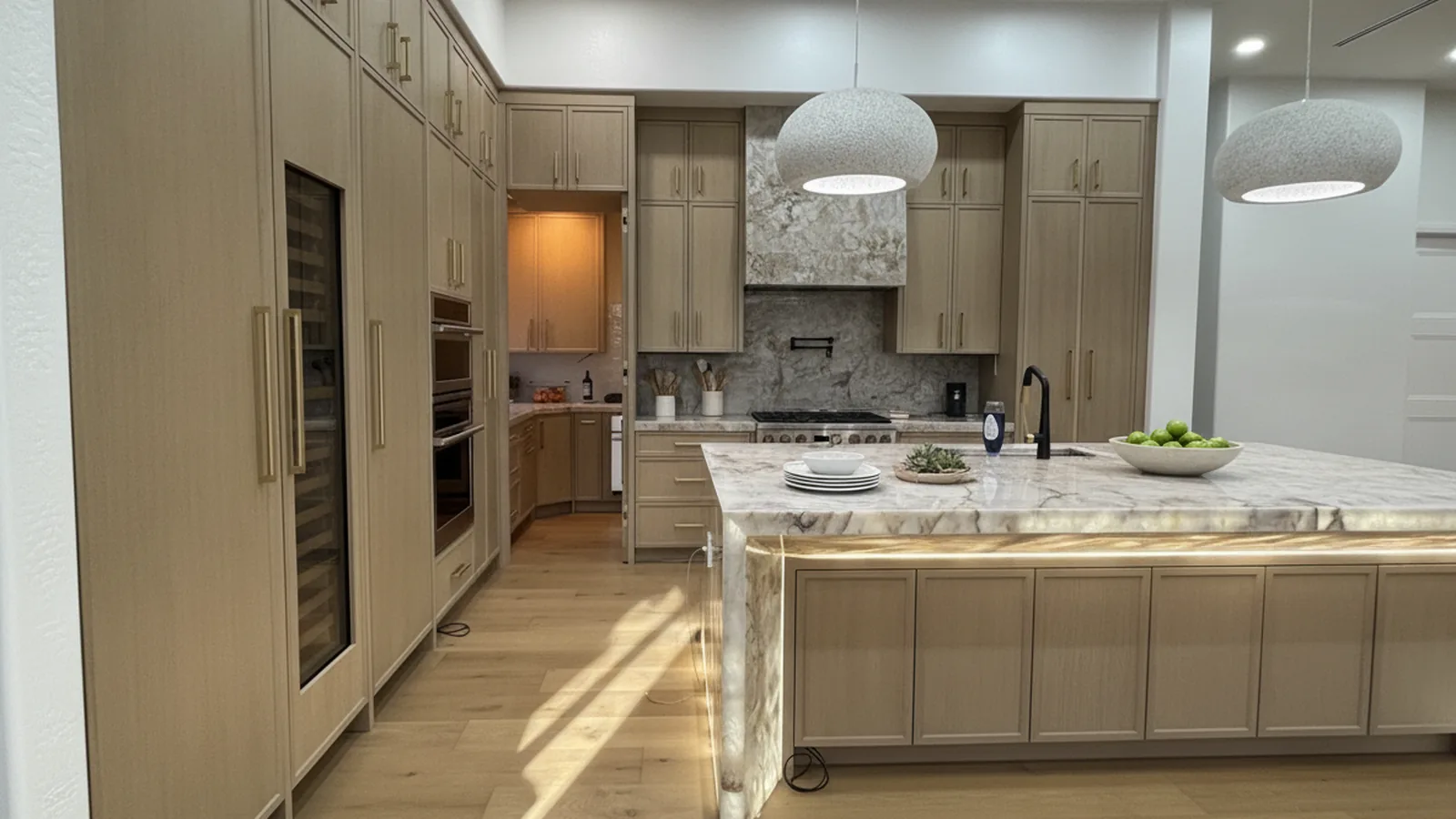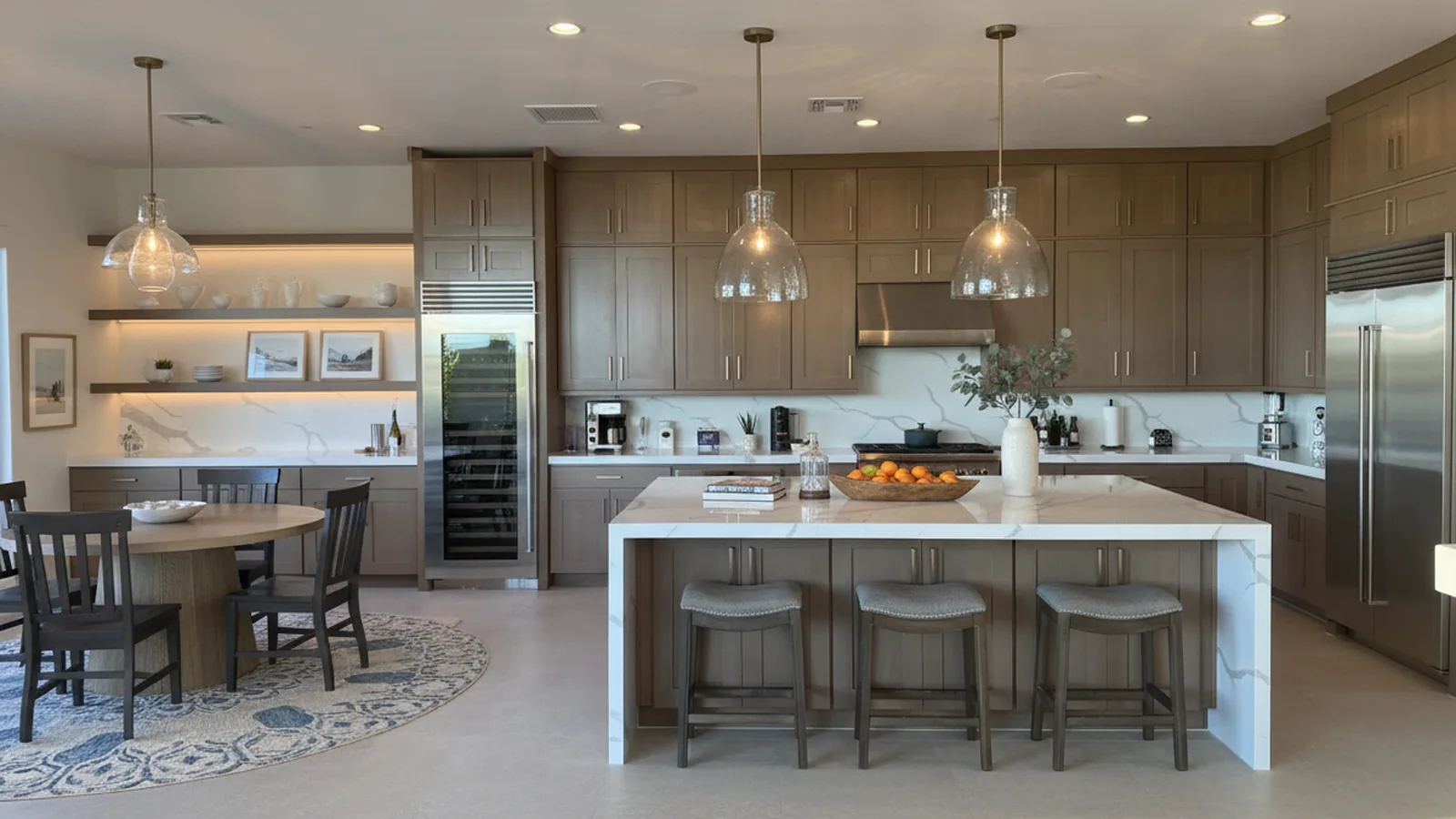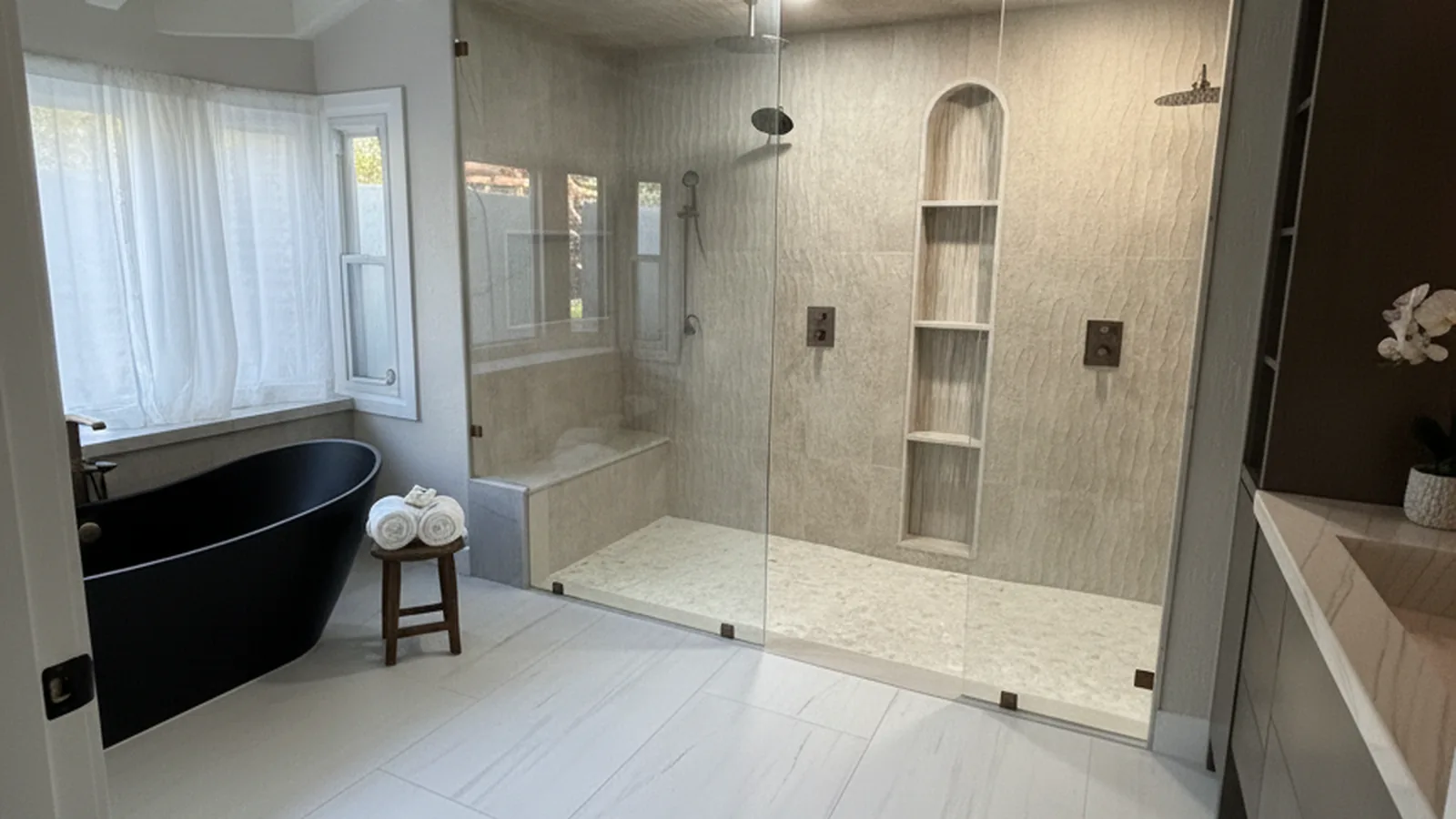
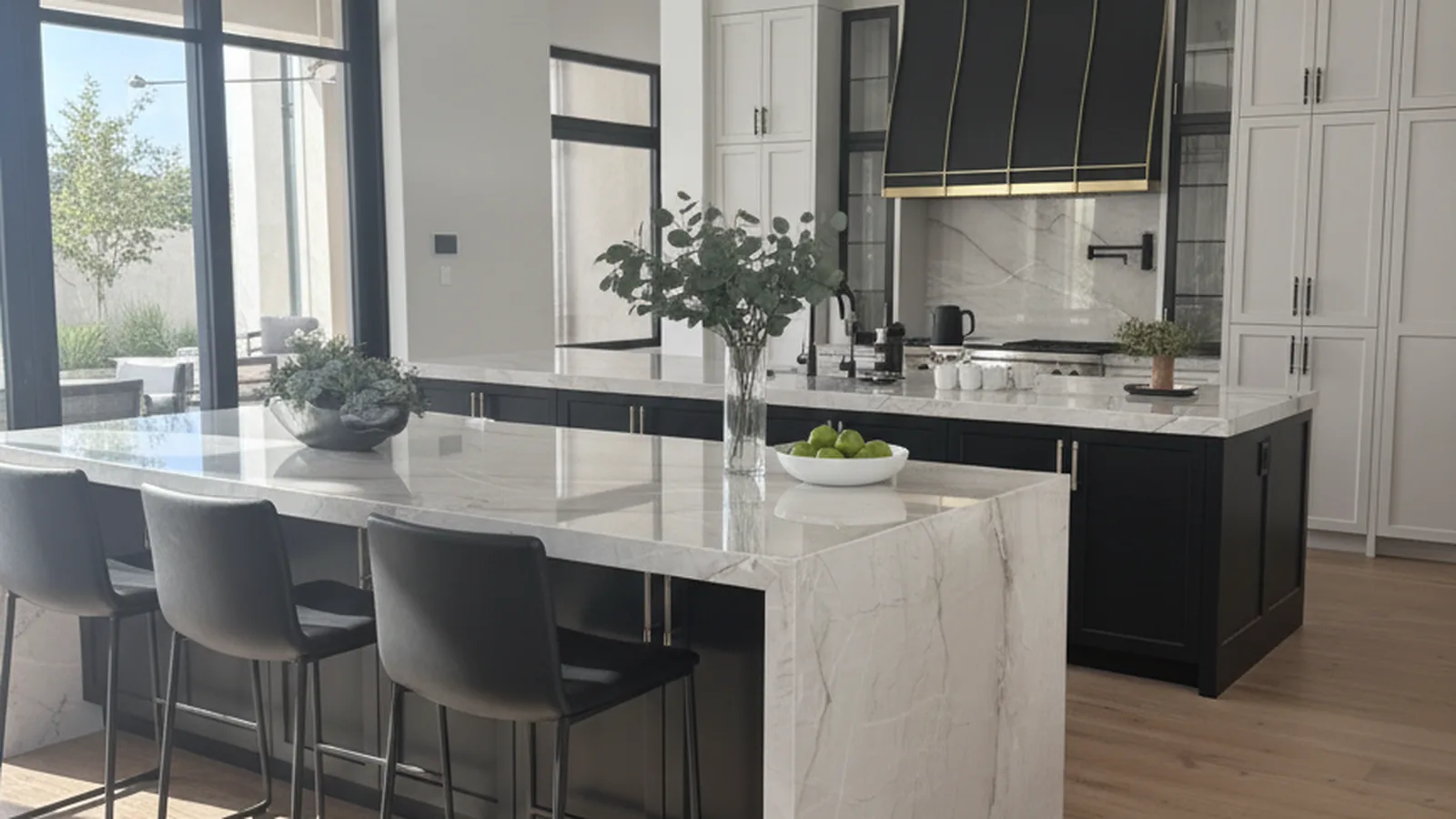
Shopping for granite countertops in Phoenix means walking into a slab yard, standing in front of a stone that was cut out of the earth a continent away, and trying to picture it in your kitchen. It is exciting and a little overwhelming. The colors are gorgeous, the prices swing wildly, and every fabricator tells you a slightly different story about sealing, seams, and how the stone will age.
This guide walks through what granite actually is, how it behaves in the Valley’s heat and hard water, what drives the price, and how to tell a good fabricator from a middleman. AZ Granite & Remodeling shows up as one local example, because they cut stone in their own Phoenix shop. But most of what follows applies no matter who you hire.
Quick answer: Granite countertops in Phoenix typically run $40 to $100+ per square foot, depending on the slab, the edge, and the layout. Granite handles desert heat, UV, and daily use very well. Its main upkeep is a periodic sealing to shrug off hard-water minerals and stains, which takes about ten minutes a year.
Key takeaways
- Granite is a natural stone, so no two slabs match. You are buying the exact piece you see, not a sample.
- In Phoenix, granite’s strengths are real: it does not fade in sun and it laughs at a hot pan. Its one chore is sealing against hard-water minerals.
- Installed cost is driven by slab grade and square footage, far more than by the brand of the shop.
- The biggest quality difference is who fabricates and installs the stone. A local shop that does its own cutting controls the seams and the fit.
- Remnants are the budget path for islands, bathroom vanities, and small jobs.
What are granite countertops?
Granite countertops are work surfaces cut from solid slabs of natural rock, quarried, polished, and fabricated to fit your cabinets. Granite forms when molten rock cools slowly underground, which is what gives it those interlocking mineral crystals and the depth you see when light hits it. The USGS describes granite as one of the most abundant hard rocks in the earth’s crust, which is part of why it has been a countertop staple for decades.
Because it is a natural product, granite is sold by the slab, not the sheet. A single slab is usually around 9 to 10 feet long, and the pattern flows across it like the grain in wood. That is the trade-off with any natural stone: you get one-of-a-kind character, but you also have to accept that the veining, color, and movement vary from one end of the slab to the other. Engineered surfaces like quartz look uniform on purpose. Granite never will, and for most people that is the appeal.
How granite holds up to Phoenix heat, sun, and hard water
Granite is one of the better-suited countertops for an Arizona home, and the reasons are specific to the desert. Because it formed under extreme heat, setting a hot pan on granite will not scorch or melt it, unlike some engineered surfaces that can be damaged by direct heat. It also does not fade. Granite near a sunny window or on an outdoor kitchen keeps its color where some materials yellow or lighten under relentless UV. If you want the deeper version of that comparison, this guide to the best countertops for Arizona heat breaks down how each surface behaves.
The desert does hand granite one real chore: hard water. Phoenix tap water is loaded with calcium and magnesium, and over time those minerals leave a chalky film and can settle into an unsealed stone. The fix is simple. A properly sealed granite top beads water and wipes clean. Most homeowners reseal roughly once a year, a ten-minute job with a spray bottle. The Natural Stone Institute publishes free care guides that spell out sealing and cleaning for exactly this reason. Skip the sealing and a busy kitchen counter can pick up an oil or wine stain. Keep up with it and granite easily outlasts the cabinets under it.
AZ Granite & Remodeling: a local shop that cuts its own stone
AZ Granite & Remodeling is a Phoenix design-build remodeler and in-house stone fabricator that has worked on Valley homes for over 20 years. The distinction that matters here is that they cut and finish countertops in their own Phoenix shop at 1923 W. Cheryl Dr rather than subcontracting the fabrication out. When one team handles the design, the cutting, and the install, there is nobody to point fingers at if a seam lands in the wrong place, and the crew measuring your kitchen is the same operation running the saw.
That in-house setup shows up in a few practical ways. You work one-on-one with a designer to lay out where seams fall and how the pattern flows across an island, then the same shop templates, fabricates, and installs. They work in granite along with quartz, quartzite, marble, dolomite, porcelain, and onyx, so if granite turns out not to be the right call for your project, you are not being steered toward the only thing they sell. You can browse the full range on their materials overview or the dedicated granite countertops page.
They serve the greater Phoenix Valley, including North Scottsdale, Desert Ridge, Peoria, Sun City, and Anthem, and offer a free, no-pressure in-home estimate so you can get real numbers for your actual kitchen. Because granite pricing depends so heavily on the specific slab and layout, an in-home measure is genuinely the only way to get an honest figure. You can request one through their contact page, 5.0-star rated after two decades in the Valley. That is one option among several good local shops, and the rest of this guide will help you judge any of them.
What actually drives the price of granite in Phoenix
Granite pricing comes down to four things, and understanding them keeps you from overpaying. The grade of the slab is the biggest lever. Common granites in widely available colors sit at the low end, while rare imports with dramatic movement can cost several times more per square foot. Second is total square footage, including how much of a slab gets wasted around a complicated layout. Third is the edge profile: a simple eased edge is included on most jobs, while ogee, waterfall, or mitered edges add fabrication labor. Fourth is seams and cutouts for sinks, cooktops, and faucets, each of which is hand-work.
As a rough frame, installed granite in the Valley commonly lands between $40 and $100 per square foot, with premium exotic slabs going higher. Templating, fabrication, and installation are usually bundled into that number by a full-service shop, but always ask what is included. Some quotes leave out sink cutouts, edge upgrades, or old-counter removal, and those add up. For a fuller cost breakdown that includes cabinets and labor, this Phoenix kitchen remodel cost guide is worth a read before you set a budget.
One underused way to save: granite remnants. These are leftover pieces from full-slab jobs, often big enough for a bathroom vanity, a small island, or a coffee bar, sold at a steep discount. If your project is small, ask shops what they have in the remnant inventory, which rotates constantly and is usually viewed by appointment.
Granite vs. quartz, quartzite, and marble in the desert
Granite is not automatically the right pick. Here is how the popular kitchen surfaces compare on the things that matter in a Phoenix home.
| Surface | Heat resistance | Upkeep in hard water | Look | Rough installed cost |
|---|---|---|---|---|
| Granite | Excellent, hot pans OK | Seal ~yearly | Natural, unique per slab | $$ |
| Quartz | Good, avoid direct heat | Very low, no sealing | Uniform, consistent color | $$–$$$ |
| Quartzite | Excellent | Seal periodically | Marble-like, wears hard | $$$ |
| Marble | Good | High, etches and stains easily | Classic veining | $$$ |
The short version: granite wins on heat and value, quartz wins on low maintenance since it never needs sealing, quartzite gives you a marble look that actually survives a kitchen, and true marble is beautiful but the most demanding to live with, especially against hard water. If maintenance is your deciding factor, the honest quartz vs. granite comparison for Arizona goes deeper on the trade-offs. There is no universal winner, only the one that fits how you cook and clean.
How to choose a granite fabricator in Phoenix
The single most important choice is whether you hire a real fabricator or a middleman, because the fabricator controls quality. A shop that cuts stone in-house owns the seams, the edge finish, and the fit against your walls. A retailer that subcontracts fabrication adds a markup and a layer of finger-pointing when something is off. Ask directly: do you fabricate in your own shop, or send it out?
A few more questions separate the good shops from the rest:
- Do I get to see and approve my exact slab? You should be able to view the full slab and mark which section becomes your island.
- How do you handle templating? A physical or laser template beats measuring off a drawing.
- What is included in the quote? Removal, sink cutouts, edges, and sealing should be spelled out, not surprises.
- Can I see finished local work? Reviews and a project gallery tell you more than a showroom sample.
Get two or three quotes, and compare what each one includes, not only the bottom-line number. A slightly higher quote that covers removal and a better edge is often the cheaper job in the end.
Frequently asked questions
How much do granite countertops cost in Phoenix?
Installed granite in the Valley commonly runs about $40 to $100 per square foot, with rare exotic slabs going higher. Your final number depends on the slab grade, total square footage, edge profile, and the number of seams and cutouts. Because it is so slab-specific, an in-home measure gives a far more accurate figure than any online estimate.
Do granite countertops need sealing in Arizona?
Yes, and it matters more here because of hard water. Most granite should be sealed roughly once a year to keep calcium and magnesium minerals from building a film and to resist oil and wine stains. It is a quick spray-on job. A simple water-drop test tells you when it is time: if water stops beading, reseal.
Does granite fade or crack in Arizona sun and heat?
No. Granite formed under intense underground heat, so it does not fade under UV and will not scorch from a hot pan set on it. That makes it one of the more forgiving choices for sunny kitchens and even covered outdoor kitchens. Cracks come almost entirely from installation stress or impact, not from desert temperatures.
Is granite or quartz better for a Phoenix kitchen?
It depends on your priority. Granite handles direct heat better and often costs less, while quartz needs no sealing and gives a uniform look. In hard-water areas, some homeowners prefer quartz purely to skip the yearly seal. Both perform well here, so choose based on maintenance tolerance and the look you want.
How long does a granite countertop installation take?
From template to install, most granite jobs run about one to two weeks. The template is measured after your cabinets are set, then the shop needs several days to fabricate before install day, which usually takes a few hours. Complex layouts with many seams or a waterfall edge add time.
What is the cheapest way to get granite countertops?
Remnants are the budget path. These are leftover pieces from larger jobs, discounted heavily, and often perfectly sized for a bathroom vanity, laundry counter, or small island. Ask local shops what remnant inventory they have on hand, since it rotates and is typically viewed by appointment.
Is granite outdated compared to quartz?
Not at all. Granite remains popular precisely because it is natural, heat-proof, and unique in every slab, qualities engineered quartz cannot copy. Trends move toward and away from specific colors, but the material itself is a durable, timeless surface. Pick a slab you love and it will look right for decades.
AZ Granite & Remodeling is a design-build remodeler and in-house stone fabricator serving the Phoenix Valley for over 20 years. For a free, no-pressure in-home estimate, call (602) 759-9000 or visit the contact page.