Most bathroom remodel galleries show you a pretty picture and skip the part that matters: whether that look survives real life. In Arizona, “real life” means hard water spotting your glass, monsoon humidity fogging a poorly vented room, fine dust settling into every grout line, and finishes baking in west-facing sun. A good idea in a magazine can be a maintenance headache here.
This guide walks through bathroom remodel ideas grouped by what you’re actually trying to fix, more storage, a bigger shower, an easier-to-clean surface, then tells you the honest trade-offs and rough costs for each. Some ideas are weekend-sized. Others are full renovations. The point is to help you spend on the changes that pay you back in daily use and resale.
Quick answer: The bathroom remodel ideas that pay off most in Arizona are a curbless or low-curb walk-in shower, large-format tile with minimal grout, a quartz vanity top that shrugs off hard water, layered lighting, and strong ventilation. Layout and surfaces drive both daily comfort and resale, so prioritize those before decorative extras.
Key takeaways
- Fix the layout and the shower first; they shape how the room feels and cost the most to change later.
- Choose low-maintenance surfaces (quartz, porcelain, large-format tile) because hard water and dust punish anything fussy.
- Ventilation and lighting are cheap upgrades that quietly make or break a desert bathroom.
- A cosmetic refresh can run a few thousand dollars, while a full gut with layout changes climbs well into five figures.
- Get a written, itemized estimate before committing, so you know what’s driving the number.
What is a bathroom remodel, exactly?
A bathroom remodel is any project that changes the room beyond swapping decor, and it lands on a spectrum from cosmetic to structural. On the light end, you’re replacing a vanity, mirror, light fixtures, and paint while keeping the plumbing where it is. In the middle, you re-tile the shower, upgrade the toilet and fixtures, and change surfaces. On the heavy end, you move plumbing, remove a tub, reframe a shower, or reconfigure the whole footprint.
Knowing where your project sits matters because cost and timeline roughly track with how much plumbing moves. Keeping fixtures in place is far cheaper than relocating a drain. Before you fall for a specific look, decide honestly which tier you’re funding. For a deeper Arizona-specific breakdown of the options and what holds up, our Phoenix bathroom remodeling guide covers it in detail.
Start with the problem, not the Pinterest board
The best first move is naming what actually bugs you about the room, because that tells you where the money should go. A cramped morning routine points to a double vanity or a smarter layout. Constant mildew points to ventilation and grout, not a new paint color. A tub nobody uses is prime square footage for a larger walk-in shower.
Walk through a normal day in the space and note the friction: not enough counter, dark corners, a shower you have to squeeze into, storage you don’t have. Rank those. Then match ideas to the top two or three. This one habit keeps a remodel from becoming a pile of pretty choices that don’t fix the thing you disliked in the first place.
Where AZ Granite & Remodeling fits in
AZ Granite & Remodeling is a design-build contractor and in-house stone fabricator that has served the Phoenix Valley for over 20 years, which makes it a useful example of the one-team approach to a bathroom project. Because they design, fabricate the stone, and install under one roof, a vanity top or shower surround gets templated and cut in their own Phoenix shop rather than handed off to a third party. For homeowners, that usually means fewer scheduling gaps and one point of accountability.
Their work spans bathroom remodeling, countertops, flooring, and full surface fabrication in granite, quartz, quartzite, porcelain, and more. That range matters for a bathroom because the vanity top, shower walls, and floor can be planned together instead of piecemeal. If you’re gathering visual ideas, their project gallery shows finished Valley bathrooms across styles, which is a more honest reference than staged catalog shots.
A practical note on their process: estimates are free, in-home, and no-pressure, and you work one-on-one with a designer. Serving North Scottsdale, Desert Ridge, Peoria, Sun City, Anthem, and the surrounding East and West Valley, they’re a fit if you want the design and fabrication handled by the same crew. That’s one option among many, and the rest of this guide stays focused on the ideas themselves so you can choose well no matter who does the work.
Shower and tub ideas that work in the desert
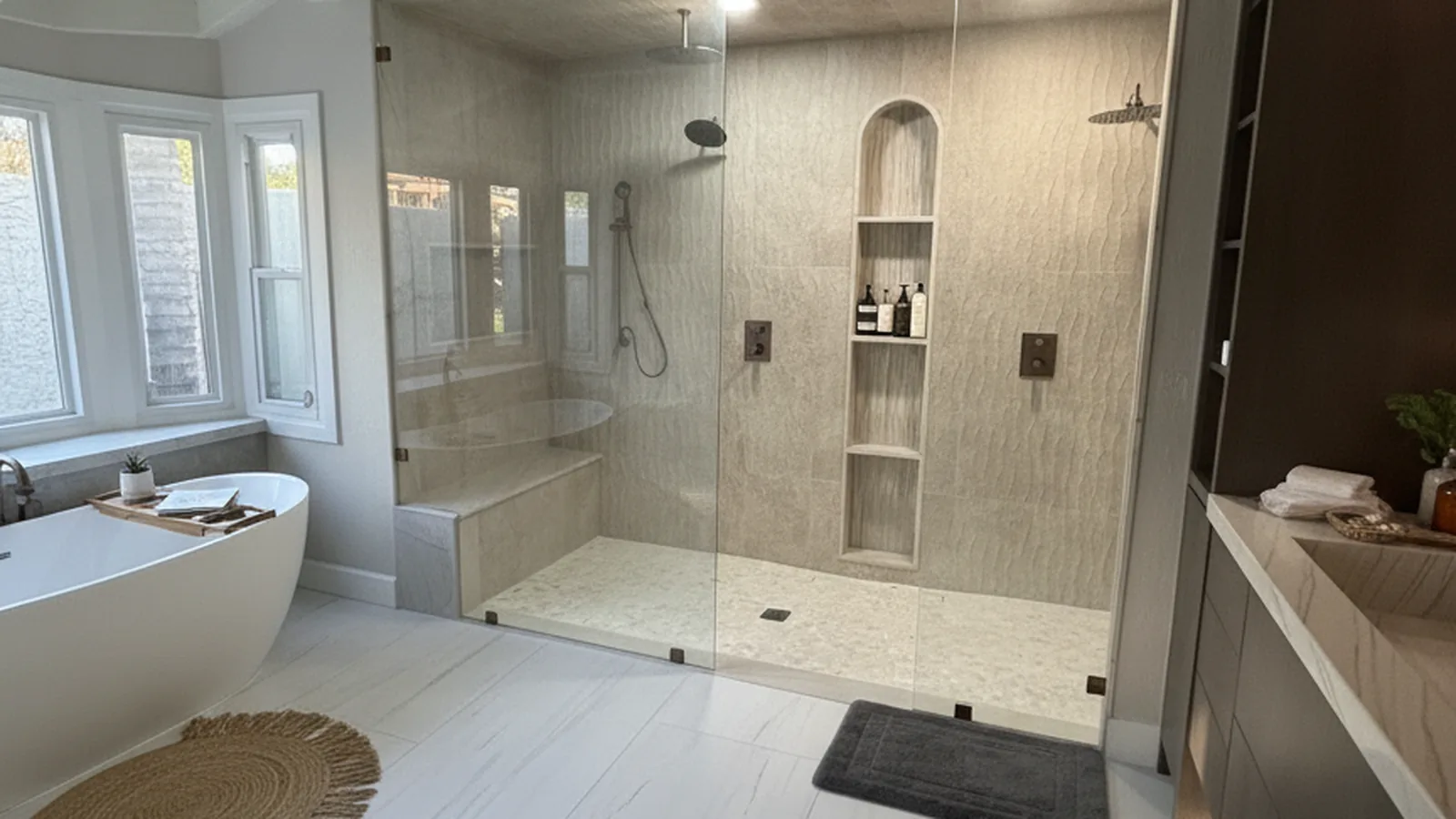
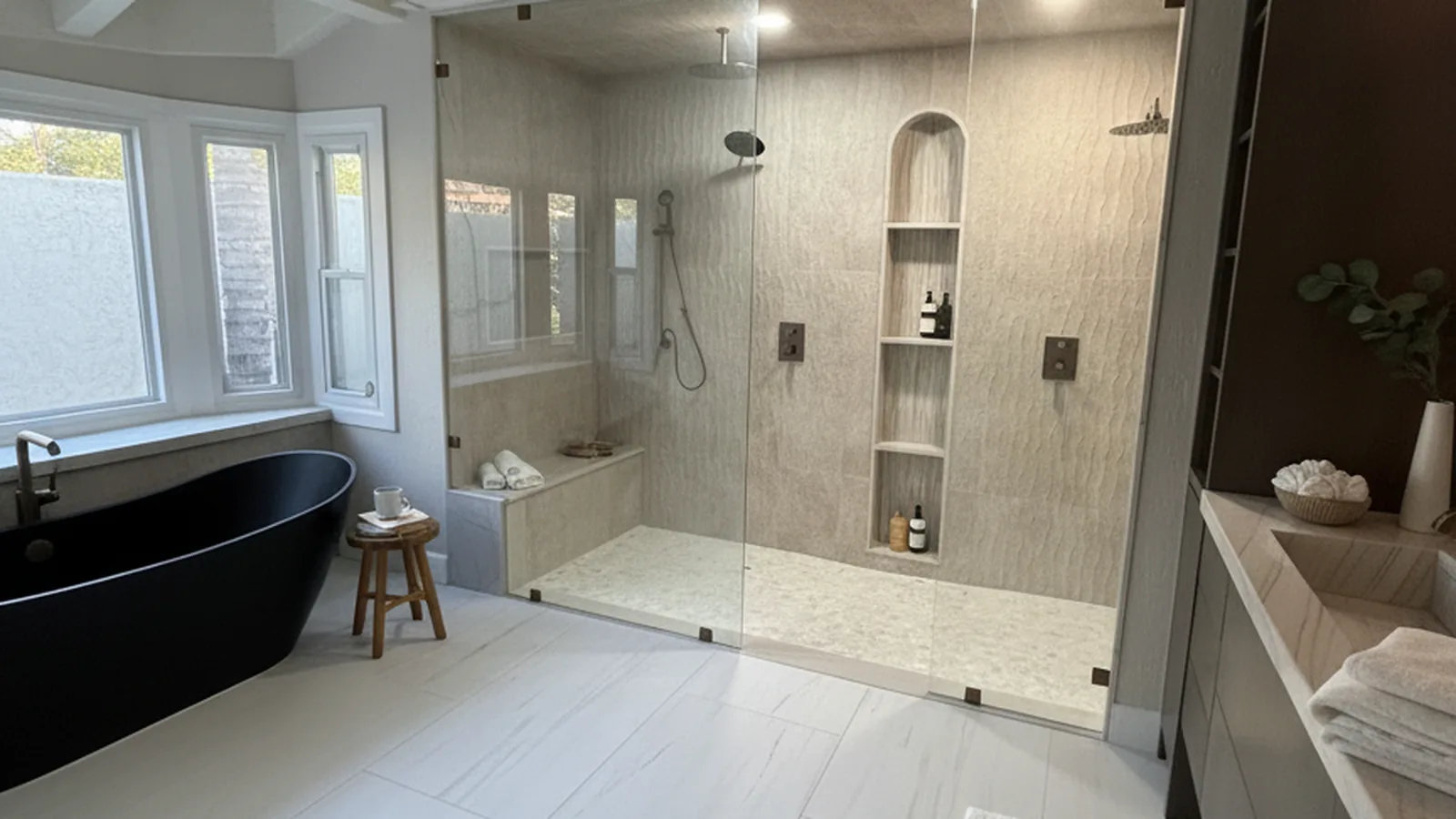
The single highest-impact change in most bathrooms is the shower, and in Arizona a curbless or low-curb walk-in shower with a frameless glass panel is the idea worth stealing. It looks bigger, cleans easier, and ages with you. If you rarely soak, converting a builder-grade tub into a large shower reclaims real space. Keep one bathtub somewhere in the house for resale, but it doesn’t have to be this room.
Two desert-smart details make a shower easier to live with. First, minimize grout by using large-format tile or a solid stone surround, because grout lines are where hard water and dust show first. Second, add a built-in niche so bottles aren’t cluttering the ledge. If you’re planning for the long term, a comfort-height bench and a well-placed grab bar (or blocking in the wall for one later) add accessibility without looking clinical.
Vanity, storage, and surface ideas
The vanity is where storage and style meet, so pick the configuration that fixes your morning bottleneck. A double vanity ends the two-people-one-sink standoff in a shared bath. A floating (wall-mounted) vanity makes a small room feel larger and leaves floor visible, which reads as more space. Drawers beat cabinet doors for actually finding things, so prioritize drawer banks over open shelving that collects dust.
For the countertop, quartz is the low-drama choice for Arizona bathrooms because it’s nonporous, needs no sealing, and resists the etching and hard-water dulling that show up on more delicate stone. Granite and quartzite are excellent natural options with more variation, while marble looks stunning but demands more care around minerals and cosmetics. If you want to compare surfaces before deciding, the materials overview lays out the trade-offs. A small footprint also means a bathroom vanity is a great candidate for a remnant piece of stone, which costs far less than a full slab.
Small bathroom ideas that don’t feel like compromises
In a small bathroom, the goal is buying visual space, and a few moves do that without knocking down walls. Use large-format tile on the floor and walls to reduce grout lines, which makes the room read as one continuous surface. Choose a floating vanity and a wall-hung or compact toilet to keep the floor visible. Swap a shower curtain for clear frameless glass so the eye travels the full length of the room.
Light and reflection do heavy lifting too. A large mirror, a recessed niche instead of protruding shelves, and lighter surface tones all expand the feel of a tight space. If budget is the real constraint, focus your dollars on the surfaces you touch and see most, and read our honest take on what a budget-friendly Phoenix bathroom remodel actually gets you before you spend.
The upgrades everyone forgets: lighting and ventilation
Ventilation and lighting are the cheapest ideas with the biggest quality-of-life return, and both get skipped constantly. A properly sized exhaust fan pulls out humidity that otherwise breeds mildew, and it should vent to the outside rather than into the attic. That matters even more in a monsoon climate, and the EPA’s guidance on indoor air quality explains why moving moist air out keeps a room healthy.
For lighting, layer it. Overhead handles the room, task lighting sharpens the mirror, and a dimmer softens evenings. Sconces or vertical fixtures beside the mirror light your face evenly, while a single ceiling light casts shadows. While you’re choosing fixtures, water-efficient models carrying the EPA WaterSense label cut water use noticeably, which matters on an Arizona water bill.
Rough costs: what each tier of idea runs
Bathroom remodel costs scale with how much you change, so here’s a realistic way to think about the tiers rather than a single number. Prices vary with size, material grade, and how much plumbing moves, so treat these as general market ranges, not quotes.
| Remodel tier | Typical scope | Rough market range | Timeline |
|---|---|---|---|
| Cosmetic refresh | Vanity, mirror, fixtures, paint, no plumbing moves | Low single-digit thousands | Days to 1 week |
| Mid-range remodel | New shower tile, toilet, surfaces, fixtures in place | Low-to-mid five figures | 2–4 weeks |
| Full / master remodel | Layout changes, moved plumbing, custom stone, tub-to-shower | Upper five figures and beyond | 4–8 weeks |
These ranges reflect general Phoenix-area work, and your real number depends on choices only a walkthrough can pin down. For the factors that push a project up or down and a realistic schedule, see our guide on how long a bathroom remodel takes. When you’re ready for an itemized figure for your specific room, a free in-home estimate is the honest way to get one.
Frequently asked questions
What is the most popular bathroom remodel idea right now?
The most popular bathroom remodel idea right now is a large curbless walk-in shower with frameless glass. It suits how most people actually bathe, makes a small room feel bigger, and cleans more easily. Keeping one tub elsewhere in the home protects resale for buyers who want one.
Which bathroom remodel ideas add the most resale value?
The ideas that add the most resale value are updated showers, quality surfaces like quartz, and good lighting. Buyers respond to a bathroom that reads clean, bright, and low-maintenance. Structural moves like relocating plumbing cost the most and return the least, so change layout only when daily function truly requires it.
What are the best low-maintenance materials for an Arizona bathroom?
The best low-maintenance materials for an Arizona bathroom are quartz vanity tops, porcelain or large-format tile for floors and shower walls, and hard-water-treated frameless glass. Arizona’s mineral-heavy water and fine dust punish porous or high-grout surfaces, so fewer seams and nonporous materials mean far less scrubbing over the years.
How can I make a small bathroom feel bigger without moving walls?
To make a small bathroom feel bigger without moving walls, cut grout lines, float the vanity, swap the curtain for clear glass, and add a big mirror with layered lighting. Use large-format tile so the floor and walls read as one surface, and keep the floor visible with a wall-mounted vanity. These visual tricks expand the sense of space at a fraction of the cost of enlarging the footprint.
Do I really need a new exhaust fan?
Yes, you almost always need a new exhaust fan, especially in older Valley homes. Monsoon-season humidity and daily showers build moisture that a weak or missing fan can’t clear, which invites mildew and damages finishes. A correctly sized fan vented to the outside is inexpensive and one of the highest-return upgrades in the whole project.
Should I hire a design-build contractor or separate designer and installer?
A design-build contractor is the simpler choice for most homeowners. It handles design, fabrication, and installation under one team, which reduces handoffs and scheduling gaps and gives you one point of accountability. Hiring a separate designer and installer can work if you already have a designer you trust, but it puts coordination on you.
How long does a bathroom remodel take?
A bathroom remodel takes anywhere from a few days to eight weeks or more, depending on scope. A cosmetic refresh can wrap in a few days to a week, a mid-range remodel usually takes two to four weeks, and a full remodel with layout changes runs four to eight weeks or more. Custom stone fabrication, permits, and moved plumbing are the usual factors that extend a timeline.
How do I get an accurate price for my specific bathroom?
To get an accurate price for your specific bathroom, book a free in-home estimate. A designer can measure the space, see the existing plumbing, and price your actual material choices. Online calculators and ranges are only starting points. An itemized written estimate after a walkthrough is the only figure that reflects your room, your finishes, and your home’s condition.