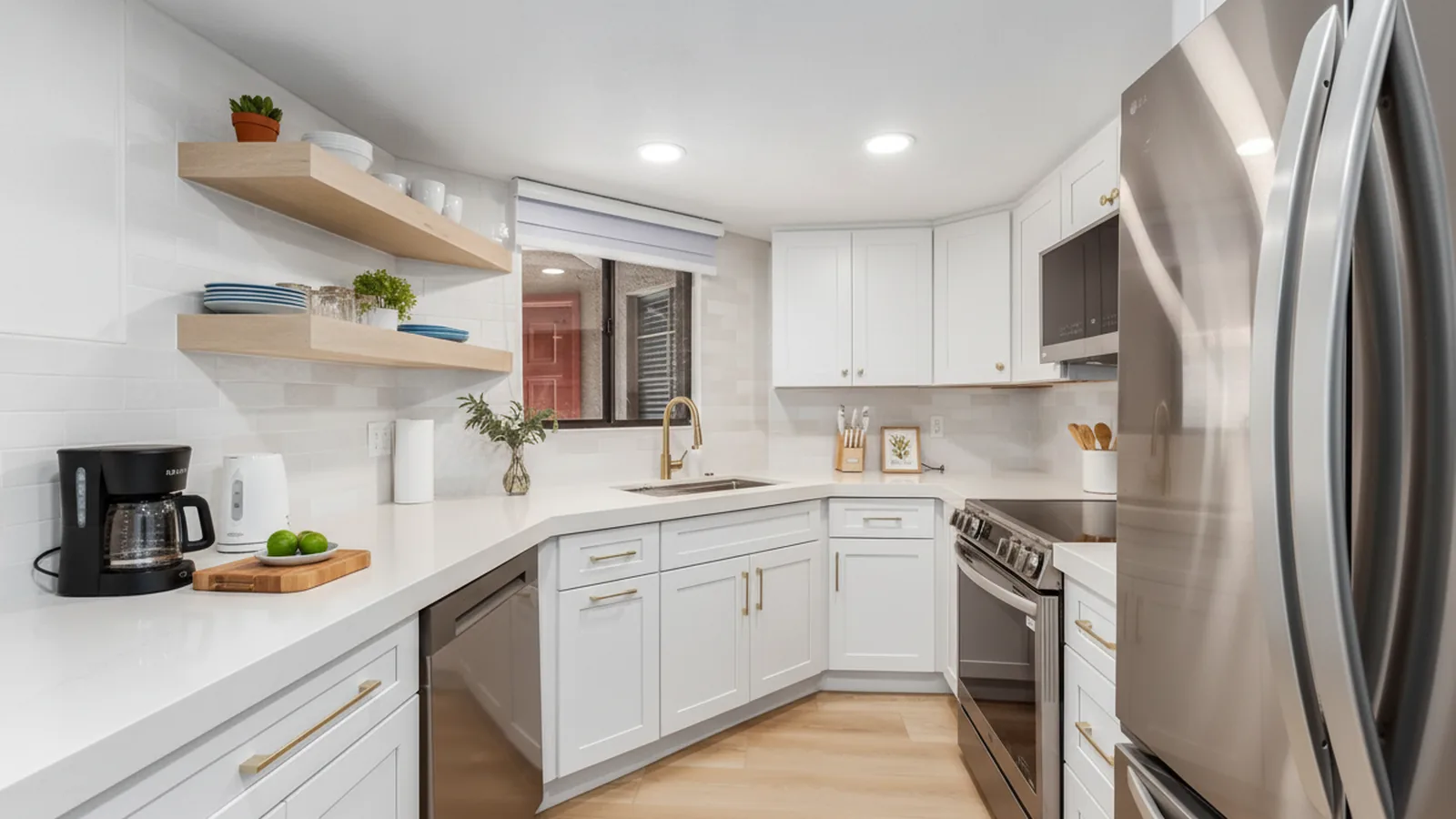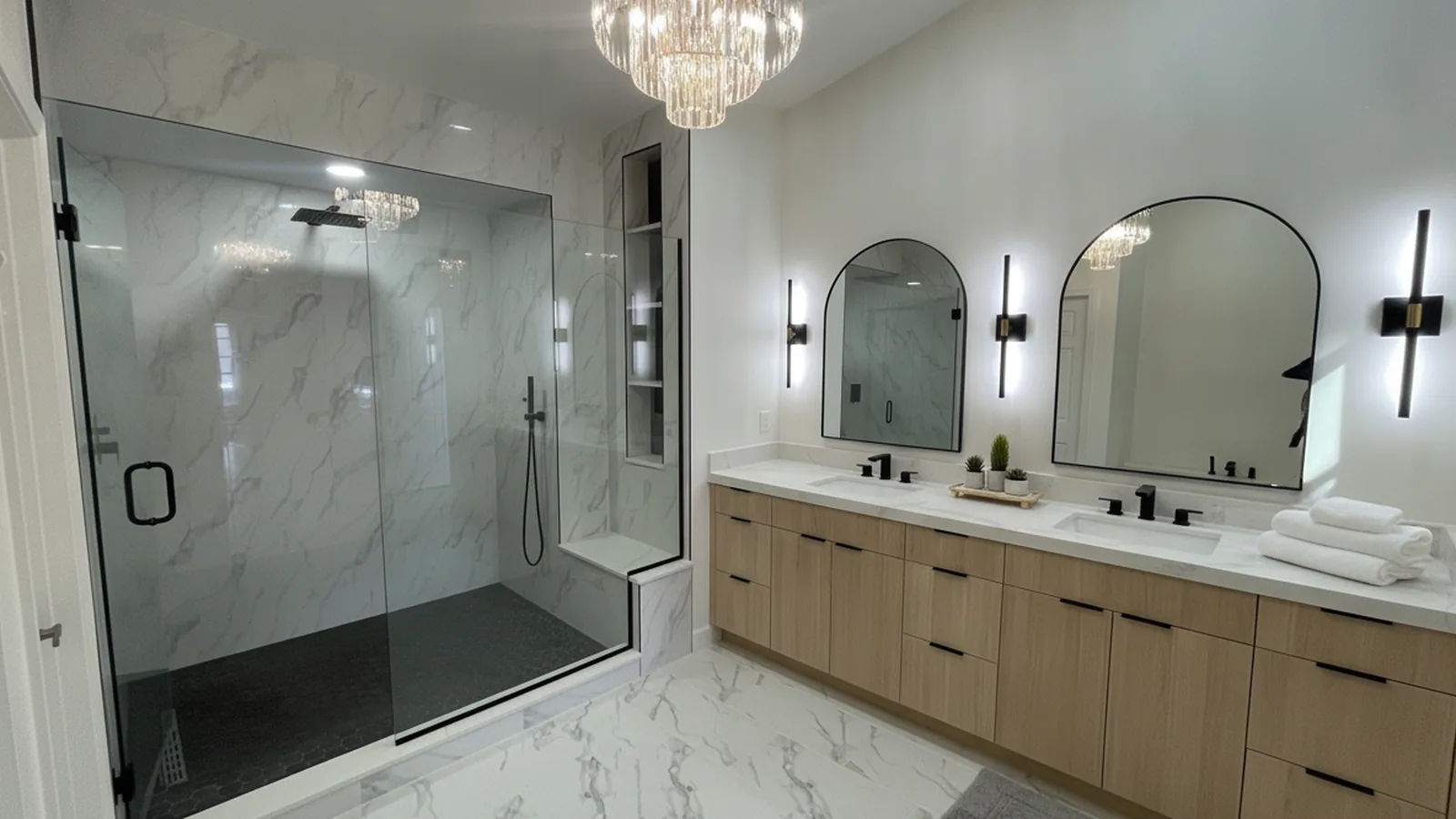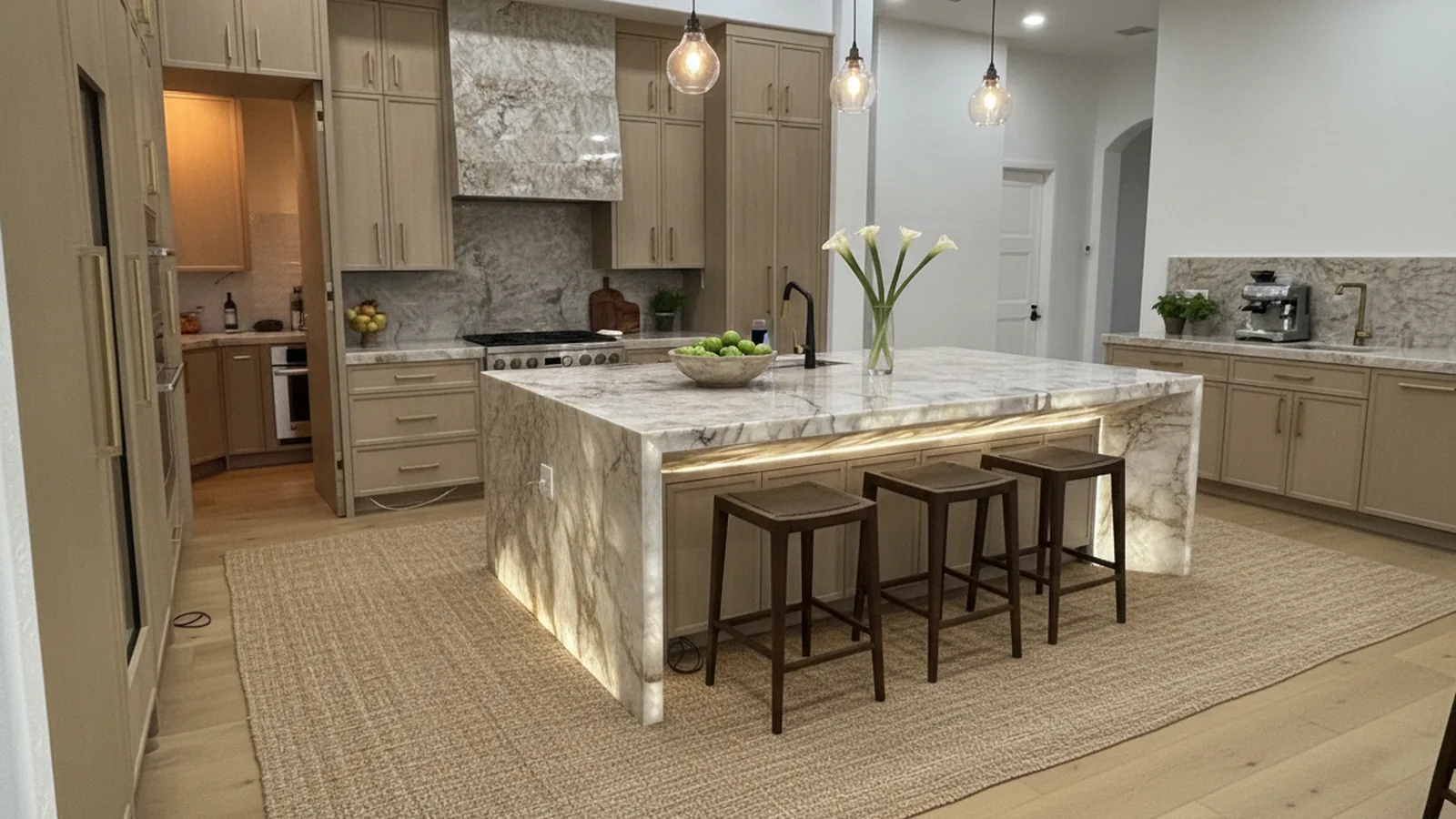
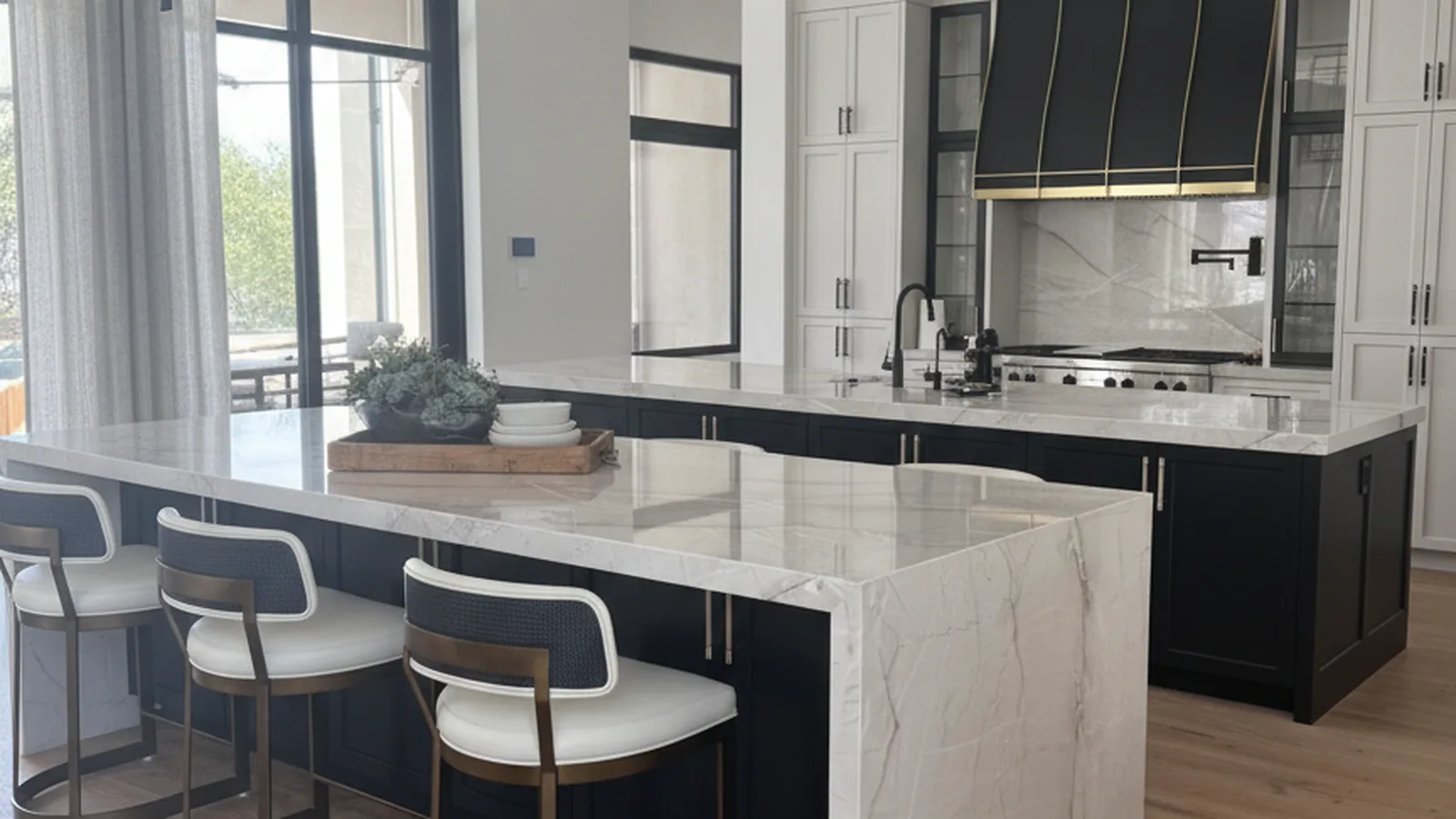
Most people searching for quartz “requirements” aren’t asking about the stone itself. They’re asking what has to be true about their kitchen, their cabinets, and their fabricator before a slab can go in and stay flat, sealed, and safe for years. That’s a smart question to ask early, because a few of these things are hard to fix once the old counters are already gone.
Quartz is engineered stone: ground natural quartz bound with resin and pigment. That construction is why it behaves differently from granite or marble, and why its install requirements are specific. Below is the honest checklist, what your space needs, what a good fabricator needs, and the Arizona details that actually matter here.
Quick answer: The core requirements for quartz countertops in Phoenix are structurally sound, level base cabinets, adequate support for overhangs and seams, an accurate template measured after cabinets are set, and a licensed fabricator who follows safe silica-cutting practices. Quartz needs no sealing and no permit for a simple like-for-like swap, but overhangs past roughly 10 inches usually need brackets or corbels.
Key takeaways
- Your cabinets must be level and solid before templating. Quartz will not hide a wavy or sagging base.
- Standard slab thickness is 2 or 3 cm, and the thinner option often needs a plywood substrate for support.
- Overhangs beyond about 10 inches typically require hidden brackets or corbels, not the stone alone.
- Vet the fabricator’s silica-dust controls and licensing, not the price alone. It affects quality and worker safety.
- A basic countertop swap in the Valley rarely needs a city permit, but check your HOA if exterior work is involved.
What are quartz countertop requirements?
Requirements here means the physical and process conditions that must be met for a quartz install to succeed. They fall into three buckets: what your existing space needs to support the stone, what the fabrication and templating step demands, and the Arizona-specific factors that shape the right choice. None of it is exotic, but skipping a step shows up later as an uneven seam, a cracked overhang, or a counter that rocks.
Unlike natural stone, quartz is nonporous, so one common “requirement” people expect, periodic sealing, simply doesn’t apply. The Natural Stone Institute draws the line clearly between natural stone and engineered surfaces, and quartz sits on the engineered side. That changes maintenance, but it doesn’t change the structural prep your kitchen needs.
The prep your kitchen needs before templating
The single most important requirement is level, well-anchored cabinets. A template is only as accurate as the surface it’s measured on, so cabinets should be installed, shimmed, and secured before a fabricator ever comes out to measure. If you’re mid-remodel, that means the base cabinets go in first, then templating, then fabrication.
From there, the requirements depend on your layout:
- Thickness and substrate. Quartz commonly comes in 2 cm (about ¾ inch) and 3 cm (about 1¼ inch) slabs. Three-centimeter is the default for kitchens because it spans cabinets on its own. Two-centimeter is lighter and cheaper but usually wants a plywood underlayment for rigidity.
- Overhang support. A standard counter overhang is fine unsupported. Once you push past roughly 10 to 12 inches for a seated bar or peninsula, you need steel brackets, corbels, or a support panel so the stone doesn’t crack under weight.
- Seam planning. Slabs have finite size, so long runs and L-shapes need seams. A good fabricator places them where they’re least visible and least stressed, often near a sink or a corner, and tells you where before cutting.
- Sink and cooktop cutouts. An undermount sink needs a support system underneath, and cutouts for sinks and cooktops are where weak stone fails. This is fabrication work, not a countertop you drop in yourself.
Where AZ Granite & Remodeling fits
If you’d rather not coordinate a separate measurer, cutter, and installer, a design-build shop that fabricates in house covers all of these requirements under one roof. That’s the lane AZ Granite & Remodeling works in. It’s a Phoenix-based remodeler and in-house stone fabricator that has served the Valley for more than 20 years, cutting slabs in its own shop at 1923 W. Cheryl Dr rather than jobbing the fabrication out.
The practical benefit for a homeowner is accountability. When the same team templates, fabricates, and installs, seam placement, overhang support, and cutout precision are all decided by people who will stand behind the finished counter. You work one-on-one with a designer, the cut happens locally, and the crew handles the install. They also offer a free, no-pressure in-home estimate, which for quartz specifically is the moment to confirm cabinet condition, overhang plans, and slab yardage before you commit.
AZ Granite serves Phoenix and the surrounding Valley, including North Scottsdale, Desert Ridge, Peoria, Sun City, and Anthem. You can see the surface options on the materials overview or dig into the specific quartz countertop page, and start a project through the contact page. They’re one option among many in the Valley. The point is that in-house fabrication is a legitimate way to keep these requirements from falling through the cracks between vendors.
How to vet a fabricator (a real requirement, not a nicety)
Choosing who cuts and installs is as much a requirement as the cabinets. Cutting engineered quartz releases respirable crystalline silica, a serious lung hazard that OSHA regulates with specific dust-control rules. A shop that wet-cuts, ventilates, and protects its crew is signaling the same discipline it brings to your seams and cutouts. Ask how they control dust. A vague answer is a real flag.
Beyond safety, confirm a few basics: they carry the right Arizona contractor licensing and insurance, they’ll show you where seams will land before cutting, and they’ll let you see and approve your actual slab, since quartz patterns vary batch to batch. If you’re weighing engineered stone against the natural option, the quartz vs granite comparison for Arizona walks through how the two differ on exactly these points.
What drives cost in Phoenix
Quartz pricing in the Valley moves with a handful of factors, and no honest guide gives you a single per-foot number without seeing the job. Cost is shaped by total square footage, the thickness and grade of the slab you pick, edge profile (a simple eased edge costs less than a mitered or bullnose), the number of seams and cutouts, and whether your project needs overhang support or substrate. Removing and disposing of old counters and any plumbing reconnection add to it too.
Two projects with the same square footage can land far apart once edges, waterfall panels, and support hardware enter the picture. That’s why a measured in-home estimate beats a phone quote every time.
Requirements at a glance: quartz vs. granite vs. quartzite
Different surfaces carry different prep and upkeep requirements. Here’s how the three most common Valley choices compare on the things that actually affect your install and your desert home.
| Requirement | Quartz (engineered) | Granite (natural) | Quartzite (natural) |
|---|---|---|---|
| Sealing | None needed (nonporous) | Periodic sealing | Periodic sealing |
| Heat tolerance | Moderate; use trivets | High | High |
| UV / outdoor use | Not for direct sun | Better outdoors | Better outdoors |
| Cabinet prep | Level, solid base | Level, solid base | Level, solid base |
| Overhang support | Brackets past ~10 in | Similar | Similar |
| Best-fit pattern | Consistent, uniform | Bold, one-of-a-kind | Marble-like veining |
The heat and UV rows are the Arizona ones to weigh. Quartz resin can discolor or soften under direct, sustained sun and high heat, which is why it’s a poor pick for an uncovered outdoor kitchen in Phoenix but excellent indoors. Granite and quartzite handle sun and hot pans better outside. Inside, quartz’s zero-maintenance surface is hard to beat against our hard water, which leaves mineral spots that etch some natural stones over time.
Arizona-specific things to plan for
A few local requirements don’t show up on a national spec sheet. If your project touches anything visible from the street, or a shared wall in an HOA community, check whether your HOA needs architectural approval before work starts. Most interior countertop swaps don’t, but exterior or structural changes can.
On permitting, a straightforward like-for-like countertop replacement generally doesn’t require a City of Phoenix permit, since you’re not moving plumbing, electrical, or walls. The moment your project relocates a sink, adds a gas line for a cooktop, or changes the layout, permitting can come into play. When in doubt, your contractor should know the local threshold, and a good one will tell you before you’re surprised.
Frequently asked questions
Do quartz countertops need to be sealed in Arizona?
No. Quartz is nonporous engineered stone, so it never needs sealing, unlike granite or marble. That’s one of its biggest advantages against Phoenix hard water, since there’s no porous surface for minerals to stain. You maintain it with soap and water.
What thickness of quartz do I need for a kitchen?
Three-centimeter (about 1¼ inch) is the standard for kitchen counters because it spans cabinets without extra support. Two-centimeter slabs are lighter and less expensive but typically require a plywood substrate underneath for rigidity, especially over dishwashers and long spans.
How big can a quartz overhang be without support?
As a rule of thumb, unsupported overhangs are safe up to roughly 10 to 12 inches. Past that, for a seated breakfast bar or peninsula, you need hidden steel brackets, corbels, or a support panel so the stone doesn’t crack under someone leaning on it.
Do I need a permit to replace countertops in Phoenix?
Usually not for a like-for-like swap that doesn’t move plumbing, gas, or electrical. Permitting can apply once you relocate a sink, add a cooktop gas line, or change the layout. Your contractor should confirm the local threshold before work begins.
Can I put quartz countertops outside in the Arizona sun?
It’s not recommended for uncovered spots. Sustained direct sun and heat can discolor or soften quartz resin over time. For an outdoor kitchen exposed to Phoenix sun, natural granite or quartzite holds up far better. Quartz shines indoors and in fully shaded outdoor areas.
Do my cabinets have to be new to install quartz?
No, but they must be level, structurally sound, and firmly anchored. Existing cabinets are fine if they can carry the weight without sagging. A fabricator templates on the actual cabinets, so any wobble or slope has to be corrected before measuring, not after.
How is the measuring done, and when?
A fabricator creates a template after the base cabinets are permanently set, using a digital measuring tool or physical templating. This captures exact dimensions, cutouts, and seam locations. Because quartz is cut to that template, accuracy at this step is what makes the finished counter fit tight.
Does the fabricator’s dust control really matter to me?
Yes. Cutting quartz produces hazardous silica dust that OSHA regulates, and a shop with proper wet-cutting and ventilation tends to run a tighter, more professional operation overall. Asking about dust control is a quick, revealing way to gauge a fabricator’s standards.
Ready to spec your project?
The quartz itself is the easy part. The requirements around it, level cabinets, the right support, a clean template, and a fabricator who cuts safely and stands behind the seams, are what separate a counter you love from one you fight with. If you want those checked in person before you commit, AZ Granite & Remodeling offers a free in-home estimate across the Valley. Start at the contact page or call (602) 759-9000.