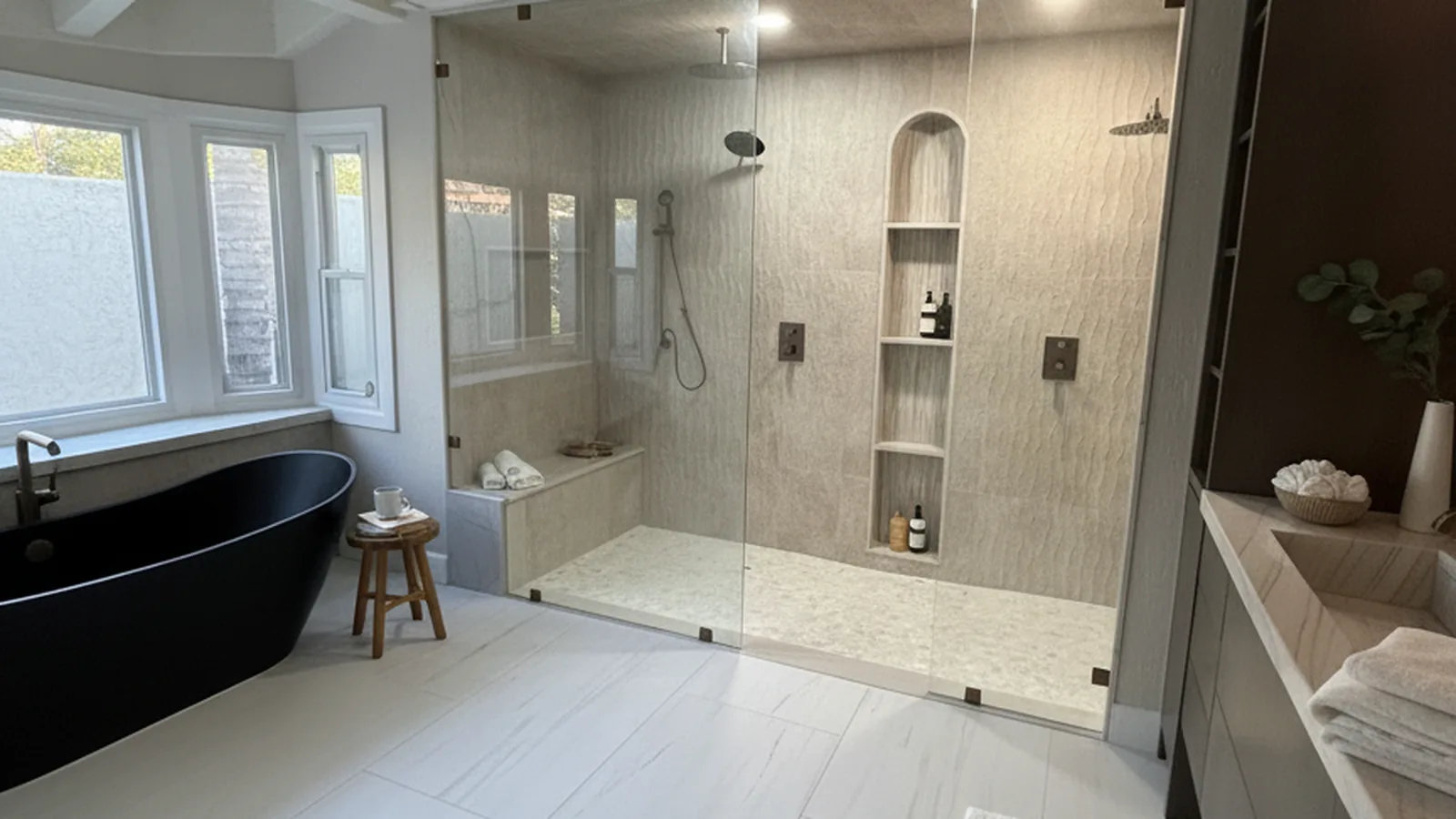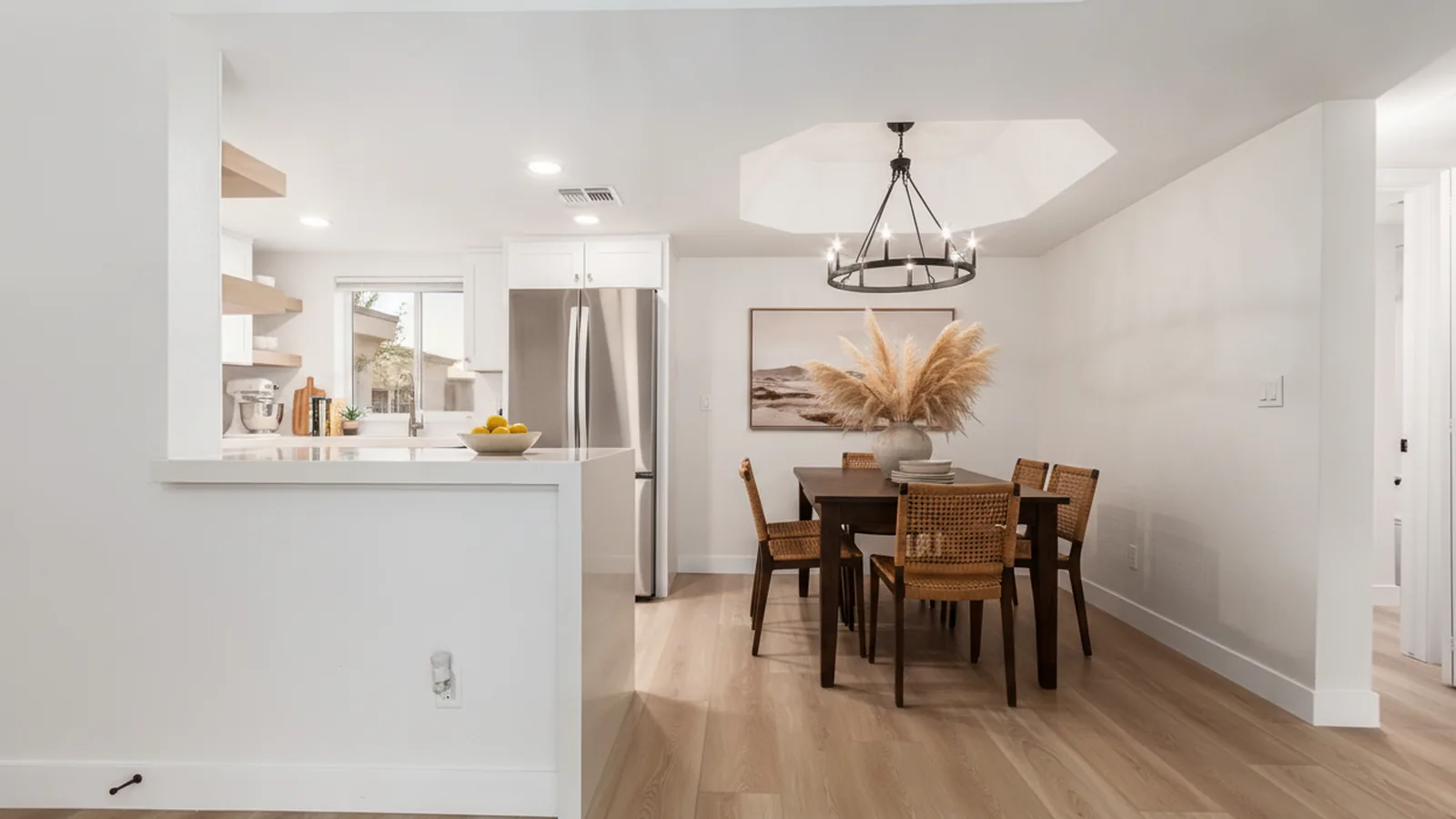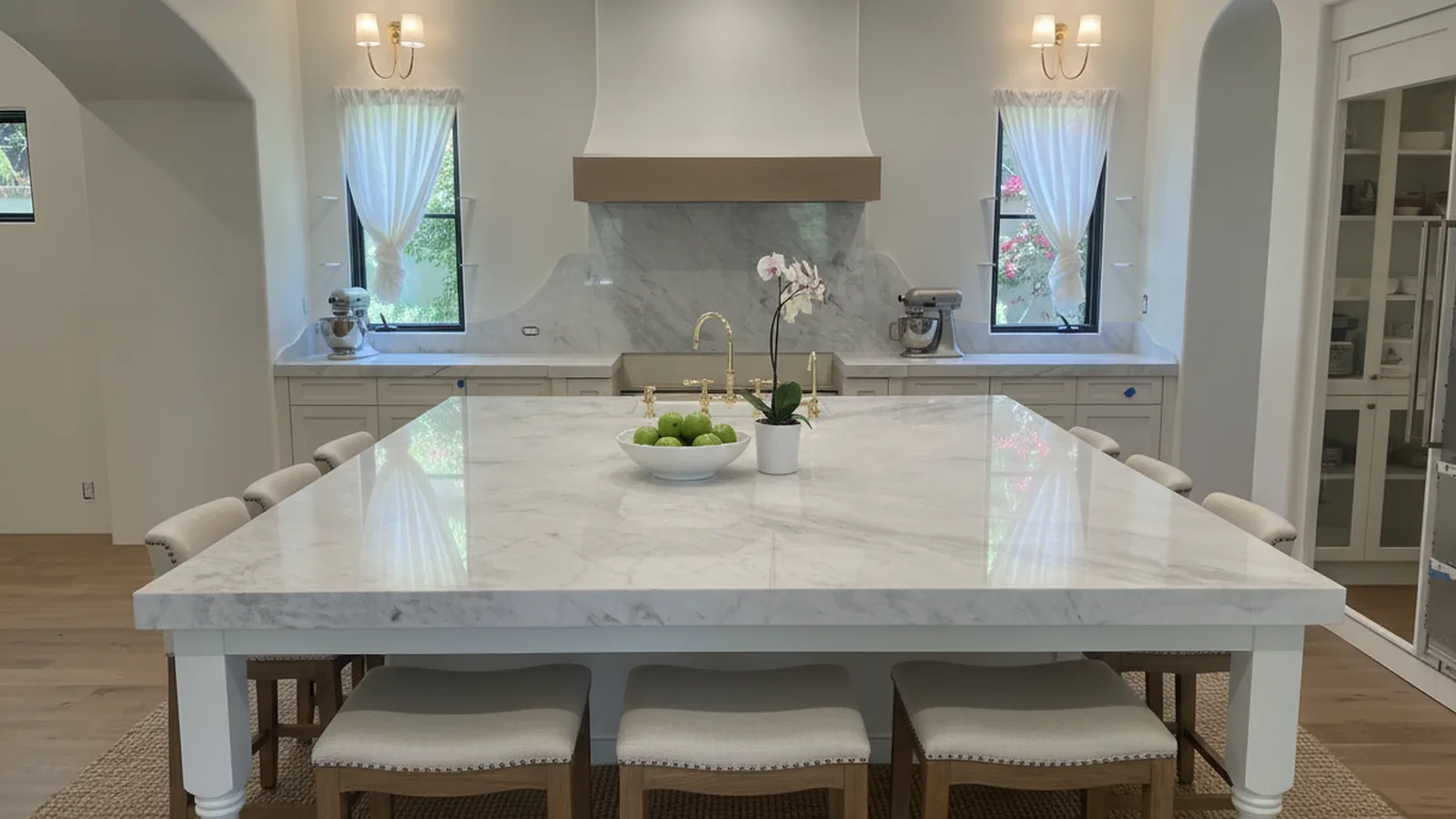
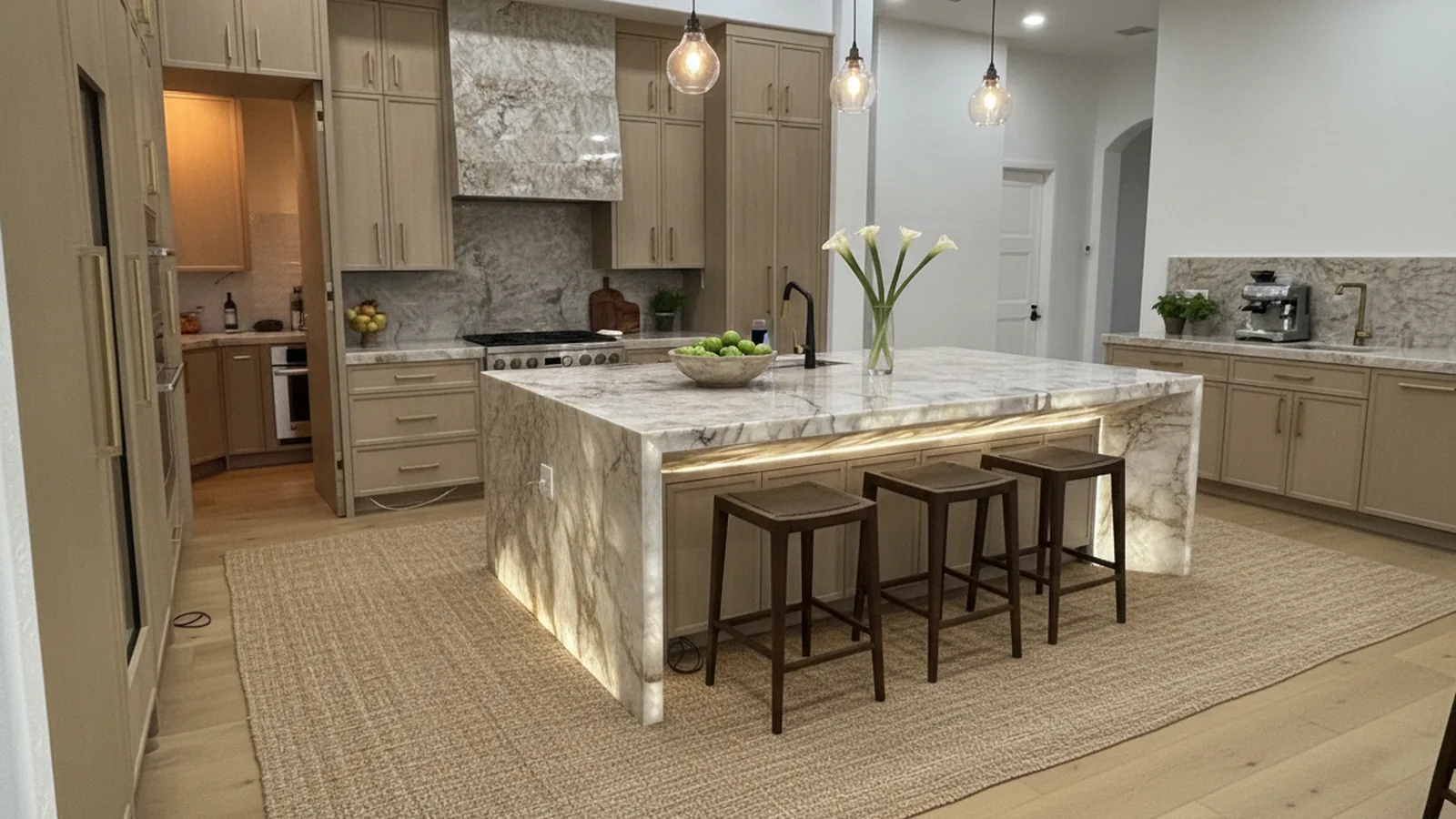
If you’ve typed “quartzite taj mahal” into a search bar, you’ve probably seen the photo: a soft cream slab with warm gold and gray veining, glowing under a kitchen window. It’s a lovely stone. It’s also one of the more loosely labeled stones in the countertop trade, so the sample that wins you over isn’t always the slab that shows up on install day.
This guide covers what the stone really is, how it stacks up against marble, dolomite, quartz, and granite, how to spot a mislabeled slab, and what drives the price in Phoenix, Arizona and beyond, so you’ll know what to ask whoever you hire.
Quick answer: Taj Mahal quartzite is a natural cream stone with gold and gray veining that looks like soft marble but wears much closer to granite. It suits most Arizona kitchens, costs a premium, and is worth buying only after you’ve confirmed the exact slab is true quartzite.
Key takeaways
- Every slab is different, so the exact slab you approve matters more than the name on the sample.
- It is natural stone, which means periodic sealing and light care, but far less fuss than marble.
- Hard stone is slower to cut, so fabrication details (seams, edges, cutouts) move the price as much as the slab does.
- If you want zero sealing or a perfectly uniform pattern, engineered quartz is the more honest match.
What is Taj Mahal quartzite?
Taj Mahal quartzite is a natural stone, mostly quarried in Brazil, with a creamy white to soft beige base and fine veining in gold, tan, and gray. Quartzite forms when sandstone is fused by heat and pressure into a mesh of interlocking quartz grains, which is why true quartzite is dense, hard, and resistant to acids. “Taj Mahal” is a trade name that borrows the monument’s glow. The monument itself is white marble.
The word to watch is quartzite, not quartz. Engineered quartz is a factory-made blend of crushed quartz and resin. Quartzite is quarried, sliced into slabs, and polished. Listings swap the two names constantly, and they behave differently: quartzite is natural stone that wants sealing, while engineered quartz does not. For the wider family of natural quartzites beyond this one stone, see our quartzite material page.
Is Taj Mahal quartzite a good fit for Arizona homes?
Yes, it suits most Arizona kitchens, with two caveats around heat and light. Natural stone tolerates hot cookware better than resin-based surfaces, so a pan set down briefly is rarely a problem. Even so, sudden temperature swings can crack any stone, so a trivet under a pot straight off the burner is a cheap habit. Our guide to countertops for Arizona heat covers how each material handles it.
The second caveat is light. Cream stones read warmer in strong desert sun, and the veining can look golden near a west-facing window and grayer under evening LEDs. Judge the sample in your own kitchen at morning, afternoon, and night. A showroom’s lighting won’t match a home in Anthem, Desert Ridge, or Peoria with a wall of glass.
How does AZ Granite & Remodeling approach a Taj Mahal quartzite project?
AZ Granite & Remodeling is a design-build remodeling contractor and in-house stone fabricator, so one Phoenix team handles the design, the stone work, and the installation. We’ve served Arizona homeowners for more than 20 years, hold a 5.0-star rating, and work from our shop at 1923 W. Cheryl Dr, Suite 2, Phoenix, AZ 85021. Our approach is design-build “form and function”: a surface should look right and also work for how you actually cook and live.
In-house fabrication matters more with quartzite than with softer stones. It’s hard on saw blades and unforgiving of a bad cut, and a stone at this price leaves little room for a miscommunication between a designer in one place and a fabricator in another. When layout and cutting happen under one roof, questions about seams, vein direction, and sink cutouts stay in one conversation.
You work one-on-one with a designer, and the estimate is a free, no-pressure in-home visit, so we can see your cabinets, your flooring, and the light in the room where the stone will live. Because we also handle kitchen and bathroom remodeling and flooring, the countertop can be planned alongside the cabinets and backsplash instead of after them. Quartzite is one of the materials we work in, next to granite, marble, quartz, dolomite, porcelain, onyx, and natural quartz. If Taj Mahal turns out to be the wrong stone for your budget or habits, we can say so and show you alternatives from that list.
Questions worth settling at any estimate, ours included:
- Which Taj Mahal slabs can actually be sourced, and can you see the specific slab before it is cut?
- Where will seams fall, and will the veining carry across them?
- What edge profile and finish are planned, and what does each add to the price?
- How will the sink and cooktop cutouts be reinforced?
We work across the Valley, including North Scottsdale, Desert Ridge, Peoria, Sun City, and Anthem, plus the surrounding East and West Valley. You can request a visit through our contact page.
How does Taj Mahal quartzite compare with marble, dolomite, quartz, and granite?
It sits between marble and granite: close to marble’s soft, veined look with far better resistance to etching and scratching. The table shows where the neighbors differ.
| Stone | Look | Etching and scratching | Upkeep | Price position |
|---|---|---|---|---|
| Taj Mahal quartzite | Cream base, gold and gray veining, soft movement | Resists both when it is true quartzite | Seal periodically, wipe spills | Premium |
| Marble (Carrara, Calacatta) | Crisp white or gray veining, classic | Etches readily, scratches more easily | Highest: seal, avoid acids, expect a patina | Mid to premium |
| Dolomite (“Super White” types) | White to cool gray, often similar to quartzite | Harder than marble but can still dull under acids; varies by slab | Seal, and test the specific slab | Mid to premium |
| Engineered quartz (cream and gold patterns) | Uniform, repeatable pattern | Highly resistant to both | No sealing; hot pans and long outdoor UV exposure are the weak points | Mid to premium |
| Cream or gold granite | Speckled to lightly veined, less flowing | Hard; resists scratching | Seal periodically | Budget to mid |
The row that surprises people is dolomite. Dolomite stones are frequently marketed as quartzite and look nearly identical on a sample, but they are softer and can dull under acidic spills, which is why the next section matters.
How can you tell real quartzite from a look-alike?
Ask for the stone’s name and quarry origin in writing, then test a sample before you commit. The trade name alone is no guarantee: cream stones with similar looks are sometimes sold under the same or similar names, and a few are softer dolomite or marble. Genuine quartzite rates around 7 on the Mohs hardness scale and marble around 3 to 4, which is why simple tests separate them.
- Read the slab tag. It should name the stone, its origin, and the slab or lot number. A vague “white quartzite” with no origin deserves follow-up questions.
- Try a scratch test. A steel knife blade or key pressed firmly should not scratch true quartzite, but it will mark marble and soft dolomite. A metal streak that wipes off is not a scratch.
- Try an acid test. A drop of lemon juice or vinegar left for a few minutes leaves a dull spot on marble and some dolomite. Quartzite should look unchanged.
- Watch a water drop. If it darkens the stone within minutes, the slab absorbs readily and needs a good sealer before it goes into service.
- Ask for the stone’s name on your written quote, so the slab you approve is the slab you get.
Run these on an offcut or sample the seller provides, never on a slab you haven’t bought. A fabricator confident in the stone won’t mind the request.
What does Taj Mahal quartzite cost?
Plan on premium pricing: natural quartzite generally costs more than most granite and many engineered quartz lines, and Taj Mahal sits toward the upper end of that range depending on slab grade. That is a general market comparison, not a quote for any particular home. Several factors decide where a real project lands:
- Slab grade. Slabs with cleaner, more consistent color and fewer fissures usually cost more than heavily veined or fissured ones.
- Fabrication difficulty. Hard stone dulls tooling and takes longer to cut and polish. Mitered or waterfall edges, islands that need seams, and farmhouse sink cutouts all add labor.
- Slab count and waste. Matching veining across a large island can mean buying more slab than your square footage suggests.
- Edge and finish. A plain eased edge costs less than an ogee or mitered edge, and specialty finishes can add processing time.
- The extras. Sink and faucet swaps, plumbing disconnects, a slab backsplash, and removing the old counters all sit outside the stone price.
Because imported slab pricing moves with supply, the only number worth trusting is one tied to a specific slab and a measured layout.
How do you choose the right Taj Mahal slab?
Choose from the actual slab, not a catalog photo, because quartzite varies a lot from one slab to the next. Four things to compare:
Undertone
Some slabs run creamier and more golden, others whiter or grayer. Hold your cabinet paint and flooring samples right against the slab.
Veining and fissures
Veining is the movement you’re paying for. Fissures are natural fracture lines that can look like veins but behave like weak spots, so ask where they’ll fall relative to seams, cutouts, and overhangs.
Finish
Polished is the glossiest and brings out the veining. Honed gives a quieter matte look, and leathered adds texture and tends to hide fingerprints. If you can, view the same stone finished more than one way.
Matching across slabs
For one large island, slabs cut from the same block match far better than slabs pulled from different lots, so ask how many slabs the job needs and where they come from.
How do you care for Taj Mahal quartzite?
Care is light but not zero: seal it, wipe spills promptly, and clean with a pH-neutral stone cleaner. Sealing frequency depends on the slab and the sealer, so ask your fabricator what was applied and when to reapply, rather than trusting a one-size schedule. The Natural Stone Institute is the industry body for stone fabricators and a good place to find care and installation standards.
Valley tap water is hard, so the usual annoyance is mineral spotting: white rings around the faucet and rings from water glasses. Wipe dry after use and a soft cloth handles most of it. Skip vinegar, citrus cleaners, and abrasive powders, even though quartzite resists etching better than marble, because they wear down the sealer and some slabs react.
When is another stone the better choice?
Choose something else if you want no sealing, a perfectly uniform pattern, or the tightest budget. Taj Mahal rewards owners who like natural variation and don’t mind a little upkeep. If that isn’t you, three alternatives are worth a look:
- Engineered quartz for a repeatable pattern and no sealing. Our quartz vs granite comparison for Arizona homes lays out the trade-offs.
- Cream or gold granite for a lower price and a very hard surface, with less flowing veining.
- Porcelain slabs for heat and UV resistance with a thin, low-maintenance surface.
Frequently asked questions
Should the backsplash be Taj Mahal quartzite too?
Often yes, but it’s optional. A full-height slab backsplash makes the stone feel intentional and avoids matching a separate tile to its undertone, while a simple tile backsplash saves slab and money. If the counter has strong veining, a quieter tile usually looks better than a second busy surface.
Is 2cm or 3cm quartzite better?
3cm is the usual choice for kitchen counters because it needs no added support under the edge. 2cm slabs can work for vanities, wall cladding, and some backsplashes, and they weigh less, but kitchens typically need laminated edges or reinforcement. Ask which thicknesses the slab you like is actually available in.
Can quartzite crack or chip?
Yes, any natural stone can, though quartzite is tough against everyday wear. Cracks usually start at natural fissures, narrow spots around sink and cooktop cutouts, or unsupported overhangs. A fabricator should point out fissures before cutting and reinforce thin areas. Edge chips from a hard knock can often be repaired.
Can I use Taj Mahal quartzite outdoors?
Generally yes for shaded or covered outdoor kitchens, because natural stone doesn’t rely on resin binders that can yellow in sun. Direct Arizona summer sun still heats any stone surface a great deal, so shade helps comfort and sealing helps with stains. Ask the fabricator whether the specific slab suits exterior use.
What cabinet colors go with Taj Mahal quartzite?
White, soft greige, and warm off-white cabinets pair naturally with the cream base, while navy, deep green, and walnut tones give contrast. The undertone decides it, so hold a cabinet door sample directly against the slab, because a cool white can make a warm cream look yellow.
Can I use Taj Mahal quartzite for a bathroom vanity?
Yes, and a vanity is a smart place to try it, since a vanity top uses far less stone than a kitchen. Sealing matters more near water and toiletries. For shower walls, the stone also needs proper waterproofing behind it, so plan that with your designer.
How long does a quartzite countertop project take?
It depends on slab availability, the size of the layout, and fabrication complexity, so get a schedule in writing instead of trusting a generic number. Imported stone can take longer to source than stock materials. Ask for the template, fabrication, and install dates at the estimate.
Ready to see Taj Mahal quartzite in your own kitchen?
Taj Mahal quartzite is worth the premium when you want a soft, marble-like look that survives daily cooking, as long as the slab is verified and the fabrication is planned well. To compare it against alternatives in your own light, call AZ Granite & Remodeling at (602) 759-9000 or email veny@azgranite.us to set up a visit.