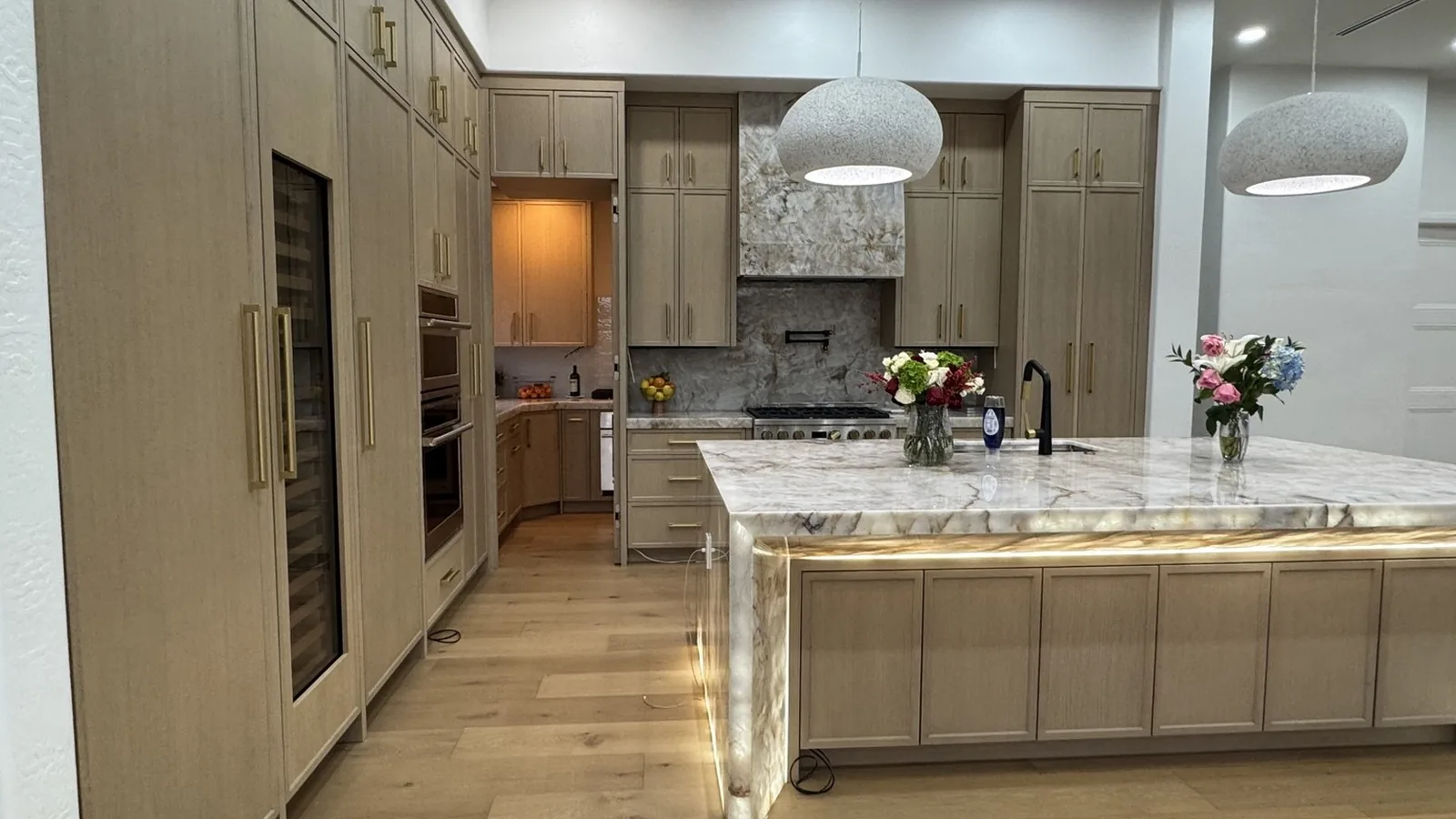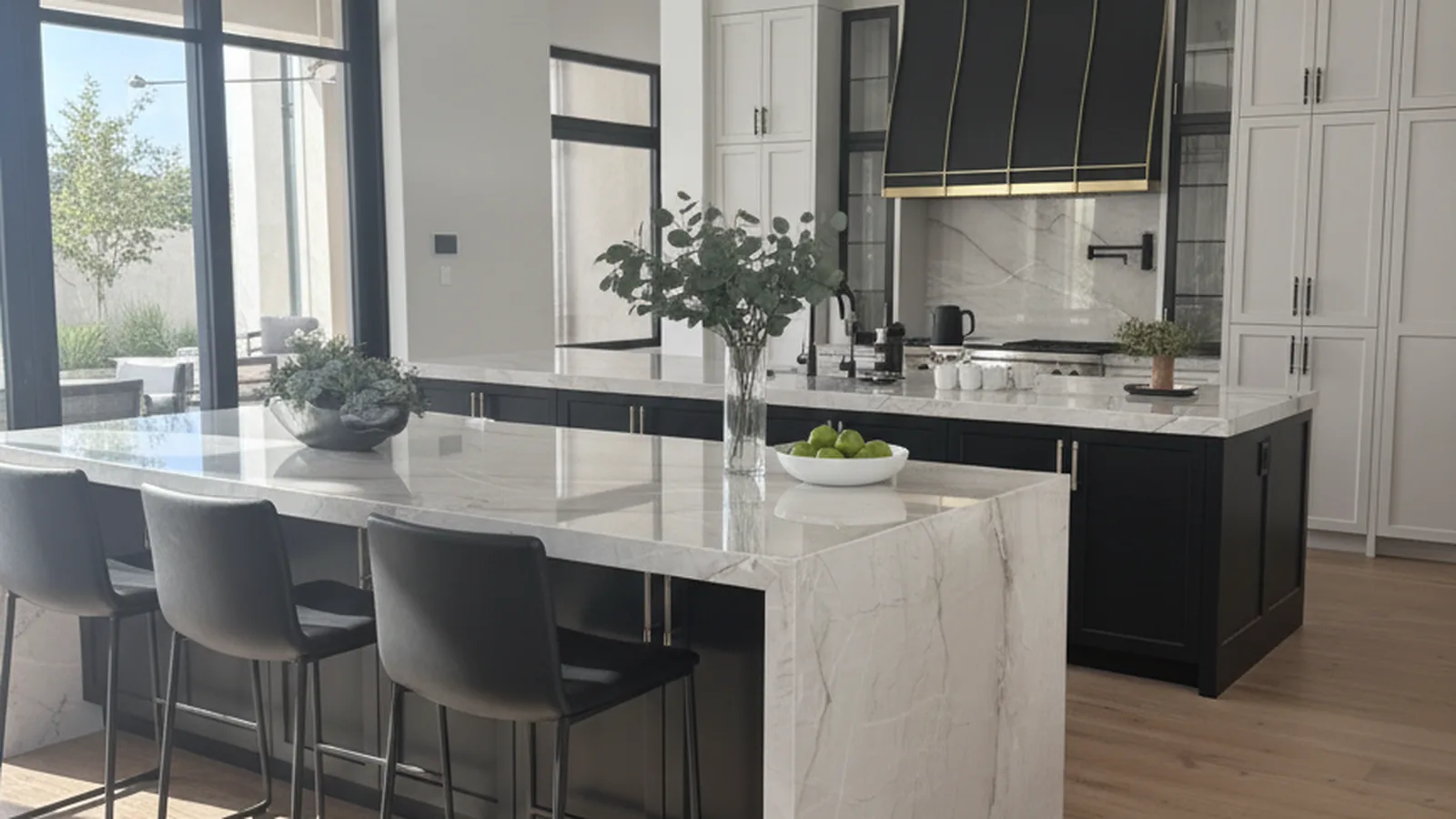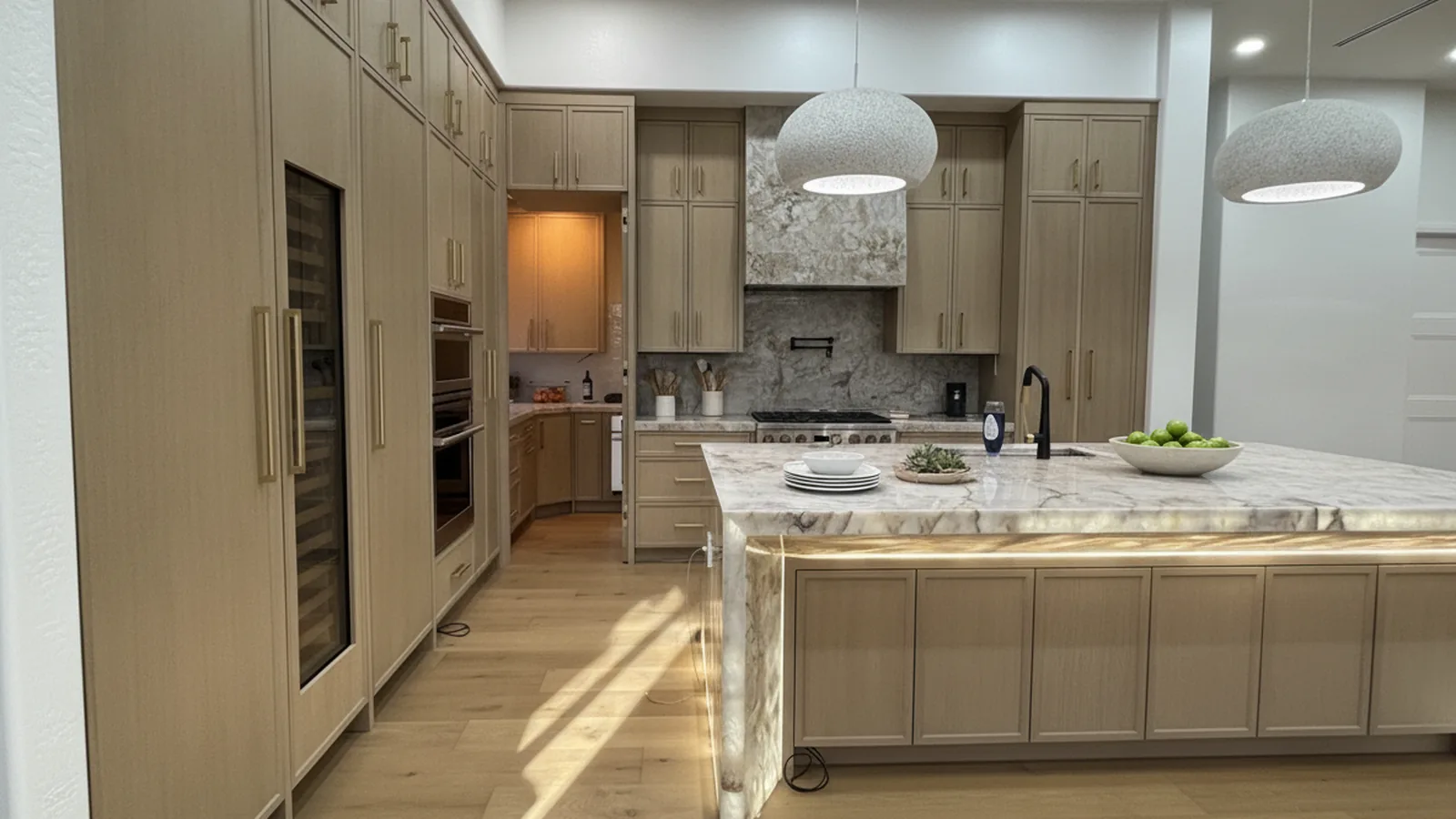
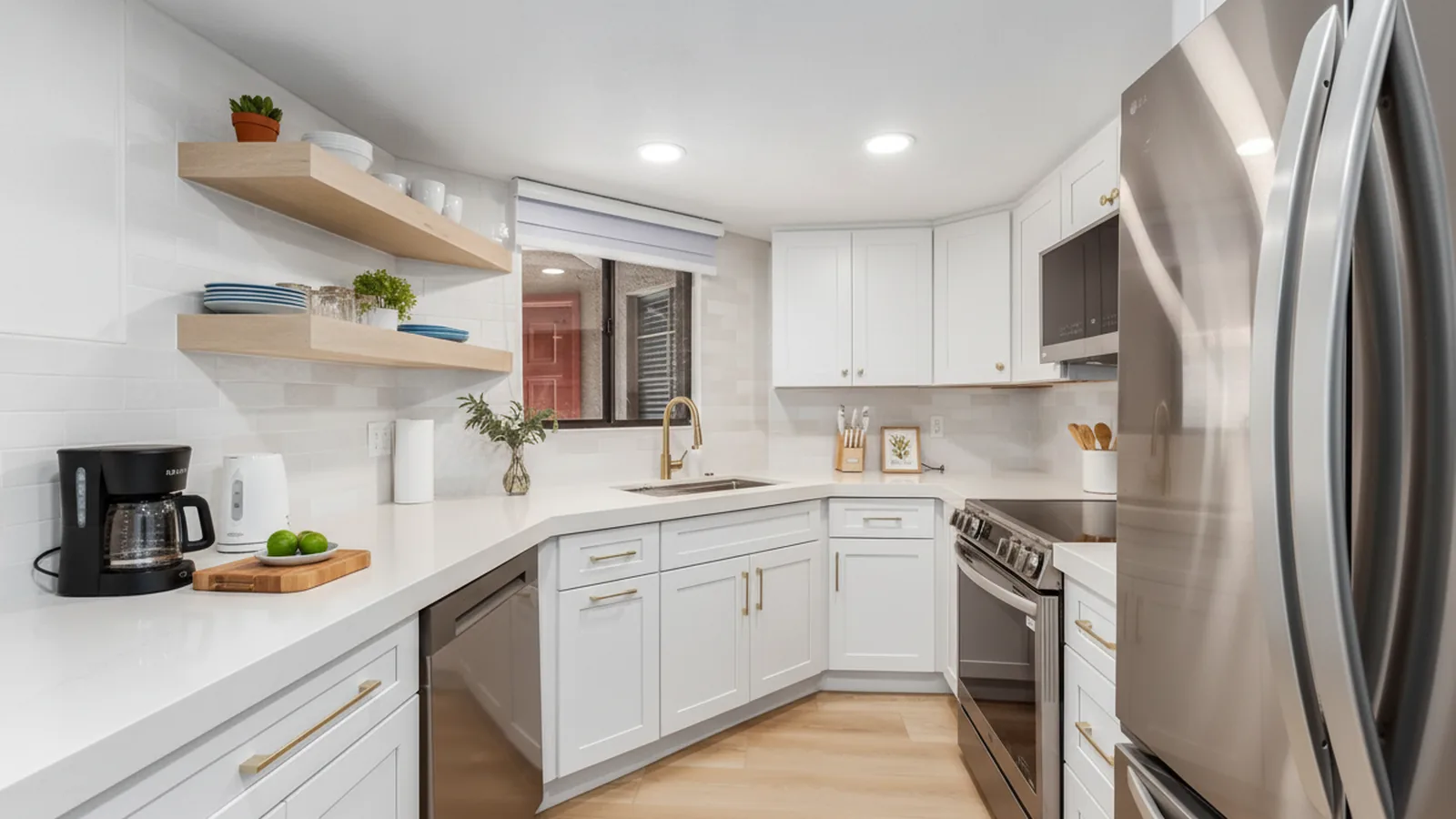
Type “kitchen and cabinet” into a search bar and you get a firehose: showroom photos, big-box catalogs, cabinet-only quotes, full-gut remodels, and everything in between. What most people are actually asking is narrower. They want to update the room, the cabinets are the biggest piece of that, and they want to know what the real choices are before anyone quotes them a number.
This guide walks through what a kitchen and cabinet project really involves: the three ways to change cabinets, the materials that last, how cabinets and countertops depend on each other, and roughly what it all costs. The goal is to make you a sharper shopper, whether you hire anyone or not.
Quick answer: A “kitchen and cabinet” project usually means updating your cabinets as the anchor of a kitchen refresh. You have three real paths: refinish (paint or restain what you have), reface (new doors and fronts on the old boxes), or replace (all-new cabinets). Cost, mess, and how much you can change the layout climb with each step. Cabinets typically drive 30 to 40 percent of a kitchen budget, so they set the tone for everything else.
Key takeaways
- Cabinets are usually the single biggest line item in a kitchen, so decide the cabinet path first and design the rest around it.
- Refinish, reface, or replace are your three options, in rising order of cost, disruption, and flexibility.
- Cabinet quality lives in the box and the hinges, not the door style you see in photos.
- Countertops and cabinets are installed in a set order, so plan them together rather than as separate projects.
- In Arizona, heat, UV, and hard water quietly punish cheap finishes and hardware, which changes what is worth buying.
What does “kitchen and cabinet” planning actually mean?
It means deciding how to change the cabinets, then letting that decision shape the countertops, layout, and finishes. Cabinets are the framework the whole room hangs on. They set the storage, the lines, the color, and a large share of the budget, so almost every other choice follows from them.
There are two halves to any cabinet: the box (the structural carcass bolted to the wall and floor) and the fronts (the doors and drawer faces you see and touch). Understanding that split is the key to the whole topic, because your three options are really about how much of each half you keep. Refinishing keeps both and changes only the color. Refacing keeps the boxes and swaps the fronts. Replacing changes everything, which is the only path that also lets you move walls, change sizes, or redo the layout.
A true layout change is the one thing you cannot fake. If your current footprint fights you, the National Kitchen & Bath Association’s planning guidelines on clearances and the work triangle are a good sanity check before you spend a dollar. If the layout already works and you just want it to look new, you can often keep the boxes and save thousands.
Your three real options: refinish, reface, or replace
Start here, because this single choice sets your budget and your timeline. Each path suits a different starting point.
Refinishing is painting or restaining the existing doors and boxes. It is the cheapest route, generally $1,000 to $4,000 for a typical kitchen, and it is right when your cabinets are structurally sound and you only dislike the color. The catch is that it hides nothing. Worn hinges, dated door shapes, and sagging shelves all survive the paint.
Refacing keeps the boxes but installs brand-new doors, drawer fronts, and a matching veneer over the exposed box faces. Expect roughly $4,000 to $10,000. It is a strong middle path when your layout works and your boxes are solid, but the doors look tired. You get a genuinely new-looking kitchen without the demolition.
Replacing means all-new cabinets. It costs the most and creates the most mess, but it is the only option that lets you change the layout, add or resize cabinets, gain modern storage, and start from a clean slate. This is the route for a dated floor plan, water-damaged boxes, or a kitchen you plan to keep for a long time.
| Option | Rough cost | Timeline | Best when | Layout change? |
|---|---|---|---|---|
| Refinish | $1,000–$4,000 | 3–7 days | Boxes are solid, color is the only problem | No |
| Reface | $4,000–$10,000 | 4–8 days | Layout works, doors look dated | No |
| Replace | $8,000–$25,000+ | 3–6 weeks | Bad layout, damage, or a long-term redo | Yes |
Those ranges are general market figures, not a quote for your kitchen. Cabinet count, materials, and whether you move plumbing or gas all swing the final number.
How a design-build remodeler handles a kitchen and cabinet project
A design-build contractor plans, sources, and installs your kitchen with one team instead of stitching together a designer, a cabinet supplier, and separate installers. That single point of accountability is the biggest practical reason to use one, because kitchens fail at the handoffs: the countertop that does not fit the cabinet, the sink base too small for the farmhouse sink, the filler strip nobody planned for.
AZ Granite & Remodeling is one example that fits here. They are a design-build remodeler and in-house stone fabricator that has served the Phoenix Valley for over 20 years, and their edge is that they fabricate the countertops in their own Phoenix shop rather than sending your slab out. When cabinets and counters come from one coordinated team, the templating, the overhang, and the support all get planned together instead of discovered on install day.
The practical version looks like this. You work one-on-one with a designer to settle the layout and cabinet choices, they fabricate and install the stone in house, and the estimate is a free, no-pressure in-home visit where someone actually measures your kitchen. That home visit matters more than most online configurators, because the room’s real dimensions, the wall that is not square, and the appliance you want to keep all change the plan.
They serve homeowners across the Valley, from North Scottsdale and Desert Ridge to Peoria, Sun City, and Anthem, plus the surrounding East and West Valley. If you want a realistic budget before committing, their guide on what a Phoenix kitchen remodel actually costs breaks the numbers down, or you can request an in-home estimate directly. That is roughly the depth of coordination worth looking for in any remodeler, this one included.
Cabinet materials that actually last
Cabinet quality is decided by the box and the hinges, not the door photo. Two cabinets can look identical in a showroom and behave completely differently after five years of humidity, heavy pots, and daily slamming.
For the box, plywood is the durable standard. It holds screws well, resists sagging, and shrugs off the occasional leak far better than particleboard, which swells and crumbles once water gets in. Particleboard keeps stock cabinets cheap and is fine in a low-use kitchen, but under a sink or near a dishwasher it is the first thing to fail. Medium-density fiberboard (MDF) is excellent for painted doors because it will not show wood grain or crack at the joints the way solid wood sometimes does.
For doors, solid wood and MDF both work well. Thermofoil (a vinyl skin over MDF) is budget-friendly and easy to wipe down, but it can peel near heat sources like ovens over time. If low-VOC matters to you, know that composite wood products sold in the U.S. must meet the EPA’s formaldehyde emission standards, so ask whether cabinets are compliant. The hardware is the quiet tell of quality: full-extension, soft-close drawer glides and solid steel hinges separate cabinets that stay tight from ones that rattle loose in a couple of years.
How cabinets and countertops fit together
Cabinets go in first, then countertops get templated to the installed boxes, then the counters are fabricated and set. That order is not negotiable, and it is exactly why planning them together saves headaches. A countertop is measured to the real cabinets, not a drawing, so the cabinets have to be level and locked in before anyone can template stone.
The countertop choice also leans on the cabinets. Stone is heavy, and a big overhang for barstool seating needs support built into the cabinet run or hidden brackets. Sink style drives the sink-base cabinet size. And the two finishes have to live together visually, which is where deciding cabinet color and counter material as a pair pays off. If you are weighing surfaces, the honest comparison in quartz versus granite for Arizona homes covers how each behaves under real desert conditions.
What drives the cost
Cabinets set the range, and a handful of factors move you within it. Stock cabinets (limited sizes and finishes, off the shelf) are the budget tier at roughly $100 to $300 per linear foot. Semi-custom cabinets add sizes, finishes, and modifications for about $150 to $650 per linear foot. Fully custom cabinets, built to your exact dimensions, run $500 to $1,200 or more per linear foot.
Beyond the tier, the big swing factors are the number of cabinets, whether you move plumbing, gas, or walls, the countertop material, and the finish level of hardware and organizers. A galley kitchen with a dozen cabinets and a small footprint costs a fraction of a large open-plan kitchen with an island. Small-scale or budget projects also have a path many people miss: leftover stone. If your counter run is short, ask about granite remnants, which are one-of-a-kind offcuts that can cut the stone cost sharply.
What Arizona does to a kitchen
The desert is hard on the cheap stuff, and that should shape what you buy. Direct sun through a big kitchen window can fade painted or thermofoil doors over years, so factor UV exposure into color and finish choices near west-facing glass. Hard water leaves mineral buildup that dulls faucet finishes and etches soft surfaces, which is one reason many Valley homeowners lean toward quartz counters and quality plumbing fixtures. And the big daily temperature swings between a hot exterior and an air-conditioned interior make solid construction and stable materials worth the extra dollars, because the flimsy stuff shows movement first.
Frequently asked questions
What is the difference between refacing and replacing cabinets?
Refacing keeps your existing cabinet boxes and installs new doors, drawer fronts, and a matching veneer, while replacing swaps everything, boxes included. Refacing is cheaper and faster but locks you into your current layout. Replacing costs more and creates more mess, but it is the only way to change the floor plan or cabinet sizes.
How much do new kitchen cabinets cost?
Generally between $5,000 and $25,000 or more installed, depending on the tier. Stock cabinets run roughly $100 to $300 per linear foot, semi-custom $150 to $650, and fully custom $500 to $1,200 and up. The final number depends on cabinet count, materials, and whether you also move plumbing or walls.
Should I replace my cabinets before or after the countertops?
Cabinets first, always. Countertops are measured (templated) to the actual installed cabinets, then fabricated to fit, then set on top. That is why it helps to plan both at once even though they are installed in sequence, so the overhang, sink base, and support all line up.
Do I have to replace my cabinets to get new countertops?
No. If your cabinets are solid and level, you can install new countertops on the existing boxes. Many refreshes pair new stone counters with refinished or refaced cabinets to get a new look for far less than a full replacement.
What cabinet material holds up best in Phoenix?
Plywood boxes for durability, MDF for smooth painted doors, and solid steel soft-close hinges. Avoid particleboard boxes near water sources, and be cautious with thermofoil doors next to ovens, since heat can lift the vinyl over time. Near a sunny window, choose a finish that resists UV fading.
How long does a kitchen and cabinet project take?
Refinishing runs about 3 to 7 days, refacing about 4 to 8 days, and a full replacement with new countertops usually 3 to 6 weeks from demolition to finish. Custom cabinets add lead time because they are built to order, so ask about the manufacturing window early.
Are stock cabinets worth it?
For a tight budget or a rental, yes. Stock cabinets keep costs down and can look great with good hardware. Their limits are fixed sizes and finishes, so if your kitchen has odd dimensions or you want specific storage, semi-custom often fits better without jumping all the way to custom.
Do design-build remodelers handle both cabinets and countertops?
Many do, and it is worth seeking out. When one team plans the cabinets and fabricates the counters, the fit and timing get coordinated instead of falling apart at the handoff between separate vendors. A single in-home estimate that covers both gives you a more accurate budget than piecing together quotes.
Ready to plan your kitchen?
Decide your cabinet path first, then design the counters and finishes around it, and you will avoid the most expensive mistakes in the whole project. If you want a realistic plan and budget for your specific kitchen, a free in-home measure beats any online estimate. You can reach the AZ Granite & Remodeling team at (602) 759-9000 to set one up, or start with their kitchen remodeling overview to see how the pieces come together.