If you typed “granite remnants phoenix near me” into your phone, you probably have a small job in mind: a bathroom vanity, a laundry counter, a bar top, maybe a fireplace surround. You do not need a whole slab, and you would rather not pay for one. That instinct is right. A remnant can cut the material cost of a small project dramatically, and Phoenix has plenty of places that carry them.
The catch is that remnant shopping works differently from picking a full slab off a showroom floor. Inventory changes week to week, pieces are one of a kind, and the best deals sit in fabrication shops that most people never think to call. Here is how to find them near you, what they actually cost, and how to tell a usable offcut from one that will fight you.
Quick answer: Stone remnants are leftover offcuts from larger slab jobs, and in the Phoenix area you find them at stone fabrication shops and remnant yards, usually viewed by appointment because the inventory rotates. They work best for projects under about 30 square feet, and they often cost noticeably less per square foot than a fresh full slab because the shop already paid for the material.
Key takeaways
- Remnants shine on single-piece jobs: vanities, bar tops, and shelves under roughly 30 square feet.
- The best local source is a working fabrication shop, not a big-box store, because shops generate the offcuts.
- Bring your rough measurements before you go, since a piece has to fit your layout in one shot.
- Price depends on stone type, size, and thickness, so a quartzite scrap and a common granite scrap are not priced alike.
- Inventory is one of a kind and first come, so the piece you love today may be gone next week.
What are stone remnants?
A stone remnant is the usable leftover piece cut from a full slab after a fabricator finishes a larger countertop job. A standard granite or quartz slab runs roughly 9 to 10 feet long, and most kitchens do not use every square inch. What is left, often a piece two to five feet across, gets set aside as a remnant instead of being scrapped.
Because the shop already bought the full slab for the original job, that leftover is essentially sunk cost. That is why remnants sell at a discount, and it is why they exist in granite, quartz, quartzite, marble, and porcelain alike. The Natural Stone Institute treats these offcuts as the same certified material as the parent slab, just in a smaller footprint. You are getting real stone, not a lesser grade.
The trade-off is size and choice. You are shopping what happens to be on the rack, not ordering a specific color in a specific dimension. For a small project that is a feature, not a flaw.
Where to find remnants near you in the Valley
Start with fabrication shops, because they are the ones creating remnants in the first place. Big-box home stores rarely stock true offcuts, and dedicated “remnant yards” often resell shop leftovers at a markup. Across the Phoenix Valley, from Peoria and Sun City on the west side to North Scottsdale, Desert Ridge, and Anthem to the north, most established countertop shops keep a remnant area.
A few practical rules make the hunt go faster:
- Call before you drive. Remnant inventory is not posted live, and pieces sell fast. A quick call saves a wasted trip across town.
- Expect to view by appointment. Shops keep remnants in the fabrication yard, not a public showroom, so someone walks you through the racks.
- Go with numbers in hand. Know your longest run, your depth, and where a sink or cooktop cutout lands. A remnant has to cover your layout in a single piece unless you accept a seam.
- Ask what came off recently. Shops with steady kitchen work turn over remnants constantly, so a “nothing today” can become “three options” a week later.
A Phoenix example: how AZ Granite & Remodeling handles remnants
AZ Granite & Remodeling is one concrete example of the fabrication-shop route, and it fits this search well because the offcuts come from its own work. AZ Granite is a design-build remodeler and in-house stone fabricator that has served the Phoenix Valley for over 20 years, cutting countertops in its own shop at 1923 W. Cheryl Dr. Every full-slab kitchen it fabricates generates leftovers, and those become the rotating remnant inventory you can browse.
Because the pieces are one of a kind, they are viewed by appointment at the Phoenix shop rather than listed online. That is the honest reality of any real remnant program: what is on the rack today is what there is. The upside of buying from the same crew that cut the piece is that they can template, fabricate, and install it without handing your project between vendors. If you want to see finished small-project ideas first, the AZ Granite team can point you toward examples and walk you through what is currently in stock.
Two AZ Granite specifics worth knowing before you call the shop at (602) 759-9000: the estimate for a remnant project is free and done in your home, and the only location is the Phoenix shop, so plan your appointment there rather than expecting a satellite yard elsewhere in the Valley.
What remnants are actually good for (and where they fall short)
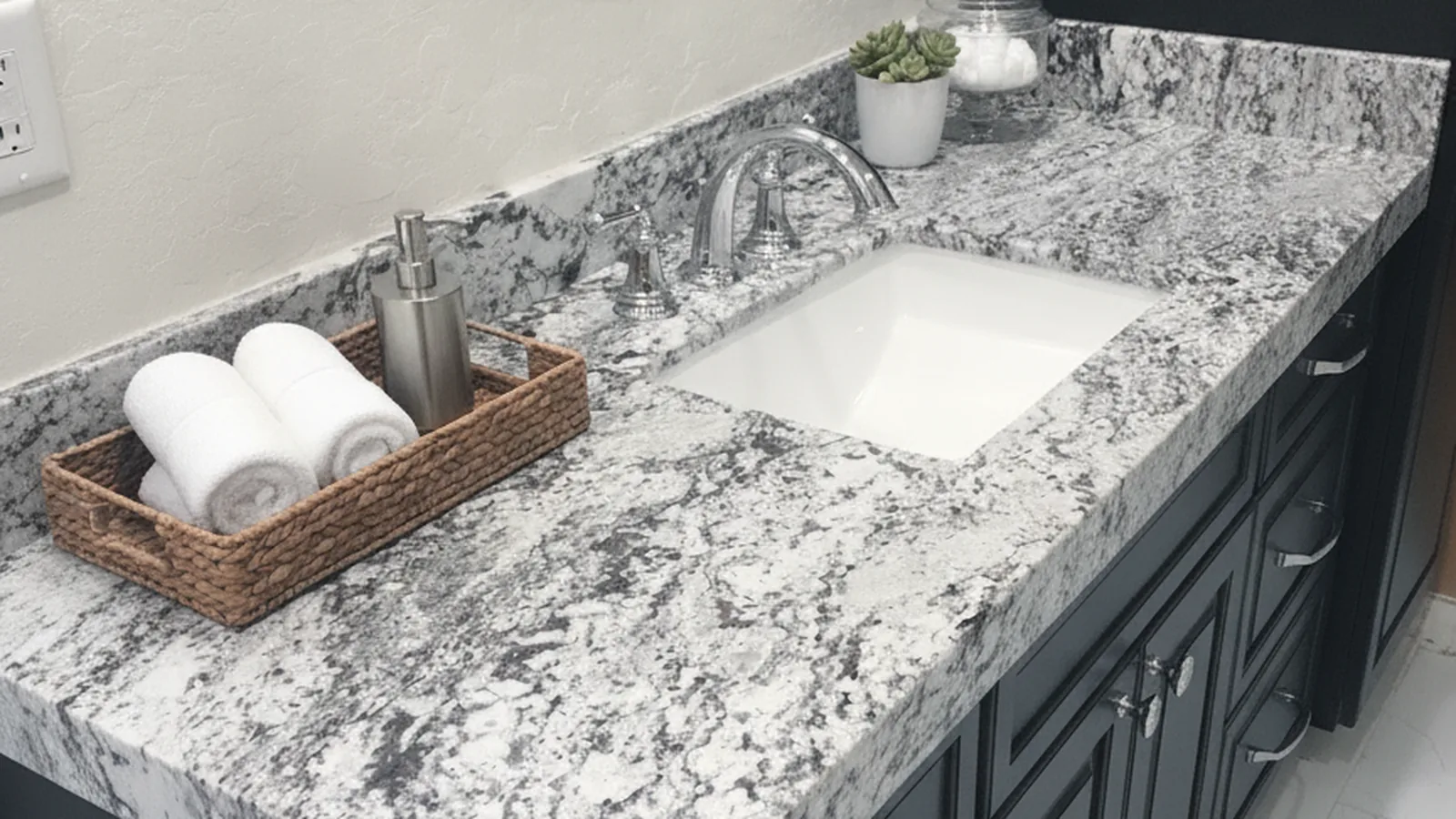
Remnants excel anywhere a single modest piece does the job. Good candidates include a bathroom vanity top, a laundry or utility counter, a small bar or coffee station, a fireplace surround, floating shelves, a windowsill, or an outdoor grill counter. Anything roughly 30 square feet or smaller and coverable in one single piece is a strong match.
They struggle with large or complex layouts. A full kitchen with an island usually needs matched slabs so the color and veining flow, and stitching that together from mismatched offcuts rarely looks right. If your project has long runs or you want everything to match perfectly, a full slab is the better buy. For the material trade-offs behind that choice, the materials overview walks through how granite, quartz, and quartzite behave differently.
One Arizona-specific note: for an outdoor or sun-exposed counter, natural stone and quartzite handle desert heat and UV better than some engineered surfaces, so the stone type matters as much as the price when the piece will bake all summer.
Remnant vs. full slab: which fits your project?
A remnant fits a small, single-piece job, while a full slab fits large or matched layouts. Here is how the two compare.
| Factor | Stone remnant | Full slab |
|---|---|---|
| Best project size | Under ~30 sq ft, single piece | Large kitchens, islands, long runs |
| Cost per square foot | Usually lower (sunk-cost material) | Full retail plus your share of waste |
| Color/pattern choice | What’s on the rack that day | Order the exact stone you want |
| Matching across pieces | Hard; each offcut differs | Slabs sequenced to match |
| Availability | One of a kind, first come | Orderable, but longer lead time |
| Lead time to install | Often quick once selected | Depends on slab order and schedule |
What a remnant project really costs
Cost comes down to three things: the stone type, the usable size, and the thickness. A common granite offcut is priced very differently from a rare quartzite or marble scrap, even at remnant discounts, because the parent slab cost more to begin with. Larger and thicker pieces cost more than small two-centimeter scraps.
Beyond the stone, budget for the work that turns a raw offcut into a finished top: templating, edge profiling, sink or faucet cutouts, and installation. Those fabrication steps are priced by the job, not the piece, so a tiny vanity and a slightly larger bar top may cost less to fabricate than you expect. This is also why buying the remnant and hiring a separate installer sometimes costs more than buying from the shop that will fabricate it.
Because every remnant and every layout is different, no honest shop can quote your exact number sight unseen. The reliable way to get a real figure is a measured, in-home estimate. AZ Granite offers a free, no-pressure estimate so you know the full cost before you commit. For a sense of how quickly a small piece can move from selection to install, this realistic remnant timeline breaks it down step by step.
How to inspect a remnant before you buy
Inspect a remnant for surface flaws and true usable size before you fall for the color. Check the surface for chips, cracks, and fissures, especially along the edges where offcuts take knocks in storage. Run your hand across it and hold it to the light at an angle so surface flaws show. Confirm the thickness matches your cabinets and your plan, since two-centimeter and three-centimeter stone are not interchangeable without a buildup.
Then confirm the actual usable dimensions rather than the overall size. An L-shaped or irregular offcut may look big but only yield a narrow strip once your straight edges are cut. Ask the shop to lay your measurements against the piece. And if the stone is natural, know that some granites contain trace natural radioactivity; household levels are generally low, and the EPA’s guidance on radon in homes is the authoritative place to read more.
Frequently asked questions
Where can I find granite remnants near me in Phoenix?
Local stone fabrication shops are your best starting point, since they create the offcuts as a byproduct of full-slab jobs. Remnant yards and some tile stores also carry them, often at resale markup. Call ahead and ask to view the remnant rack, because inventory rotates weekly and is rarely posted online.
How much cheaper are remnants than a full slab?
Remnants typically cost less per square foot than a fresh full slab because the shop already recovered the slab cost on the original job. The exact savings depend on the stone type and how much usable area the piece has. Rarer stones like quartzite still cost more than common granite, even as remnants.
Do I need an appointment to see remnants?
Usually yes. Most fabrication shops store remnants in the yard rather than a public showroom, so a staff member walks you through the racks by appointment. This also lets them match your measurements to what is in stock while you are there, which saves a second trip.
What size project can a remnant cover?
A remnant covers single-piece jobs up to roughly 30 square feet: vanities, bar tops, small counters, shelves, and fireplace surrounds. Larger kitchens or anything needing matched runs across multiple pieces are better served by full slabs, since mismatched offcuts rarely flow together well.
Can I use a remnant for an outdoor kitchen in Arizona?
Yes, if you pick the right stone. Natural granite and quartzite handle direct sun, heat, and UV well, which matters for a counter that bakes all summer in the Valley. Ask the shop which remnants on hand are rated for outdoor use before you buy.
Should I buy the remnant myself or through a fabricator?
Buying through the fabricator that cut the piece is usually the simpler path, and sometimes cheaper, because templating, cutting, and installation stay with one crew. If you buy a remnant separately and hire an installer, confirm they will warranty work on material they did not source, since some will not.
Will a small remnant have a visible seam?
No, not if the piece covers your layout in one shot, which is the goal with a remnant. Seams only come up when a project is too large for a single offcut. For a vanity or bar top, a properly sized remnant should install cleanly with no joins at all.
Ready to see what’s on the rack?
A remnant is the smart move when your project is small and you would rather put the savings elsewhere. The hard part is simply finding the right piece before someone else does. If you want to browse current offcuts and get a real, measured price, reach out to the AZ Granite & Remodeling team at (602) 759-9000 or request a free in-home estimate. Bring your measurements, and you could walk out with the exact piece your project needs.