If you’re shopping for quartz countertops in Phoenix, you’re mostly trying to answer three things: what it actually costs, whether the desert sun and heat will wreck it, and who you can trust to fabricate and install it without a mess. The showroom brochures rarely give you a straight answer on any of them.
This guide does. Here’s what quartz really is, what drives the price around the Valley, how it stacks up against granite and marble in a hard-water desert climate, and the questions that separate a good installer from a cheap one.
Quick answer: Quartz countertops in Phoenix typically run $60 to $110 per square foot installed, depending on the brand, thickness, and edge you choose. Quartz handles our heat and hard water beautifully because it’s nonporous and never needs sealing, but direct, all-day UV can slightly affect some colors near big south-facing windows. Your final number comes down to slab choice and how complex your layout is, which is why an in-home measure beats any online estimate.
Key takeaways
- Expect roughly $60 to $110 per square foot in the Valley, with the slab brand and edge profile moving that number most.
- Quartz is engineered stone, about 90% ground quartz bound with resin, which makes it nonporous and it never needs sealing.
- It’s an excellent match for Arizona hard water, since there are no pores for mineral deposits to lodge in.
- The two honest weak spots are heat and prolonged UV: use trivets, and think twice about the darkest colors under an unshaded south window.
- The fabricator matters as much as the slab. Ask about seam placement and who actually cuts your stone.
What are quartz countertops, exactly?
Quartz countertops are an engineered stone, not a slab quarried whole from the ground. Manufacturers grind natural quartz crystals, one of the hardest common minerals, and bind roughly 90% of it with about 10% resin and pigment, then cure the mix into slabs. Brands you’ll see in Phoenix slab yards include Caesarstone, Cambria, Silestone, and MSI.
That recipe is why quartz behaves the way it does. Because the surface is sealed by the resin itself, it’s nonporous, so liquids, bacteria, and stains can’t soak in. Unlike natural stone, it never needs sealing, and the color and pattern are engineered to be consistent slab to slab, which makes it easier to plan a kitchen around. If you want the deeper material breakdown, AZ Granite keeps a plain-English quartz countertops overview that covers the surface in detail.
What quartz countertops cost in Phoenix
Installed quartz in the Valley generally lands between $60 and $110 per square foot, and a typical kitchen uses 40 to 55 square feet. The spread is wide because a handful of choices push the price up or down more than the brand name on the slab does:
- Slab tier. Entry-level solid colors sit at the low end. Slabs engineered to mimic Calacatta marble veining cost noticeably more.
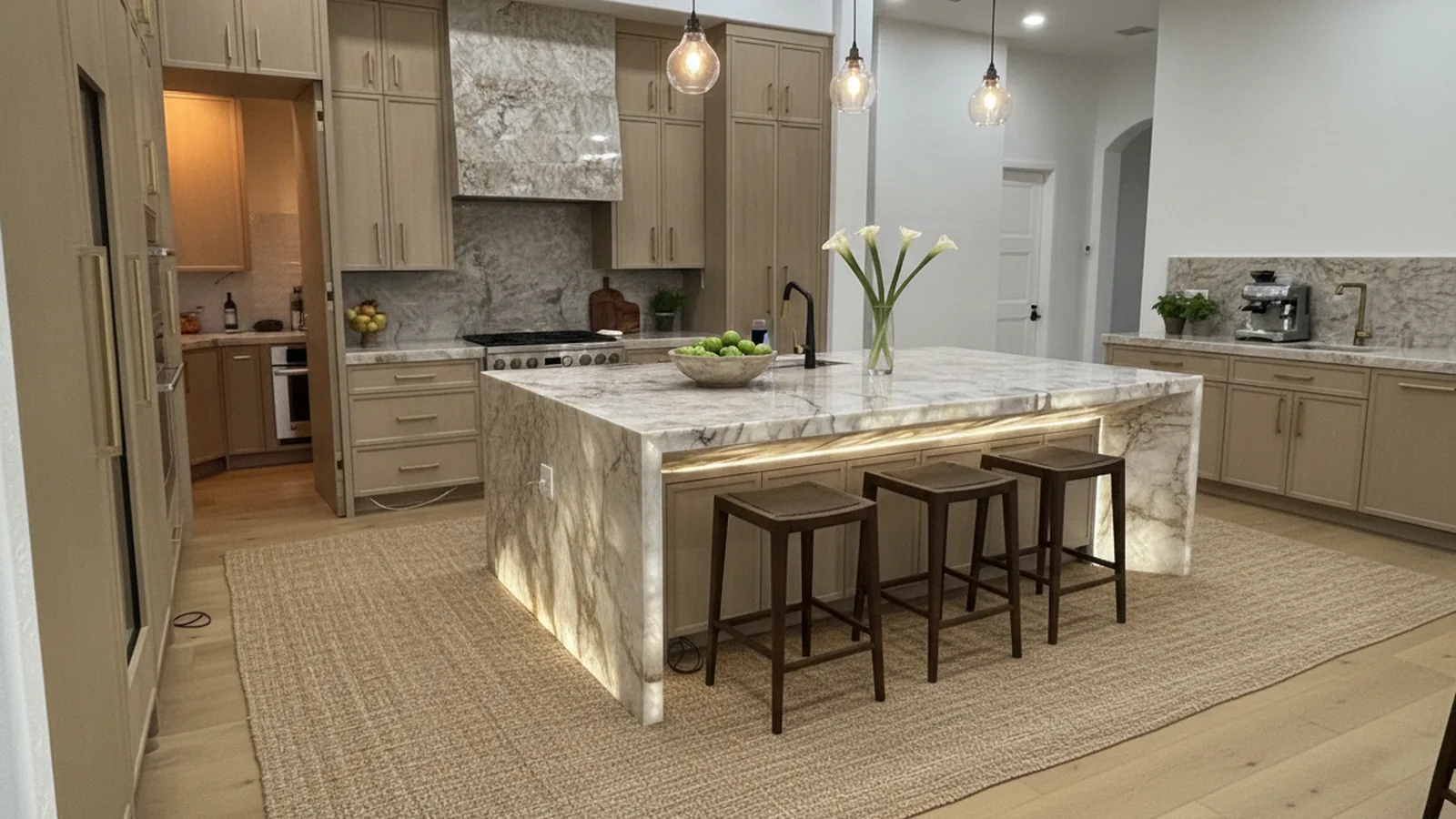
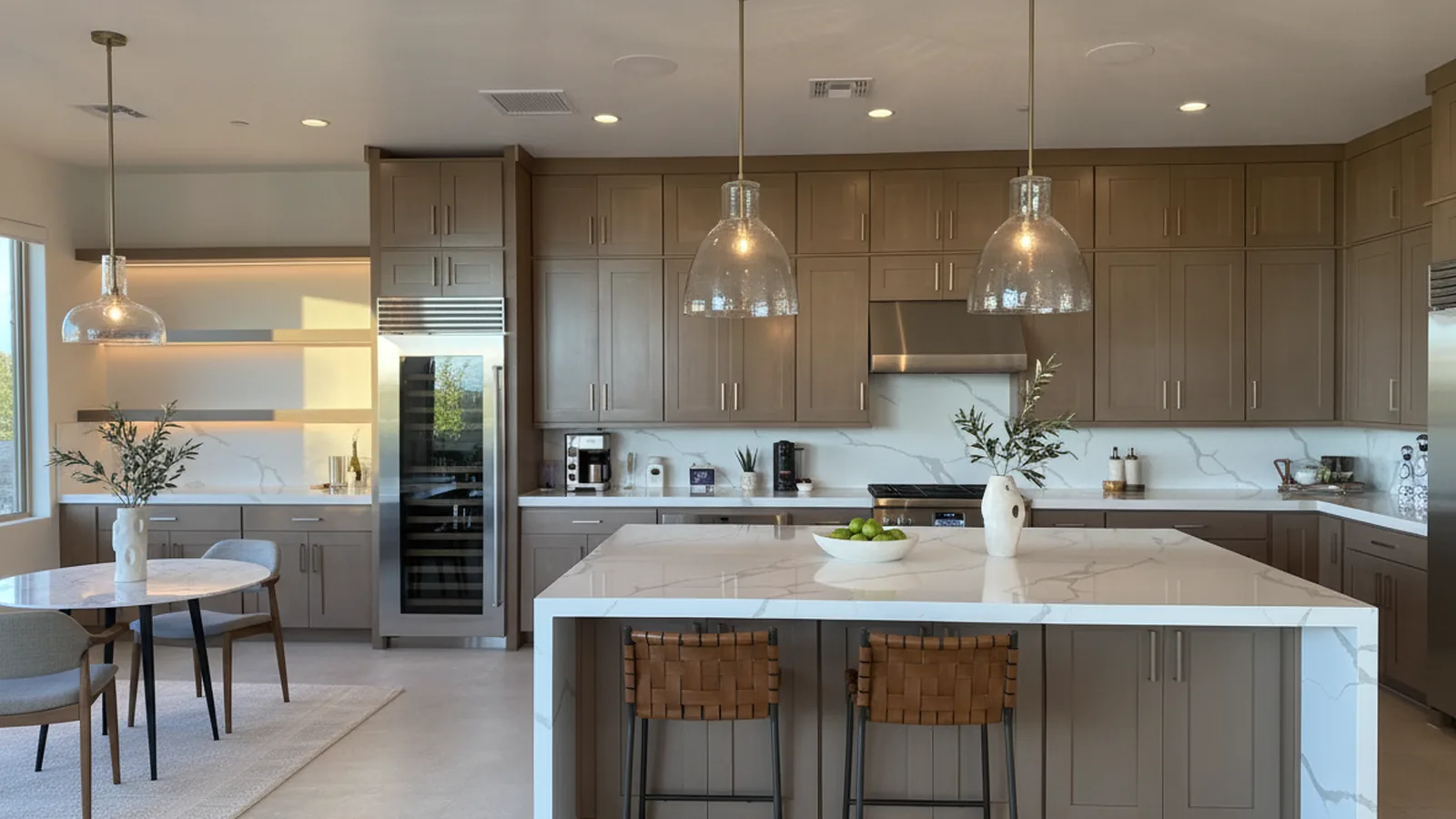
- Edge profile. A standard eased or square edge is included on most quotes. A mitered waterfall or ogee adds fabrication time and material.
- Thickness. A 3cm slab costs more than 2cm but usually skips the plywood backing a thinner slab needs.
- Layout complexity. Islands, cutouts for an undermount sink and cooktop, and multiple corners all add labor.
- Tear-out and plumbing. Removing old tile or laminate and reconnecting a sink adds to the day-of cost.
Treat any per-foot number, including the ones above, as a starting range, not a quote. The only way to price your kitchen accurately is a real measure of your cabinets. AZ Granite offers a free, no-pressure in-home estimate through its contact page, which is where an honest number actually comes from. If your project is small, a bathroom vanity or a coffee bar, ask about granite and quartz remnants: offcuts from full-slab jobs, sold at a discount and viewed by appointment at the Phoenix shop.
Where AZ Granite & Remodeling fits
AZ Granite & Remodeling is a design-build remodeler and in-house stone fabricator that has worked on Phoenix Valley homes for over 20 years. What sets that apart from a lot of countertop sellers is simple: they cut and finish the stone in their own shop at 1923 W. Cheryl Dr rather than subcontracting the fabrication out to whoever is cheapest that week.
That in-house control matters for a quartz job specifically. Seam placement, edge finishing, and sink cutouts are where a rushed or outsourced fabricator gives itself away, and keeping the work under one roof means one team owns the result from template to install. You work one-on-one with a designer, the crew handles fabrication and installation directly, and the in-home estimate is genuinely free and low-pressure.
They serve the whole Valley, from North Scottsdale and Desert Ridge to Peoria, Sun City, and Anthem, plus the surrounding East and West Valley, and the company is 5.0-star rated with two decades of local work behind it. You can read what past clients say on the testimonials page. Beyond quartz, the same shop fabricates granite, quartzite, marble, dolomite, porcelain, and onyx, so if you’re still weighing surfaces, one visit covers all of them. That’s the case for them as one option worth a quote, not the only one, and the rest of this guide stays about quartz itself.
Quartz vs. granite, quartzite, and marble in the desert
Quartz isn’t automatically the right pick. It depends on your kitchen, your budget, and how you cook. Here’s an honest side-by-side of the four surfaces Phoenix homeowners weigh most:
| Surface | Sealing | Heat tolerance | Hard-water stains | Best for |
|---|---|---|---|---|
| Quartz | Never needs it | Good, use trivets | Very resistant (nonporous) | Low-maintenance kitchens, busy families |
| Granite | Reseal ~yearly | Excellent | Resistant when sealed | Cooks who set down hot pans |
| Quartzite | Reseal periodically | Excellent | Resistant when sealed | Marble look, harder wear |
| Marble | Frequent, porous | Good | Etches and stains easily | Bakers, statement islands, aware owners |
The short version: quartz wins on maintenance, granite and quartzite win on raw heat tolerance, and marble wins on looks alone while asking the most of you. In a hard-water climate, that maintenance gap is real. According to the USGS, most of Arizona sits in the “very hard” water range, which is exactly what leaves chalky mineral rings on porous stone. Quartz gives that buildup nowhere to grip. For a longer treatment of the two most common picks, AZ Granite’s quartz vs. granite guide for Arizona walks through the trade-offs.
Does Phoenix sun and heat actually hurt quartz?
Mostly no, with two honest caveats. Quartz shrugs off everyday kitchen heat, but the resin binder that makes it nonporous is also its weak point against extremes. A pan straight off the burner can leave a scorch or a dull mark, so a trivet is not optional. This is one area where natural granite genuinely outperforms quartz.
The second caveat is UV over years, not a single sunny afternoon. Prolonged, direct desert sunlight can slightly shift some colors, which is why most manufacturers don’t warranty quartz for outdoor use. Indoors it’s rarely an issue, but if you have a big, unshaded south- or west-facing window pouring light onto the counter all day, lean toward mid-tone colors and know the risk on the darkest ones. AZ Granite covers this in detail in do quartz countertops fade in the sun, which is worth a read if your kitchen is sun-drenched. For a truly outdoor kitchen, granite or porcelain is the safer call.
How to choose a quartz fabricator in Phoenix
The slab gets the attention, but the fabricator determines whether you love it in five years. A beautiful slab cut poorly still looks cut poorly. Before you sign anything, ask:
- In-house or outsourced? Ask whether they cut the stone themselves or subcontract it. In-house shops own the outcome; middlemen point fingers when something’s off.
- Seam placement. Ask where seams will go and whether you can approve the layout. A good fabricator plans them around sinks and low-visibility spots and shows you first.
- Templating. Ask whether they digitally template on site. A laser or physical template of your real cabinets beats working from a drawing.
- Warranty. Ask what’s covered and whether it’s the brand’s or the installer’s, so you know who stands behind both the slab and the work.
- Local work. Ask to see finished Valley kitchens. Photos of real projects tell you more than a showroom sample. Browse a project gallery to calibrate what good work looks like.
One more note on safety and ethics: cutting engineered stone releases silica dust, and reputable shops control it. The CDC has flagged engineered-stone silica exposure as a real worker-health concern, so a fabricator that runs a clean, wet-cut, dust-controlled shop is protecting its crew and doing the job right.
Frequently asked questions
How much do quartz countertops cost for an average Phoenix kitchen?
Most Valley homeowners spend in the low-to-mid four figures for a typical 40 to 55 square foot kitchen, once you include the slab, fabrication, and installation. The exact figure depends on your slab tier, edge, and how many cutouts and corners your layout has. A free in-home measure is the only way to get a real number.
Do quartz countertops need to be sealed?
No. Quartz is nonporous because the resin binder seals the surface during manufacturing, so there’s nothing to reseal, ever. That’s the biggest maintenance difference between quartz and natural stones like granite or marble, which need periodic sealing to stay stain-resistant.
Are the seams on quartz countertops visible?
Usually not, unless you look for them. A skilled fabricator places seams in low-visibility spots, near a sink or a corner, and color-matches the filler. On busy patterns seams nearly disappear; on solid colors they’re slightly more noticeable. This is exactly why who fabricates the slab matters.
Is quartz good for bathroom vanities in Arizona?
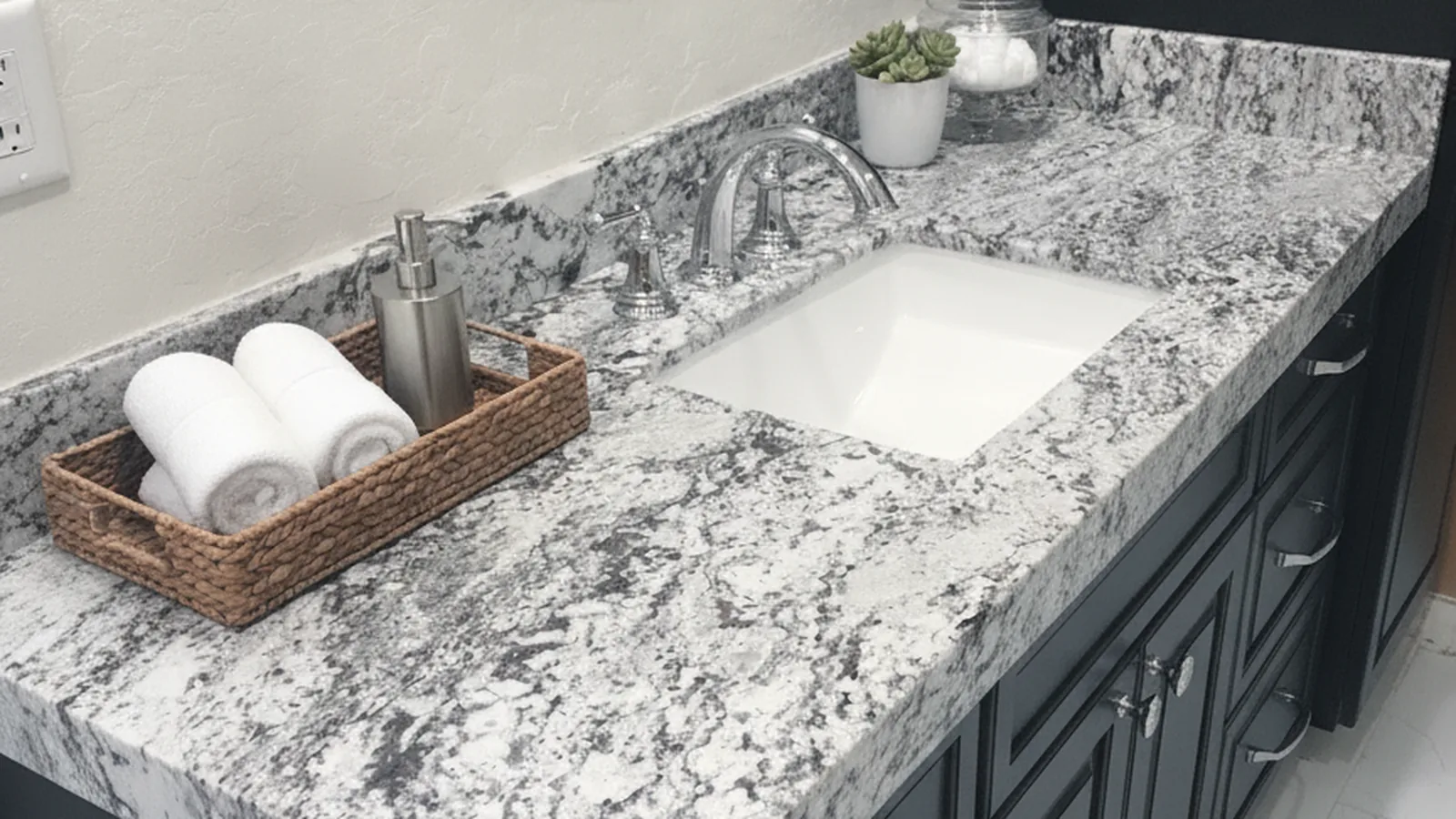
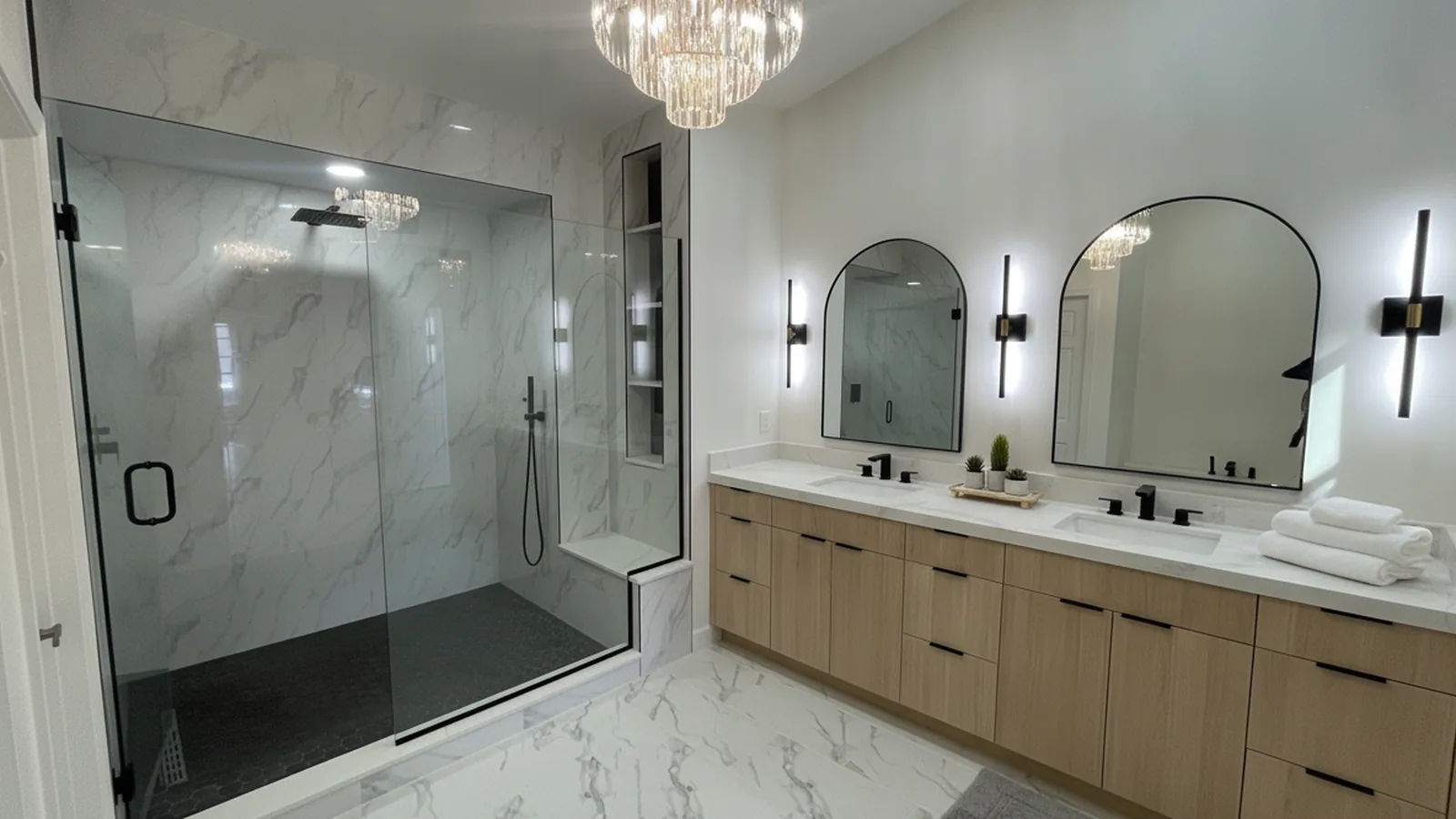
Yes, and it’s arguably even better suited to bathrooms than kitchens. The nonporous surface resists hard-water spotting and toothpaste stains, and heat is rarely a concern at a vanity. It’s also a common use for discounted remnants, since vanities need less material than a full kitchen.
Can I put quartz countertops outdoors in Phoenix?
Generally no. Prolonged, direct desert UV can discolor the resin over time, and most manufacturers won’t warranty quartz outdoors. For an outdoor kitchen or a covered patio bar, granite or large-format porcelain holds up far better to the sun.
How long does a quartz countertop installation take?
Most jobs run one to three weeks from template to install, with the bulk of that being fabrication time in the shop, not the install day itself. The actual install is often a single day. Tear-out of old counters and plumbing reconnection can add a little.
Is quartz cheaper than granite?
Not necessarily. They overlap heavily: entry-level granite can undercut quartz, and premium quartz that mimics marble can cost more than mid-grade granite. Price shouldn’t be the deciding factor between them. Maintenance tolerance and heat exposure usually should be.
What should I bring to a countertop estimate?
Bring a government-issued photo ID and your slab preferences if you have them. Rough measurements or a photo of your kitchen help too, but the fabricator will take precise measurements at the in-home visit. Come with an idea of your edge style and any questions about seams. The estimate is where those get answered for your specific space.
Getting a real number for your kitchen
Quartz earns its popularity in Phoenix for good reasons: it never needs sealing, it laughs off our hard water, and it comes in nearly any look you want. The two things it asks of you are a trivet and a little thought about sun exposure. Everything else comes down to the slab you fall for and the crew that installs it.
When you’re ready to price your actual kitchen instead of a range, book a free, no-pressure in-home estimate with the AZ Granite & Remodeling team through their contact page, or call (602) 759-9000. They’ll measure your space, show you slabs, and give you a real number, with no obligation to say yes.