Steam shower bathroom remodeling in Phoenix tends to attract homeowners who already love a long, hot shower and want something closer to a spa. A steam shower is a different build from a regular shower, though. It changes the enclosure, the waterproofing, the electrical, and the stone or tile, and the Valley’s hard water adds a wrinkle most national guides skip. This guide covers what the build involves, how the options compare, what drives cost, and what to ask before you hire anyone.
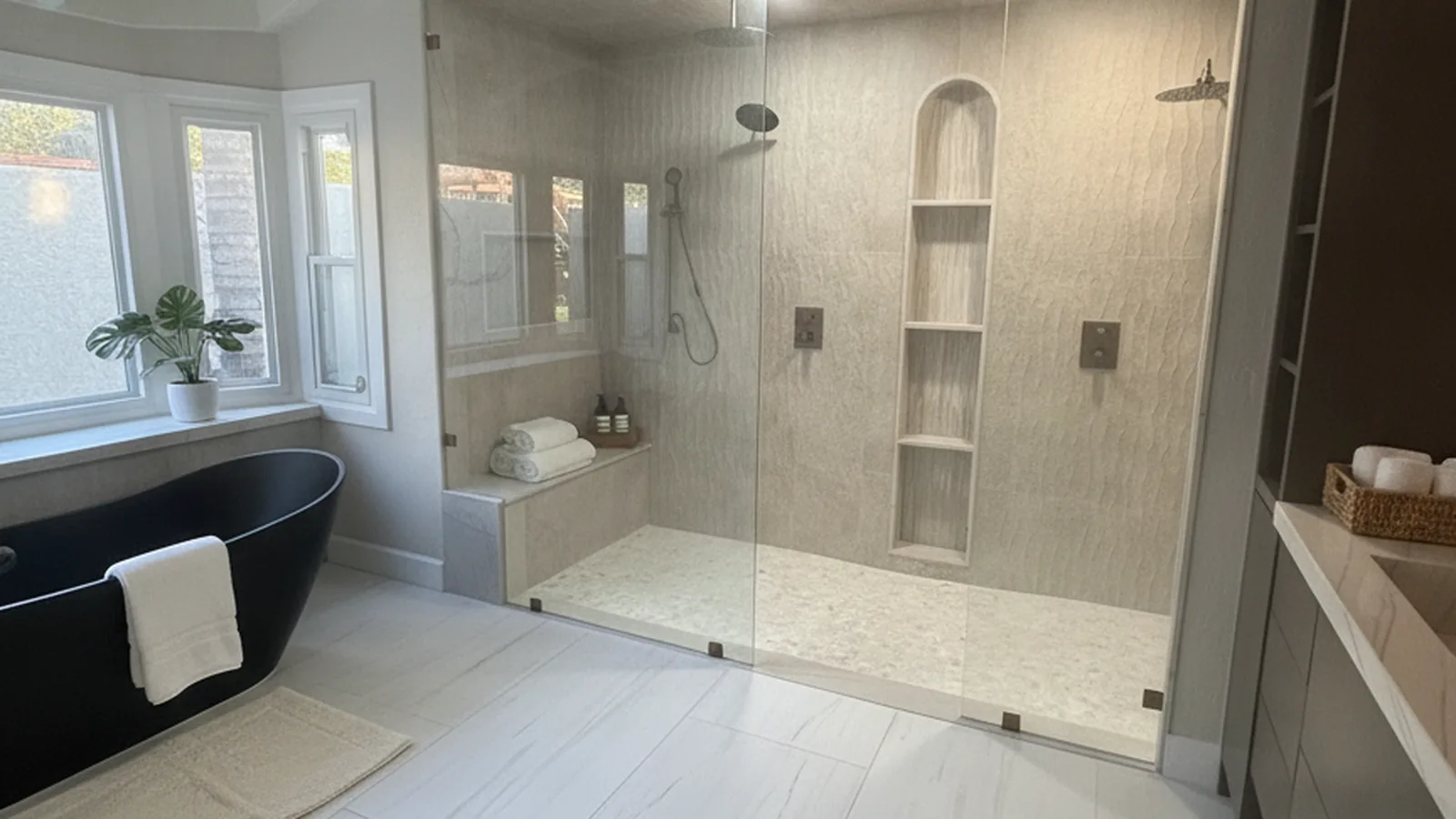
Quick answer: Yes, most Phoenix bathrooms can take a steam shower, but it needs a sealed, sloped enclosure, steam-rated waterproofing, a generator on its own circuit and water line, and surfaces that tolerate constant heat. The steam-specific parts typically add several thousand dollars to a shower rebuild, and Phoenix’s hard water makes the water plan matter as much as the tile.
Key takeaways
- Hard water decides how long a generator lasts in the Valley, so settle the water plan before you fall for a tile.
- Weak steam and leaks usually trace back to the ceiling slope and door seal, so inspect those before anything cosmetic.
- Porcelain slabs and well-sealed quartzite are the low-regret surfaces. Marble and onyx demand more upkeep.
- Retrofitting an existing shower is cheapest on paper and the most likely to disappoint. A rebuild costs more up front and removes the guesswork.
- Ask any contractor who sizes the generator, who does the electrical, and how the waterproofing gets tested.
What is a steam shower?
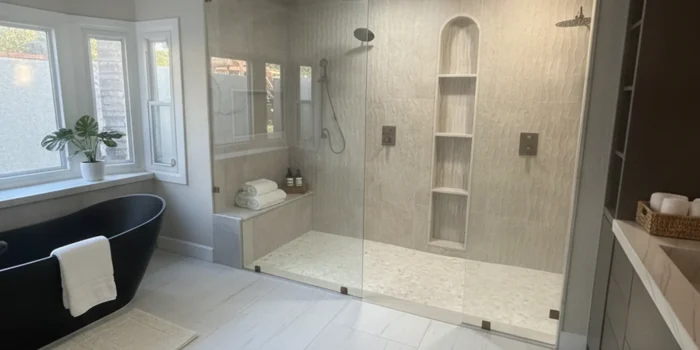
A steam shower is a fully enclosed shower that adds a separate steam generator, which heats water in a small tank and pipes vapor into the enclosure through a low-mounted steam head. The air inside typically settles around 110 to 120 degrees F with humidity near 100 percent, so it feels like a warm cloud rather than a hot room. The regular shower head still works, so the space doubles as your everyday shower.
That separates it from a sauna, which uses dry heat at much higher temperatures, and from a steam room, which is usually a standalone sealed room built just for steaming. A steam shower fits inside an ordinary bathroom footprint, which is why it is a realistic add-on for a typical home.
What does a steam shower need that a regular shower doesn’t?
Five things, and each is a spot where lower-cost builds tend to cut corners.
- A sealed, sloped enclosure. Steam escapes through gaps, so the glass runs to the ceiling, the door seals, and the ceiling is pitched so condensation runs down the wall instead of dripping on your head. Open transoms and flat ceilings are the usual reasons a shower never gets properly steamy.
- Steam-rated waterproofing. Vapor reaches places splashing never does, so the walls and ceiling need a continuous membrane, sheet or liquid-applied, rather than standard drywall behind tile. The Tile Council of North America publishes installation methods for steam rooms and showers, and a good installer can tell you which method they follow.
- The right-sized generator. Output depends on the enclosure’s volume and what lines it. Stone and tile soak up heat and glass sheds it, so a tall, stone-clad, or glass-heavy shower needs more output than the raw dimensions suggest. The unit lives outside the shower, in a vanity cabinet, closet, or attic, and manufacturers limit how far the steam line can run.
- Dedicated power and water. Most residential generators want their own high-amperage circuit (check the model’s spec), a cold water supply, and sometimes a drain connection. Follow the manufacturer on the steam line itself: it should slope steadily and stay free of valves and low spots.
- Controls and ventilation. A control panel goes inside the shower, often with a timer outside. The exhaust fan stays off while you steam and runs afterward to clear the humidity.
Where AZ Granite & Remodeling fits in a steam shower build
AZ Granite & Remodeling is a design-build remodeling contractor and in-house stone fabricator based at 1923 W. Cheryl Dr, Suite 2, in Phoenix. It has served homeowners across the Valley for over 20 years and holds a 5.0-star rating. A steam shower suits that model because the pieces depend on each other: the surface you choose sets the waterproofing detail, and the generator location sets the cabinetry and framing.
In practice, that looks like this:
- One-on-one work with a designer. Enclosure size, glass, generator location, bench, and stone get planned together before demolition, which is where most steam shower surprises are avoided.
- Custom fabrication done in house. Several steam shower parts have to be cut to what is actually framed: a bench top, a curb, a niche, or slab wall panels. A shop that fabricates its own stone can template from the real enclosure instead of ordering to a guess.
- A material range that includes granite, marble, quartz, quartzite, dolomite, porcelain, onyx, and natural quartz, so you can compare them side by side on how they handle steam.
- A free, no-pressure in-home estimate, where someone looks at your actual bathroom and the spaces around it.
Steam adds electrical and plumbing scope beyond a standard shower, so when you request an estimate, ask who handles the generator hookup, how the ceiling gets waterproofed, and what warranty covers the equipment. Those are fair questions for any crew, this one included. If you are reworking more than the shower, the bathroom remodeling page lays out the full process. The service area covers North Scottsdale, Desert Ridge, Peoria, Sun City, and Anthem, plus the surrounding East and West Valley, and you can request a free in-home estimate to talk through a steam shower specifically.
Steam shower options compared: retrofit, rebuild, or prefab
The cleanest way to choose is by how much of your current shower you are willing to tear out.
| Option | Best for | What changes | Cost level | Main trade-off |
|---|---|---|---|---|
| Add a generator to an existing shower | A tile shower in good shape with full-height glass | Generator, steam head, controls, door and ceiling fixes | Lowest | Hidden ceiling or waterproofing problems surface later |
| Full rebuild in tile or porcelain | Most homeowners doing a real remodel | New membrane, sloped ceiling, bench, glass, generator | Mid to high | More demolition and a longer timeline |
| Slab-clad rebuild (porcelain, quartzite, granite) | Few grout lines and a high-end look | Fabricated wall panels, bench, curb | Highest | Material and fabrication cost, plus sealing for natural stone |
| Prefab steam unit or kit enclosure | Tight budgets or small footprints | Pre-formed enclosure with a built-in generator | Lowest to mid | Limited sizes and finishes |
| Steam-ready now, generator later | Spreading the cost over time | Sealed enclosure and rough-ins built now, equipment added later | Mid | You pay for capacity you may not use yet |
A retrofit is a gamble unless you can open the ceiling or inspect the existing waterproofing. A shower built decades ago with a flat ceiling and a vented transom usually ends in a rebuild anyway, after you have paid for the generator twice in aggravation if not in dollars.
Prefab units earn their place in a tight space or a tight budget, since the enclosure and generator are matched. The trade is design freedom: you pick from set sizes and finishes rather than shaping the room around how you live.
Which surfaces hold up in a steam shower?
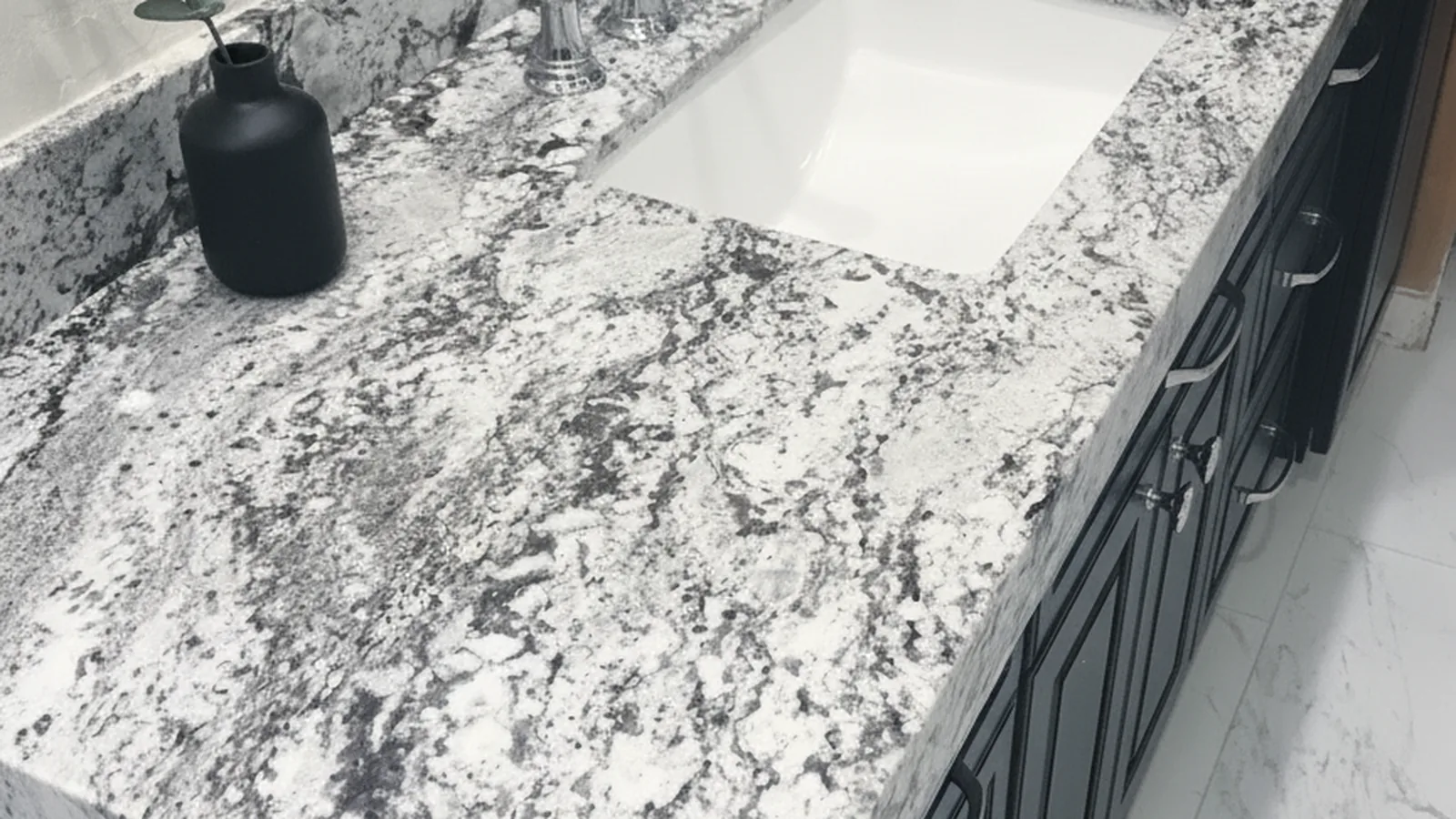
Porcelain and sealed quartzite are the safest bets, while marble and onyx call for the most caution. Steam keeps surfaces warm and wet for long stretches, which is harder on a material than a quick rinse.
Porcelain is nearly nonporous, and large-format slabs mean fewer grout lines, which is where steam, hard water, and mildew find a foothold. It also takes sustained heat without complaint.
Quartzite is a hard natural stone that tolerates heat and moisture when it is sealed on the schedule your installer gives you. Verify what the stone is before you buy, since some marble-look slabs are sold under looser names. Our Taj Mahal quartzite guide explains how to tell.
Granite works well for benches and curbs. Marble and dolomite are softer and etch from acidic cleaners and hard-water minerals, so they suit homeowners who are comfortable with a lived-in patina. Onyx is dramatic but soft and porous, which makes it better as a backlit accent outside the wettest zone.
Engineered quartz uses resin binders, so read the manufacturer’s warranty language on steam and sustained heat before choosing it for the enclosure.
What does steam shower bathroom remodeling cost in Phoenix?
Plan on the steam-specific parts adding the low-to-mid thousands to a shower rebuild, with a complete project landing in the five figures once glass, tile or stone, and labor are counted. These are general industry ranges, not a quote for your home, and the real number comes from someone looking at your bathroom.
What moves the total:
- Generator and controls: often somewhere between one and four thousand dollars for the unit and controls alone, with larger or stone-clad enclosures needing bigger units.
- Surface and fabrication: porcelain tile sits at the lower end, slab panels and natural stone at the upper end, and benches, curbs, and niches add fabrication time.
- Glass: full-height, sealed custom glass costs more than a standard door, and it is where steam leaks most often.
- Electrical and plumbing: distance from the panel, whether the panel has room, and any new supply or drain runs.
- Water treatment: a softener or filter on the generator’s supply line, if your model calls for one.
- What’s behind the wall: older homes sometimes hide damage that has to be fixed before waterproofing starts.
For broader numbers on rebuilding a shower without the steam, the shower remodel cost guide breaks down typical ranges by scope.
What changes for a steam shower in Phoenix and the Valley?
Scale in the generator is the Arizona-specific problem, and it shows up long before the tile does. The USGS classes water above 180 milligrams per liter as very hard, and Phoenix-area tap water runs from hard to very hard depending on the source serving your neighborhood. Minerals bake onto the heating element and tank, which shortens generator life and weakens steam. Many manufacturers call for softened or filtered water or a regular descaling routine, and some tie warranty coverage to it, so read the model’s water-quality requirements before you buy. Our guide to remodeling for hard water covers glass coatings and fixtures that cope.
Older homes bring a panel capacity question. A dedicated high-amperage circuit may need breaker space, or an upgrade, that a 1970s or 1980s house does not have, and the generator needs a home within reach of the shower. Ask the contractor to confirm both before the design is final.
You may also find you use steam more in the cooler months than in July. That does not change the build, but it is worth weighing when you decide how much to spend.
Is a steam shower worth it?
It is usually worth it if you are already rebuilding the shower and would use it a few times a week. It is rarely worth it as a standalone add-on to a shower you would otherwise keep.
Resale is the weak argument. A steam shower is a lifestyle upgrade, and buyers tend to treat it as a nice extra that they rarely pay dollar-for-dollar for. Spend on it if you will enjoy it, and don’t count on recouping the cost.
Expect small ongoing chores. Squeegee the glass, run the fan after each session, flush or descale the generator as the manufacturer recommends, and reseal natural stone on your installer’s schedule.
How do you choose who builds it?
Choose on steam-specific proof. A general bathroom portfolio won’t show it, since a crew that tiles beautiful showers may never have built one that holds steam. Questions worth asking:
- Can they show a steam shower they have finished, ideally one that has been in use for a few years?
- How do they waterproof the ceiling, and do they flood test the pan and curb before tile goes on?
- Who sizes the generator, and from what? A solid answer references the manufacturer’s sizing chart for your enclosure’s volume and surfaces.
- Who does the electrical and plumbing?
- What does the warranty cover (equipment, labor, or both), and who services the generator?
- Is the scope in writing, including glass, stone, water treatment, and allowances?
Before signing with anyone, verify license status and complaint history with the Arizona Registrar of Contractors.
Frequently asked questions
How long does a steam shower take to heat up?
Most residential steam showers fill with steam in about 5 to 15 minutes, depending on generator size and how much glass and stone the enclosure has. Sessions typically run 10 to 20 minutes, and many controls include a timer that shuts the generator off. A slow warm-up usually points to an undersized generator or a leaky door.
Does a steam shower use a lot of electricity or water?
No, a typical session uses modest amounts of both. A generator draws its full power mainly while heating, then cycles, so a session generally costs well under a dollar in electricity at typical household rates. Generators use only a few gallons of water per session, though exact numbers depend on unit size and session length.
Can steam cause mold or damage the rest of my bathroom?
Not when the shower is built correctly and dried out afterward. Problems come from missing membrane, flat ceilings, or skipped ventilation. Warning signs include peeling paint or soft drywall just outside the enclosure, a musty smell, or grout that stays dark for days. Squeegee the glass, run the fan, and fix small leaks early.
Can I fit a steam shower in a small bathroom?
Yes, small enclosures often suit steam well because they heat quickly and need a smaller generator. The harder part is usually the generator’s location and the seating, not the shower footprint. A compact stall can work with a corner or fold-down seat, and the generator can live in a vanity cabinet or a nearby closet.
Do I need a permit for a steam shower in Phoenix?
Usually yes when the work adds an electrical circuit or changes plumbing, and your contractor normally pulls those permits. Requirements vary by scope and home, so confirm with the City of Phoenix Planning and Development Department before work starts. Unpermitted electrical work can cause trouble with insurance and at resale, so ask who is pulling the permit.
Is a steam shower safe for everyone?
Not automatically. People with heart conditions, high or low blood pressure, or pregnancy, and anyone on medications that affect heat tolerance, should ask a doctor before using steam regularly. Keep sessions short, stay hydrated, and take extra care with children and older adults. A properly placed steam head sits away from where you sit or stand.
How long will I be without a shower?
Longer than a standard shower rebuild, because the waterproofing has to cure and be tested before tile or stone goes on, and custom glass and slabs carry their own lead times. Ask for a written schedule that separates demolition, rough-in, waterproofing, surfacing, and glass. If it is your only shower, plan a temporary option.
Ready to plan your steam shower?
If you are weighing steam shower bathroom remodeling in Phoenix, start with the three decisions that shape everything else: the water plan, the surface, and where the generator will live. AZ Granite and Remodeling can walk through all three at a free, no-pressure in-home estimate. Request an estimate, call (602) 759-9000, or email veny@azgranite.us.