If you’re researching bathroom remodeling in Phoenix for an Arizona home, most of the money and most of the regret trace back to two decisions made before tile colors come up: how far to take the scope and who does the work. A bathroom is small, but it packs plumbing, waterproofing, electrical, stone, glass, and tile into one room. In the desert, those pieces have to survive hard water, dry heat, and houses that often sit on concrete slabs.
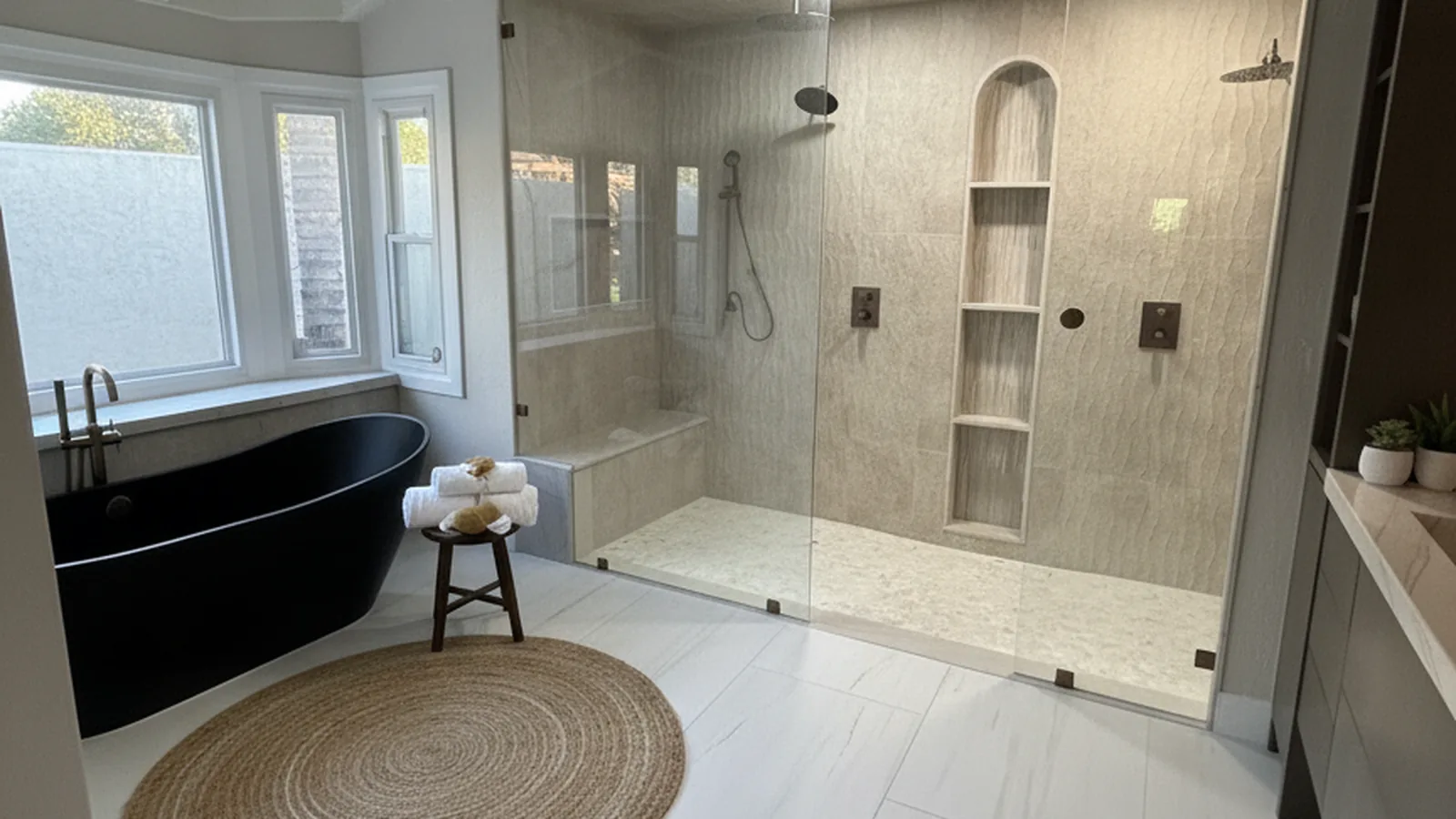
Quick answer: Choose the smallest scope that fixes what is actually wrong, pick surfaces that tolerate hard water, and hire a licensed crew that puts the scope in writing. In most Valley homes, moving a toilet or shower drain is the point where a modest project becomes a large one.
Key takeaways
- Where the plumbing sits usually sets the budget more than room size does, so keep drains where they are unless the layout truly fails.
- Hard water is the main wear factor in Arizona, so favor fewer grout lines and finishes that forgive spotting.
- Get the license number, scope, and allowances in writing before demolition starts.
- A design-build team earns its keep when stone, tile, glass, and layout must line up. A simple refresh may need only a good tradesperson.
What is bathroom remodeling in Phoenix, and what changes for Arizona homes?
Bathroom remodeling is any project that changes how a bathroom looks, works, or holds up, from a new vanity and fixtures to a gut down to the studs. In Phoenix, AZ, the climate and the housing stock shape the work more than style trends do. Five local factors come up on almost every job:
- Hard water. Valley tap water carries a lot of dissolved minerals, which leave scale on glass, faucets, and showerheads and wear out cheap cartridges and valves sooner.
- Concrete slabs. Many homes here are built on slab, so relocating a drain can mean cutting into concrete instead of opening a floor from below.
- Dry air and heat. Low humidity dries a bathroom quickly, but a shower still needs real waterproofing behind the tile because slow leaks do their damage out of sight.
- Home age. Homes from the 1970s through the 1990s often still have original tubs, builder-grade vanities, and aging shutoff valves worth replacing while the walls are open.
- HOA and city rules. Some communities limit work hours and dumpster placement, and the City of Phoenix generally expects permits when plumbing, electrical, or structure changes (the Planning and Development Department lists current requirements).
Refresh, update, gut, or reconfigure: which scope fits your bathroom?
A refresh fits when the layout works and the room just looks tired. A gut or reconfiguration fits only when something structural is the real complaint, such as a failing shower pan or a layout nobody can use. Most homeowners land in between. The table compares the four common scopes.
| Scope | What it covers | Disruption | Relative cost | Fits when |
|---|---|---|---|---|
| Refresh | Paint, mirror, lighting, hardware, faucets, sometimes a new vanity top | Short, room stays mostly usable | Lowest | Layout is fine, finishes are dated |
| Update | New vanity and top, toilet, flooring, re-tiled shower or tub surround | Room out of service for the job | Moderate | Fixtures stay put, surfaces are worn |
| Full gut | Everything to the studs, new waterproofing, tile, glass, fixtures | Extended, trades sequenced | High | Hidden damage or a full style change |
| Reconfigure | Moved fixtures, tub-to-shower conversion, larger shower, added space | Longest, with permit and slab work | Highest | Layout fails daily use or accessibility needs |
The ranking is a planning guide, not a quote, and the tiers overlap on purpose because stone, glass, and shower size swing a total more than the label does. Dollar figures vary too much from room to room to print here, so for real ranges by scope, see what remodeling a bathroom costs in Phoenix.
Where AZ Granite & Remodeling fits in a Phoenix bathroom project
AZ Granite & Remodeling fits best when a bathroom depends on stone, tile, and layout decisions that all have to line up. It is a design-build remodeling contractor and in-house stone fabricator based in Phoenix. It has served the Valley for over 20 years and carries a 5.0-star rating. The approach is built around form and function: how the room looks, and whether it still works well after years of daily use.
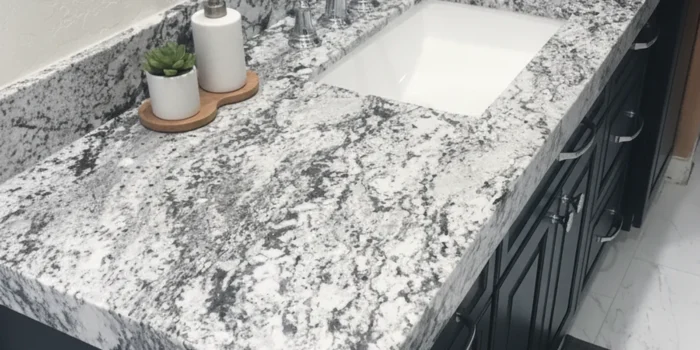
In practice, you work one-on-one with a designer, and the same team handles custom fabrication and installation in its own shop. A vanity top is cut from the stone you chose by the people who will set it, so there is no handoff between a stone yard, a fabricator, and a remodeler when a dimension needs adjusting. The materials list covers granite, marble, quartz, quartzite, dolomite, porcelain, onyx, and natural quartz, which is most of what a bathroom needs from vanity to shower.
A vanity top uses very little stone, so some homeowners look at granite remnants, which are offcuts from the shop’s own full-slab jobs, viewed by appointment at the Phoenix shop. The inventory rotates, so ask what is available when you call.
The team works across the Phoenix Valley, including North Scottsdale, Desert Ridge, Peoria, Sun City, and Anthem, plus the surrounding East and West Valley. Details on the bathroom side of the business are on the bathroom remodeling service page.
It is not the right call for every job. If all you want is a new faucet and a coat of paint, a handyman or a single skilled tradesperson will likely cost less and move faster. A design-build team makes more sense once plumbing, tile, stone, and glass all have to arrive in the right order. If that sounds like your project, the next step is a free, no-pressure in-home estimate, which you can request here.
What drives the price of a Phoenix bathroom, and where do surprises hide?
Plumbing changes, shower construction, and stone and glass choices drive most of the price, well ahead of square footage. A small hall bath with a custom shower can cost more than a larger room with simple surfaces. Five line items do most of the damage:
- Moving fixtures. Relocating a toilet, tub, or shower drain in a slab home means saw-cutting and patching concrete, plus plumber time. Leaving fixtures in place is the biggest single saver.
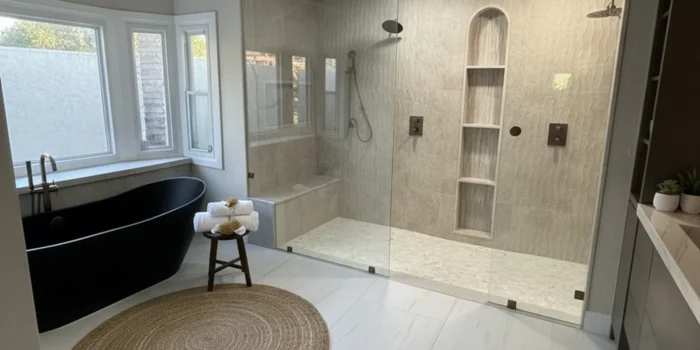
- Shower construction. A prefab insert, a tiled shower, and a porcelain or slab-walled shower sit at very different price and labor levels, and the waterproofing behind each matters more than what you see.
- Glass. Frameless custom glass is usually its own line item and is made to measure after the shower is finished.
- Surfaces. A vanity top is a small slab, so quartzite or marble can be within reach in a bathroom when it would strain a kitchen budget.
- Behind-the-wall surprises. Soft subfloor around an old tub, weeping valves, and outdated wiring show up once demolition starts.
Bids can differ by thousands for reasons unrelated to quality. The usual culprit is the placeholder budget called an allowance, which covers a material you haven’t chosen yet. A low tile allowance makes a bid look cheap until you pick the real tile, so compare allowances line by line.
Which materials stand up to Arizona water and heat?
Surfaces with few seams and low porosity, such as quartz, porcelain, and properly sealed granite, handle Valley water best. Grout, unsealed edges, and soft finishes are where scale and staining collect.
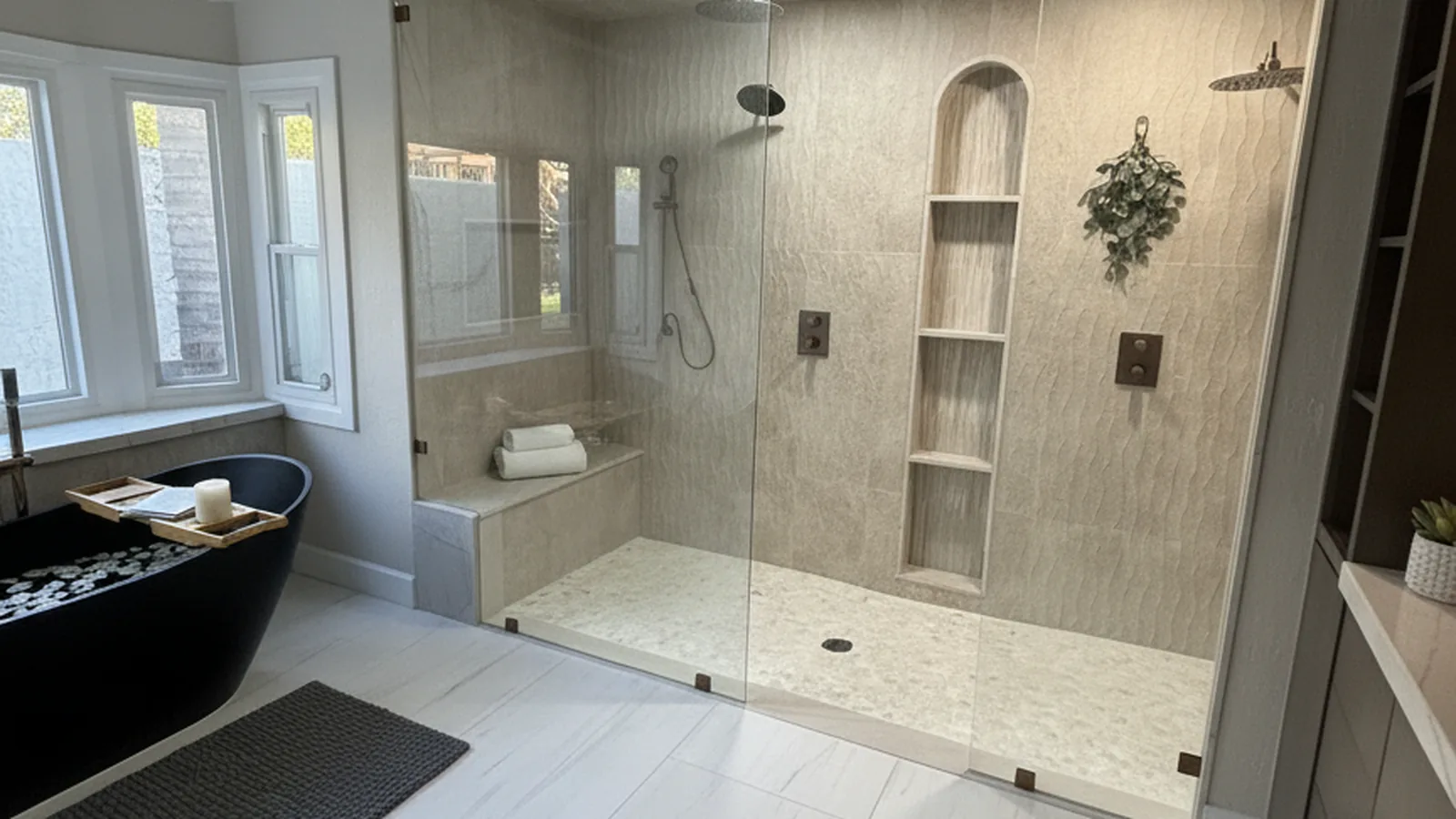
For shower walls, large-format porcelain panels or slabs cut the number of grout lines sharply. If you prefer smaller tile, epoxy grout resists staining better than standard cement grout, though it costs more to install and is less forgiving to work with.
On vanity tops, quartz is the low-maintenance default. Granite and quartzite tolerate heat well and need periodic sealing. Marble is beautiful but etches from acidic products, so it suits a guest bath better than a busy family bath.
With fixtures and glass, polished chrome and clear glass show spots but wipe clean fast, while matte black and other dark finishes show a white mineral film vividly. A hydrophobic glass coating and a quick squeegee habit help more than any product.
Floors should be textured porcelain for grip. Also look for WaterSense-labeled toilets, faucets, and showerheads. A labeled showerhead flows at 2.0 gallons per minute or less, against the 2.5 federal maximum, and that adds up in the desert.
How do you vet a bathroom crew before you sign?
Verify the contractor’s license first, then compare bids line by line and look past the bottom number. The Arizona Registrar of Contractors lets you look up a license, its classification, and any complaint history before you hand over a deposit.
Four kinds of crews take on bathroom work, and they trade off differently:
- Design-build team. One company designs, builds, and sometimes fabricates, so responsibility sits in one place. It suits layout changes and stone-heavy rooms and can be more than a simple swap needs.
- General contractor with subcontractors. Flexible and common, but quality depends on the subs and on how well they are sequenced. Ask who is on site day to day.
- Single tradesperson or handyman. Good for refreshes and one-trade jobs, a poor fit when plumbing, tile, and electrical all change.
- Retail install programs. Predictable for standard products, limited for custom showers or stone.
Before signing, ask each crew:
- What is the license number and classification, and does it cover this scope?
- Who pulls the permits and schedules inspections?
- What waterproofing method does the written scope specify, and which items are allowances?
- How are change orders priced and approved?
- Who measures and fabricates the stone and glass?
- What is the deposit, and which milestones trigger each payment?
Treat pressure to sign today, a vague scope, a large upfront payment, or a bid with no license number as reasons to keep looking. A straightforward crew leaves a written bid with you and expects you to compare it. Unpermitted plumbing or electrical work can also complicate a future sale or insurance claim, so the permit question is worth asking early.
What order does a bathroom project follow, and where do delays come from?
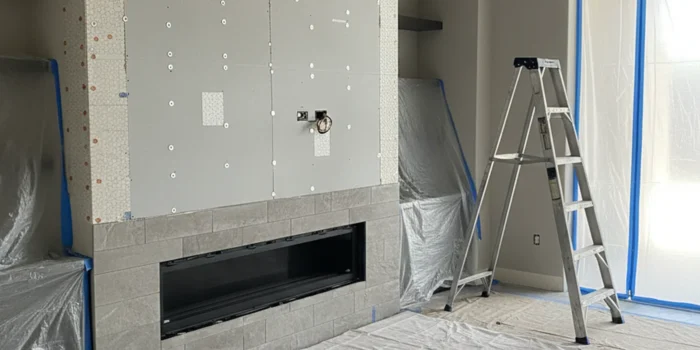
A typical project runs demolition, rough plumbing and electrical, waterproofing and inspection, tile, stone and glass, then fixtures. Delays usually come from made-to-order pieces. Stone and frameless glass are cut to measured dimensions, so they can only be finalized once the cabinets and shower are in place. That leaves a built-in gap between tile and final install.
Order the vanity, tile, and fixtures before demolition so nothing holds up the crew. Ask your contractor to confirm the sequence in writing and name who owns each handoff.
Frequently asked questions
Can I stay home during remodeling?
Yes, in most cases, but plan for the work area to be unusable for the whole job. If it is your only bathroom, ask about a phased schedule and arrange a backup for the stretch when water is shut off. Ask for floor protection and a daily cleanup routine to keep dust under control.
How much buffer should I budget?
Set aside roughly 10 to 20 percent of the project budget. Older Valley homes, or any bathroom with a long-running leak around the tub or shower, belong at the high end because damage hides behind walls and under pans. If nothing turns up, the money stays yours.
Shower or tub for resale?
A walk-in shower is usually the better primary-bath choice, but keep one tub somewhere in the house if you may sell to families with young children. Low-threshold showers also help anyone planning to age in place, which is a common reason Arizona homeowners convert a tub.
Do I need a water softener?
No, a softener is optional. It reduces scale on glass, fixtures, and tile, but it does not replace choosing low-maintenance surfaces. Water treatment is a plumbing decision separate from the remodel, and some communities and HOAs may restrict salt-based units, so check local rules before buying one.
Does my HOA approve bathroom work?
Often not for purely interior work, but check your CC&Rs first. Many associations set rules for contractor hours, parking, and dumpsters, and for anything that touches exterior walls, vents, or windows. A quick email to the management company before demolition can prevent a stop-work notice.
Can porcelain go on shower walls?
Yes, quartz slabs and porcelain panels are both used on shower walls and curbs, and they replace most grout with a few seams. Ask the fabricator how seams are sealed and whether they can template for niches and benches. Natural stones like granite or marble can work too, with sealing and more upkeep.
What happens at a free estimate?
At AZ Granite & Remodeling, the estimate is free, carries no pressure to sign, and takes place in your home so the room can be seen in person instead of guessed from photos. Bring inspiration photos and your must-have list, and ask how scope and allowances will be written up. You then work one-on-one with a designer.
Ready to scope bathroom remodeling in Phoenix for your Arizona home?
Start by writing down the one thing you most want fixed, then choose the scope that fixes it and no more. If you’d like a second set of eyes on the room, AZ Granite & Remodeling offers free, no-pressure in-home estimates across the Valley. Call (602) 759-9000, email veny@azgranite.us, or request an estimate. The shop is at 1923 W. Cheryl Dr, Suite 2, Phoenix, AZ 85021.