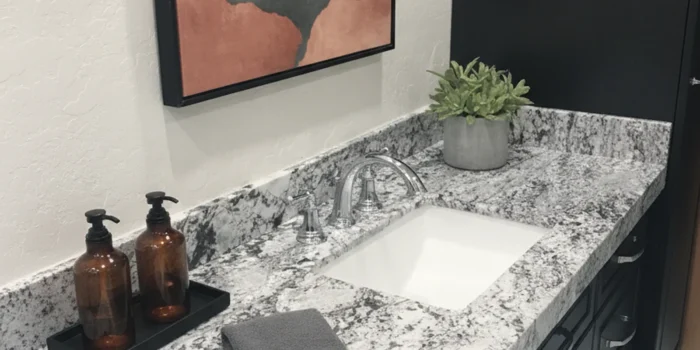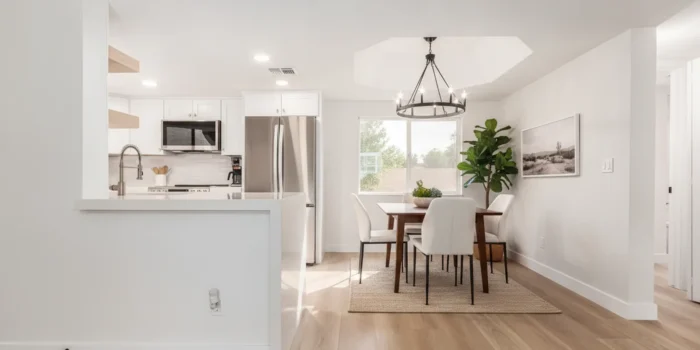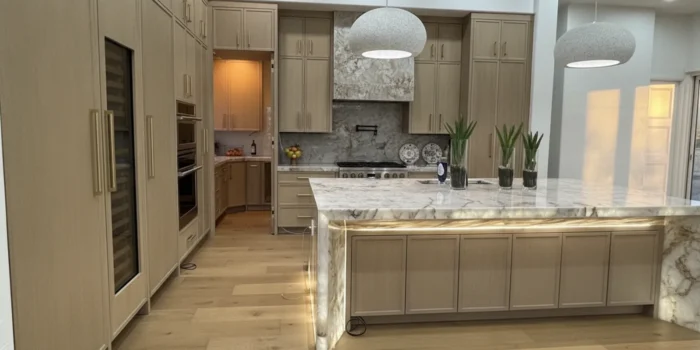
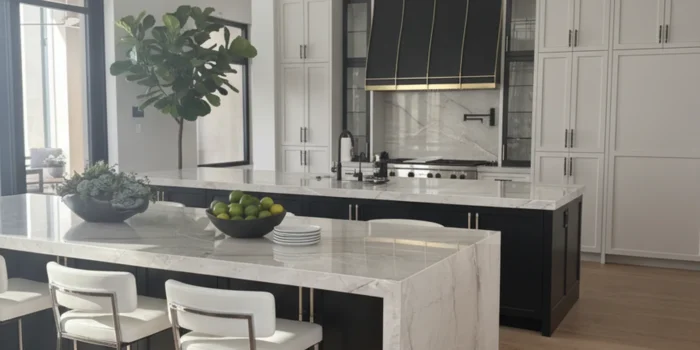
If you’re sorting through kitchen countertop materials and quartz keeps landing at the top of the shortlist, there is a good reason. It is the surface Valley homeowners ask about most, because it looks consistent from slab to slab, never needs sealing, and handles a busy household without fuss. It also has two weak spots in Arizona that the sample cards rarely mention, and a few other surfaces beat it at specific jobs. This guide covers both sides so you can decide before you start collecting quotes.
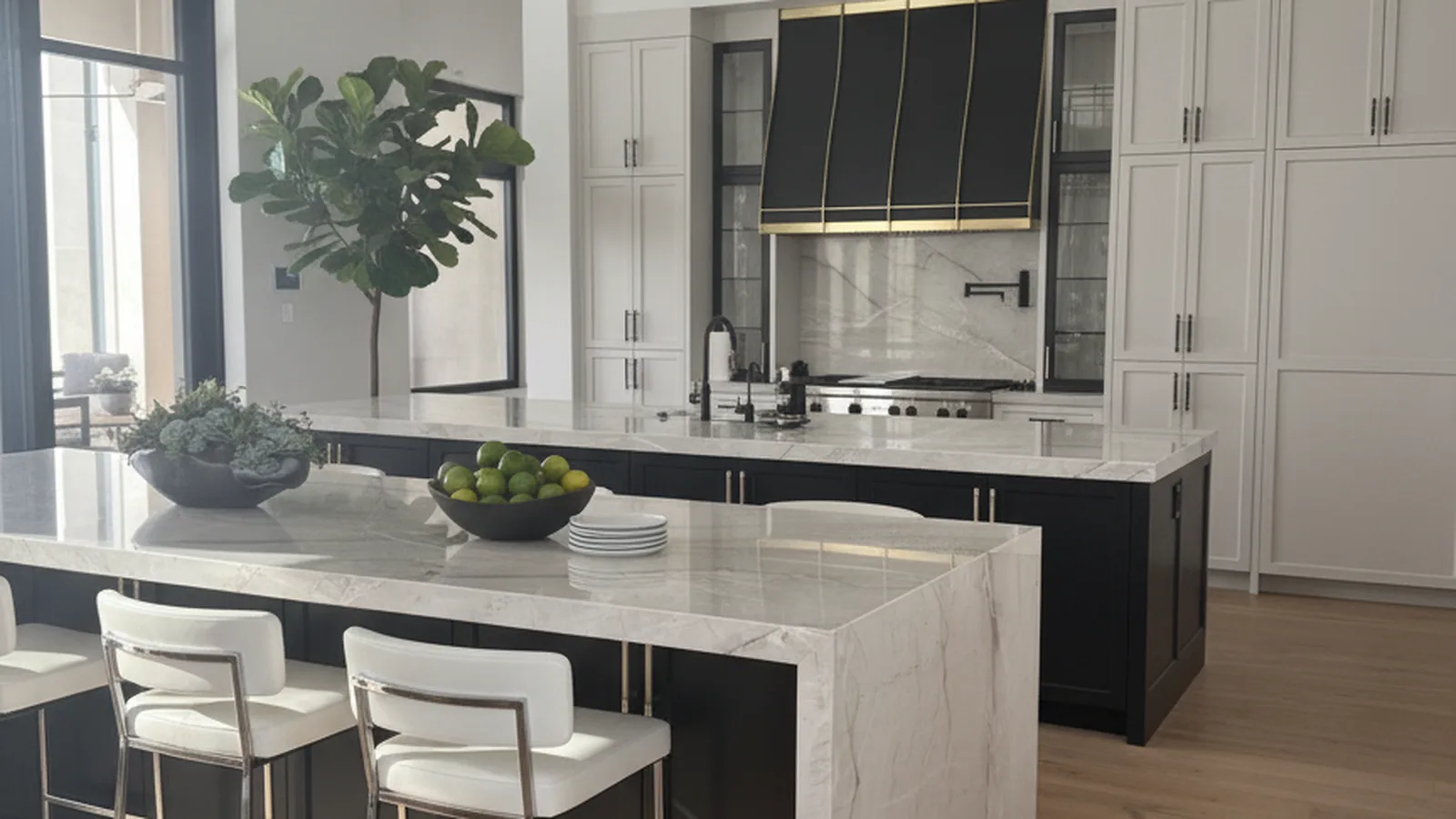
Quick answer: Quartz is the safest default for most Arizona kitchens because it is non-porous, uniform, and needs no sealing. Choose granite, quartzite, or porcelain instead if you cook on high heat, want real stone movement, or plan to use the surface outdoors.
Key takeaways
- Quartz is manufactured, so the sample you hold is what you get across the whole kitchen, island included.
- No surface wins every category, so the useful question is which weakness you can live with.
- Slab tier, edge, and layout move the price more than the surface name does.
- The slab matters, but the shop that cuts and installs it shapes the result just as much, so ask who cuts and seams the slab.
What is quartz as a kitchen countertop?
Quartz is an engineered stone made of ground natural quartz, typically around 90 percent of the slab, bound with polymer resin and pigment and then pressed and cured into a flat sheet. A fabricator cuts that sheet to a template of your kitchen, polishes the edges, and installs it on your cabinets.
Because the slab is manufactured, the pattern is controlled. That is why quartz is easy to match across a long run or a big island, and why the color range goes from flat whites to convincing marble looks. The resin fills the pores a natural stone would have, so liquids stay on top. The same resin sets the limit: it can scorch under direct heat and shift color under strong ultraviolet light.
That is different from granite and quartzite, which are quarried natural stone with real variation and, in most cases, a sealing routine. The names cause real mix-ups at the counter, so the FAQ below sorts out quartz versus quartzite.
How do the main kitchen countertop materials compare to quartz?
Quartz leads on low upkeep and consistency, granite and quartzite lead on heat tolerance, and porcelain is the one that pairs near-zero upkeep with full outdoor tolerance. The table puts the usual contenders side by side on the points that decide most kitchens.
| Surface | Heat tolerance | Stains and etching | Main trade-off | Relative cost |
|---|---|---|---|---|
| Engineered quartz | Fair. Use trivets, since the resin can scorch | Excellent. Non-porous, no sealing | Not suited to direct sun or outdoor use | $$ to $$$ |
| Granite | Excellent | Good when sealed. Rarely etches | Periodic sealing, and patterns vary slab to slab | $ to $$$ |
| Quartzite | Excellent | Varies by stone. Most want sealing | Premium price and uneven slab quality | $$$ to $$$$ |
| Marble | Good, but acids dull the finish | Etches and stains readily | Highest upkeep, and the patina is part of the look | $$$ to $$$$ |
| Porcelain | Excellent | Excellent. Non-porous | Fewer edge profiles, and edges can chip | $$ to $$$ |
| Laminate | Poor | Fair. Seams dislike standing water | Shortest lifespan, cheapest to replace | $ |
Cost key: $ is lowest and $$$$ is highest. Dollar ranges are in the cost section below.
Read the table as trade-offs. A cook who sears steaks every night and a household with toddlers and a sun-washed kitchen are choosing different winners from the same rows. Dolomite and onyx round out the list as specialty picks, and the materials overview covers them.
How AZ Granite & Remodeling approaches a quartz kitchen
AZ Granite & Remodeling works with quartz alongside granite, marble, quartzite, dolomite, porcelain, onyx, and natural quartz, so a recommendation can follow your kitchen, not a product line.
The company is a design-build remodeling contractor and in-house stone fabricator that has served the Phoenix Valley for over 20 years, and it is 5.0-star rated. Countertop fabrication happens in its own shop at 1923 W. Cheryl Dr, Suite 2, in Phoenix. You work one-on-one with a designer, and the company handles custom fabrication and installation in house.
That matters for quartz because the details that make or break a quartz kitchen are fabrication details: where seams fall on a long run, how the sink and cooktop cutouts are handled, and how the slab is laid out so the pattern flows across the island. Fewer handoffs leave fewer places for those decisions to get lost.
The team works across the Valley, including North Scottsdale, Desert Ridge, Peoria, Sun City, and Anthem, plus the surrounding East and West Valley, and offers free, no-pressure in-home estimates. The quartz countertops page shows what it fabricates.
A design-build team earns its keep when the counters are part of a larger kitchen remodel with new cabinets, flooring, or a changed layout. If you only need new tops on good cabinets, you can still get an estimate, and the checklist later in this guide works for comparing any fabricator, this one included.
Where does quartz genuinely win?
Quartz wins on day-to-day care because it is non-porous, so coffee, red wine, and cooking oil stay on the surface until you wipe them away. There is no sealing schedule to remember and no sealer to wear off over the years.
Two Arizona conditions play to that strength. Valley tap water is hard, and the mineral spots it leaves around a faucet come off quartz with a cloth. Monsoon dust and fine desert grit behave the same way, because there is no porous finish for them to work into.
The other win is pattern control. A ten-foot island can match the perimeter runs, and a waterfall edge can wrap the sides without looking like three different stones. With natural slabs, that kind of match depends on careful slab selection and some luck. Households with kids and frequent entertaining, and little appetite for maintenance, tend to be happiest here.
Where does quartz fall short in Arizona?
Quartz falls short in Arizona on two counts: direct heat and direct sun.
On heat, a pan straight off the burner or a tray out of a 450-degree oven can scorch the resin, leave a pale ring, or even crack the slab through thermal shock. Trivets solve it, but only if everyone in the house uses them every time.
On sun, some quartz colors can yellow or fade after years of strong ultraviolet exposure, and Arizona sun is not gentle. It matters most in kitchens with a big slider or a west-facing window that puts direct light on the counter for hours. Many manufacturers do not warrant outdoor use, so read the warranty before putting quartz on a covered patio. For outdoor kitchens, granite and porcelain are the safer picks.
When is another surface the better call?
Another surface is the better call whenever one of quartz’s two weak spots shows up in your kitchen every day. A quick way to sort it:
- Heavy, high-heat cooking. Granite and quartzite tolerate hot cookware far better than quartz, though a trivet is still good practice.
- A marble look with real cooking. Quartzite delivers the veining with harder wear. True marble etches, meaning lemon juice, wine, and tomato leave dull spots, and you need to be comfortable with that patina.
- An outdoor kitchen. Granite and porcelain handle ultraviolet light and big temperature swings that quartz does not.
- Tight budget, small run. Laminate costs least, and granite remnants can cover a bar top, a vanity, or a short counter. Ask what is currently available.
- A preference for real stone. Granite brings natural character and heat tolerance. If you are torn between it and quartz, the quartz versus granite comparison for Arizona goes line by line.
What do kitchen countertops cost, and what moves the price?
Quartz and granite usually share the middle of the market, often somewhere around $50 to $120 per square foot installed, with laminate well below and premium quartzite, marble, and porcelain above. Those are general industry ranges, not a quote. Valley pricing moves with slab supply, so the only number that counts is an itemized estimate built on your layout.
Several things push a job up or down:
- Slab price group. Within quartz alone, entry colors and premium marble-look designs can sit tiers apart, and across a whole kitchen that gap adds up quickly.
- Layout and seams. Islands, long runs, and waterfall edges use more slab and more labor.
- Edge and thickness. A simple eased edge costs less than mitered or built-up profiles.
- Cutouts. Undermount sinks, cooktops, and faucet holes each add fabrication time.
- Demo and prep. Removing old tile or laminate tops and disconnecting plumbing add to the job, and older Valley homes with tile counters are where this surprises people.
How do you choose a slab and a fabricator?
Look at the actual slab in person and find out who will cut and install it before you compare prices. A short checklist keeps quotes honest:
- Look at the full slab. Veining and mottling vary, and a palm-size sample hides it. Hold the sample against your cabinets in your own kitchen light.
- Ask for a layout drawing. It should show where seams fall and how the pattern runs across the island.
- Ask who cuts the stone. Cutting quartz releases fine dust containing crystalline silica, which OSHA regulates because breathing it is harmful. That work belongs in a shop with water and ventilation controls.
- Settle edge and thickness first. Otherwise two quotes are not comparing the same job.
- Get an itemized estimate. It should cover demo, cutouts, sink, backsplash, and haul-away of the old tops.
- Read the warranty. Look for indoor-only language and any heat guidance.
How should you care for quartz in a Phoenix kitchen?
Quartz care is a damp cloth and mild soap, plus two Arizona habits: dry the faucet area and keep heat away. Wipe hard-water spots with a soft cloth and a non-abrasive cleaner before the minerals build into a crust. Skip bleach, oven cleaner, and strong solvents, which can dull the resin finish, and check the brand’s care sheet. Use a cutting board too, since quartz is hard enough to dull knives. If you went with natural stone instead, the Natural Stone Institute, the industry trade association, publishes care guidance, and sealing needs differ from stone to stone.
Frequently asked questions
Is quartz the same as quartzite?
No. Quartz is a manufactured stone made from ground quartz and resin, while quartzite is a natural stone quarried and cut into slabs. Quartzite handles heat better and usually needs sealing, while quartz needs no sealing but is resin-based. Marketing sometimes blurs the two, so ask which one a slab is before you compare prices.
Does quartz look fake?
Usually not from normal viewing distance, though it can. Modern quartz with veining that runs through the body is convincing. The giveaways are repeating patterns across a large island and flat, uniform edges. Look at the full slab, not a sample, and ask how the veining will run across your layout.
Which quartz color hides spots best?
Mid-tone patterns with fine flecking hide dust, crumbs, and mineral spots best. Solid dark colors and pure whites show nearly everything. Take a sample home and judge it after a few days of ordinary use, not in one quick glance under showroom-style lighting.
How thick should counters be?
Three centimeters, about an inch and a quarter, is the common choice for kitchen counters. Two-centimeter slabs are used when a built-up edge or added support underneath makes up the difference. Which suits you depends on the cabinets, the edge profile, and the slab itself, so settle it before comparing quotes.
Can I keep my cabinets?
Yes, if the cabinets are sound, level, and fit the layout you want. A fabricator templates the tops after the cabinets are in their final position, so any repairs or changes should come first. Sagging boxes or loose wall attachment are worth fixing before heavy stone goes on.
Should the backsplash match too?
It can, and the choice comes down to look and budget. A matching low splash is common, while a full-height splash cut from the same slab gives a wipeable, grout-free wall behind the cooktop but uses more slab. Tile is often the lower-cost way to add color or texture.
How long do quartz counters last?
Well-installed quartz commonly lasts for decades in a kitchen. The usual causes of early failure are heat damage, sun exposure, and poorly supported seams or cutouts, not everyday wear. Warranty terms vary by brand and often assume indoor use, so read the fine print.
Ready to compare real slabs?
Choosing among kitchen countertop materials usually comes down to which weakness you can live with, and quartz is a strong answer for many Arizona kitchens when heat and sun are managed. If it is on your shortlist, AZ Granite & Remodeling can walk the kitchen with you, show full slabs, and price the job in an itemized estimate. Call (602) 759-9000, email veny@azgranite.us, or request your free estimate.