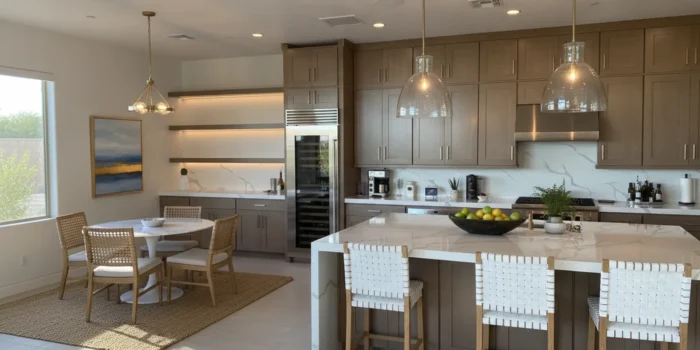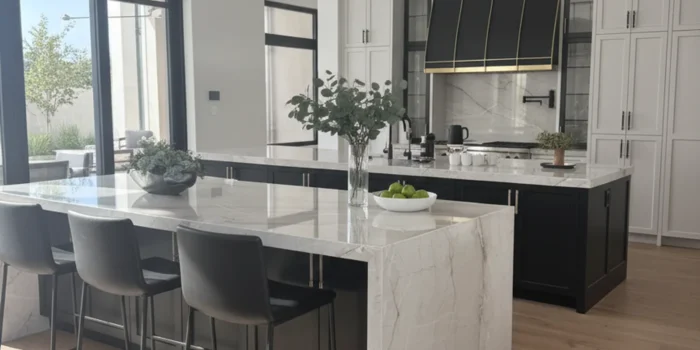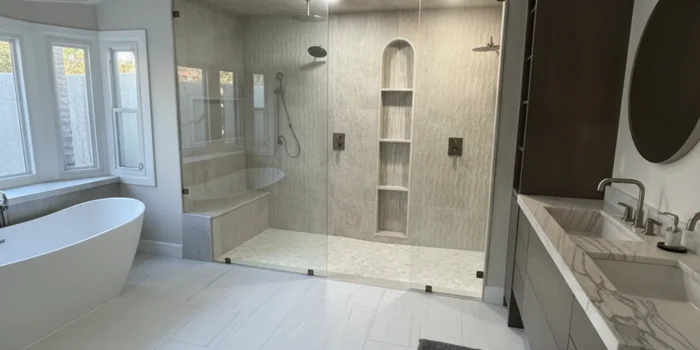
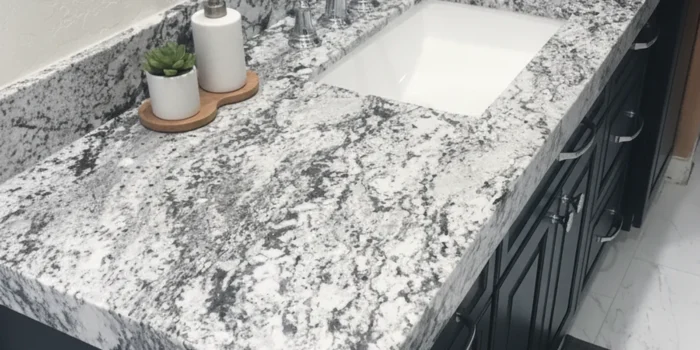
Searching for quartz slabs for sale near me in Phoenix, AZ turns up a messy mix of big-box displays, wholesale distributors, fabricator websites, and online sellers shipping from another state. Each one sells something different, and only some of them end with a finished countertop in your kitchen. This guide sorts out who sells what in the Valley, what to inspect before you pay, what moves the cost, and where a local fabricator like AZ Granite & Remodeling fits.
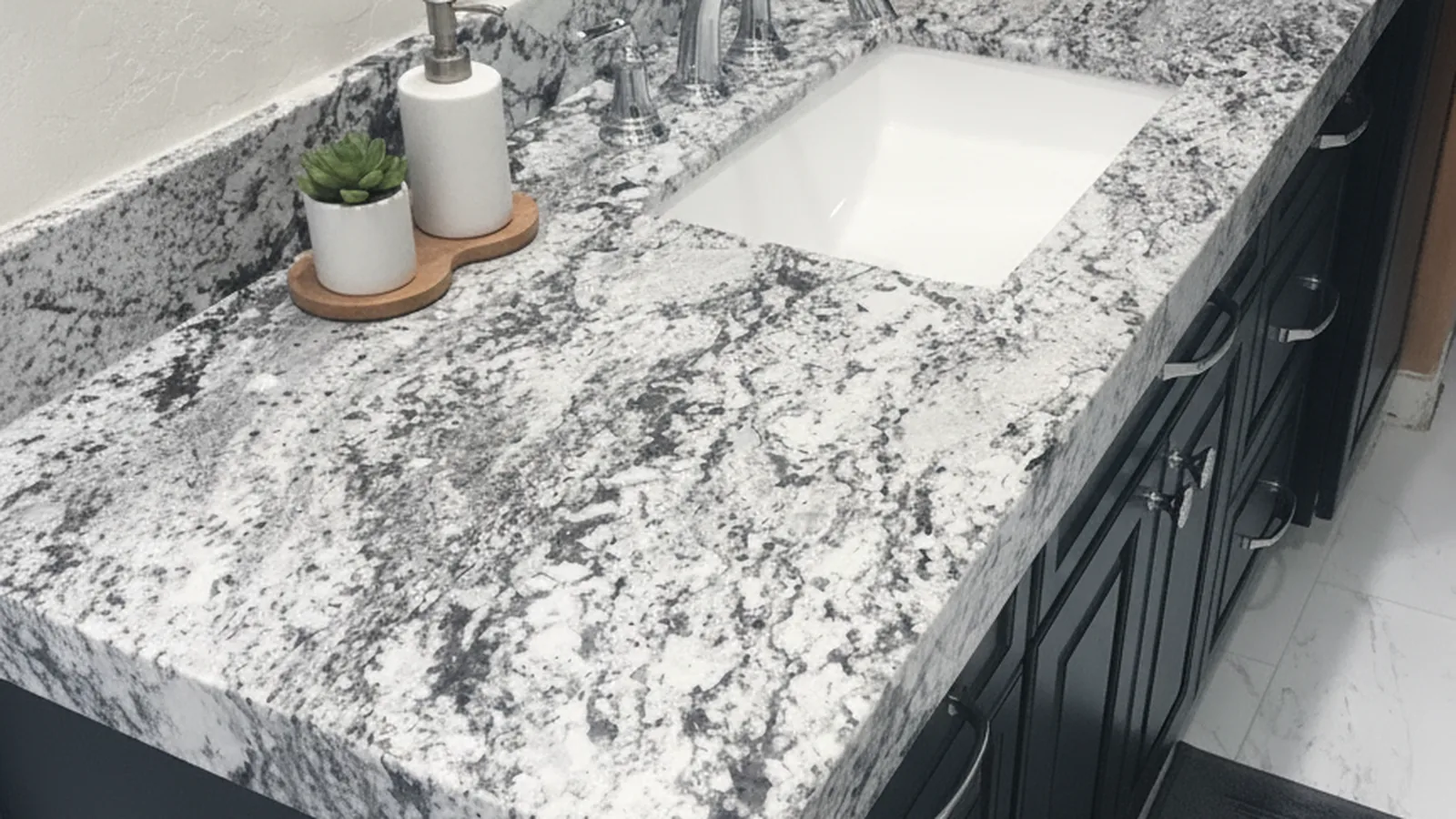
Quick answer: In the Phoenix Valley you can buy quartz slabs from stone distributors, big-box home centers, online sellers, and local fabricators. For most homeowners the fabricator route is the practical one, because a slab only becomes a countertop after it is cut, seamed, and installed, and one company should own that whole result.
Key takeaways
- Choose the fabricator before the slab, since some shops limit their warranty on a slab they did not source.
- See the full slab in daylight, and confirm every slab in your job comes from the same lot.
- A cheaper slab price can disappear once transport, waste, and risk become yours.
- In Arizona, heat and direct sun matter more than hard water.
- Ask where and by whom the cutting is done, and verify the license.
What is a quartz slab?
A quartz slab is a large sheet of engineered stone, typically about 90 percent or more ground natural quartz bound with resin and pigment, made to be cut into countertops, backsplashes, and surrounds. Full slabs commonly run around ten feet by five feet, roughly 45 to 55 square feet, though sizes vary by manufacturer.
Because the material is manufactured, pattern and color are predictable in a way natural stone never is. Slabs from the same production lot look alike, which is a big reason quartz is popular for kitchens where an island and the perimeter need to match.
Two terms cause confusion at the slab yard. “Quartz” on a tag almost always means this engineered product. Quartzite is something else: a quarried natural stone with real veining, more variation from slab to slab, and its own pricing. If the photo you love turns out to be quartzite, a quartz lookalike may not give you the same depth.
Where do quartz slabs for sale near me actually come from?
Four kinds of sellers show up in a local search, and what separates them is who is responsible once you have paid.
- Distributors and slab yards stock full slabs from several manufacturers. Many sit in industrial parts of the Valley rather than retail corridors, and some sell only to the trade, so call before you drive.
- Big-box home centers sell quartz from a limited catalog and typically hand installation to a third-party contractor.
- Online sellers ship slabs or cut-to-size pieces by freight.
- Fabricators and design-build shops sell a finished, installed countertop and source the slab as part of the job.
Most Valley homeowners who search for slabs need a countertop. A slab is only raw material until someone cuts it, seams it, polishes the edges, and sets it on your cabinets, and that last stretch is where most of the cost and most of the problems live.
Where AZ Granite & Remodeling fits: the fabricator route
AZ Granite & Remodeling is the fourth kind of seller: a design-build remodeling contractor and in-house stone fabricator at 1923 W. Cheryl Dr, Suite 2 in Phoenix, Arizona, serving the Phoenix Valley for over 20 years and rated 5.0 stars.
There you get a finished, installed countertop, not a slab off a rack. You work one-on-one with a designer on the surface, and the custom fabrication and installation are done in house. That keeps accountability simple, because one team handles selection, cutting, and install, instead of a distributor, a fabricator, and an installer pointing at one another when a seam looks off.
Quartz is one of several materials the shop works with, alongside granite, marble, quartzite, dolomite, porcelain, onyx, and natural quartz. That matters if you started with a quartz search but are still deciding, because you can compare quartz with a harder natural stone or a porcelain option in one conversation instead of visiting three suppliers who each recommend what they stock. The quartz countertops page explains the service in more detail.
Estimates are free, in-home, and no-pressure. For quartz that helps more than it sounds, since layout, edge profile, cutouts, and seam placement all change the number and are hard to judge from a photo. You can request one here and talk through slab choices with the designer before committing to anything.
Two caveats. If you want to buy a bare slab and take it elsewhere, ask the team up front whether that suits your project. And if the job is small, such as a vanity or bar top, you may not need a full slab at all. AZ Granite keeps a rotating, one-of-a-kind inventory of granite remnants left over from its own full-slab jobs, viewed by appointment at the Phoenix shop.
Slab yard, big box, online, or fabricator: how do they compare?
The right source depends on whether you want a slab or a finished countertop, and on who you want to call when something is off.
| Source | Selection | Who answers after install | Main risk | Good fit when |
|---|---|---|---|---|
| Slab yard or distributor | Widest, often several manufacturers | You and a separate fabricator | A fabricator may limit its warranty on a slab you supplied | You already have a fabricator you trust |
| Big-box home center | Narrow catalog | The store plus a subcontracted installer | Often sold from samples, so you may not see the exact slab first | The layout is simple and you want financing or speed |
| Online seller | Wide, shown on a screen | You | Freight damage, color that shifts from screen to room, difficult returns | You are an experienced buyer or a trade pro |
| Local fabricator or design-build shop | What the shop stocks or can order | One company | Choice is limited to its sources, and it needs an estimate | You want one phone number for a kitchen or bath remodel |
Read the last column as a filter, not a ranking. A homeowner with a trusted fabricator already lined up may get the widest choice at a slab yard, while someone who wants a single point of contact is usually better served by a fabricator.
What should you inspect before paying for a quartz slab?
Inspect the full slab, in daylight, before any money changes hands, because the sample chip on a showroom wall is only a rough guide.
- Match the lot number. Every slab in your job should come from the same production lot, since tone and pattern can shift between lots. When a seam will cross two slabs, ask for consecutively numbered ones.
- Scan the surface at an angle. Look for chips on edges and corners, hairline cracks, pits, and dull patches in the polish.
- Bring a cabinet door, a flooring sample, and a paint chip, then look at the slab near an open bay door or outside. Valley sun makes colors read warmer and brighter than showroom lighting.
- Ask for the usable dimensions. Edges are trimmed, so the listed size overstates what can be cut, and layout waste is part of what you pay for.
- If the pattern has veining or flecks, check how it travels across the slab, and picture it running along your island rather than sitting in the middle of a rack.
- Get the exact slabs tagged in your name, in writing, with lot numbers on the paperwork.
What do quartz slabs cost, and what moves the number?
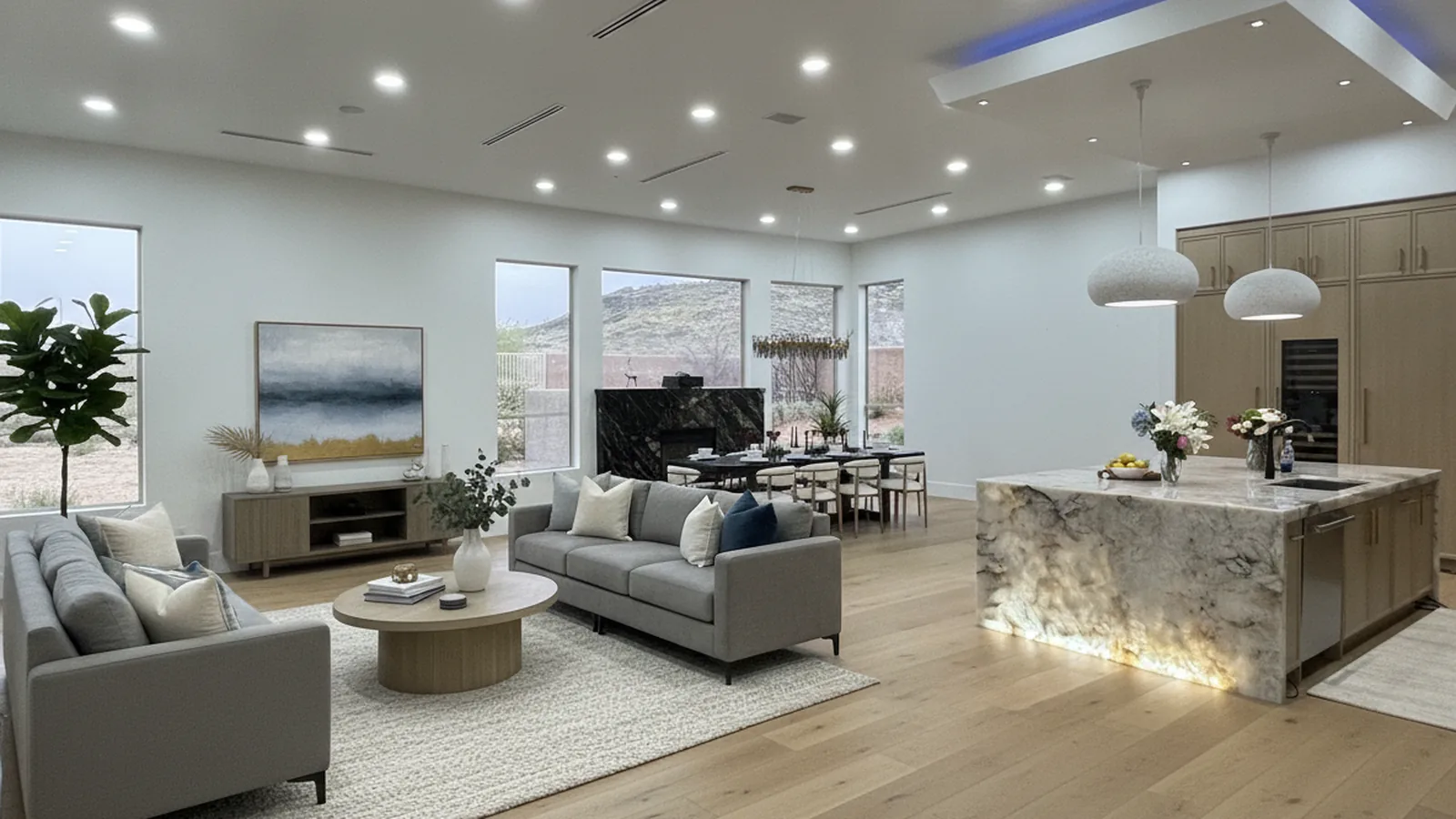
Installed quartz commonly runs around $50 to $150 per square foot or more across the U.S., and the slab is only one line of that. Treat it as a broad market range, not a quote or AZ Granite’s rate for your job, because tier, layout, and edge work swing it widely. A free in-home estimate is how you get a real number.
What moves the number:
- Brand tier and color. Solid whites and neutrals tend to sit lower, while dramatic marble-look patterns with heavy veining sit higher.
- Layout and waste. How efficiently your pieces nest on the slab can decide whether you need an extra one.
- Edge profile. A simple eased edge costs less than an ogee or a mitered waterfall.
- Cutouts and seams. Undermount sinks, cooktops, and long runs that need seaming all add fabrication time.
- Removal and prep. Taking out old tops, plumbing disconnects, and backsplash changes are separate work.
Ask every seller for a line-item quote, so slab, fabrication, edges, cutouts, and install can be compared on equal terms.
Is buying the slab yourself worth it?
Sometimes, but it usually moves risk onto you. A jumbo slab can weigh several hundred pounds, so transporting it is a job in itself, and a break between the yard and the shop is your loss if you own the slab. Some fabricators decline customer-supplied material or limit their warranty on it, and if a flaw shows up after cutting starts, replacing the slab becomes a negotiation. For the full math on buying direct, see this guide to wholesale quartz slab costs.
What does Arizona change about choosing quartz?
Heat and sun matter more than hard water. The resin that binds quartz handles everyday cooking heat but not a pan straight off the burner, so trivets are not optional in a Valley kitchen. Prolonged direct sun is the other concern: if your kitchen has large south- or west-facing windows, look at a sample in that light before you commit.
Hard water is the easier problem. Because the surface is dense, minerals sit on top and wipe off, though deposits left around a faucet for weeks get harder to remove.
Who should cut and install it?
Choose a fabricator that cuts in a controlled shop, holds a current license, and will show you finished work, because the cutting matters as much as the slab. Engineered quartz releases fine crystalline silica dust when it is cut, ground, or polished, and OSHA’s silica guidance explains why reputable shops use water and ventilation controls. The concern is careless fabrication, not the finished, installed counter.
Before you hire anyone, verify the license on the Arizona Registrar of Contractors site, ask for proof of insurance, and ask whether fabrication happens in house or is sent to another shop. Ask to see a seam on a past job too. A well-made seam is tight, color-matched, and placed where the layout allows rather than through the middle of the sink cutout.
Is quartz the right slab at all?
Quartz is a strong default for low upkeep, but it is not the only answer. If you want a marble look with harder wear, look at quartzite, which is natural stone. If heat tolerance matters most, granite handles it better than resin-bound quartz. If the surface will see strong sun or be used outdoors, large-format porcelain is generally the safer pick. A fabricator that works across materials can price these side by side.
Frequently asked questions
How many quartz slabs does a typical kitchen need?
A typical kitchen needs one to three slabs, depending on the length of the countertop run, the size of any island, and whether the backsplash or a waterfall panel uses the same material. A fabricator lays out the cuts against the real slab dimensions, so get that layout done before you commit to a count.
Should I choose 2 cm or 3 cm quartz?
Choose 3 cm for most kitchen countertops, and consider 2 cm mainly for vanities, wall cladding, or surfaces with solid support underneath. Thinner slabs often get a built-up edge so they look thicker. Not every color comes in both thicknesses, so confirm what your pattern offers before you fall for it.
Can I use quartz slabs for an outdoor kitchen in Arizona?
Generally no. Quartz resin is not designed for sustained direct sun and heat, and Arizona exposure can cause fading or discoloration over time. Granite, porcelain, and other outdoor-rated surfaces are the usual choices for patios and built-in grills, and a shaded, covered area is easier on any surface than full sun.
Do I need to seal quartz slabs?
No sealing is needed, because the resin makes engineered quartz dense and non-porous. Wipe spills with mild soap and water, and avoid harsh solvents, bleach-heavy cleaners, and abrasive pads. That low upkeep is a main reason homeowners choose it over natural stone, which often needs periodic sealing.
Do quartz slabs come with a warranty?
Usually there are two separate warranties: one from the manufacturer on the material, and one from the fabricator on cutting and installation. Ask for both in writing, and ask what voids them, such as using a slab you supplied yourself or exposing the surface to high heat.
When should I buy the slab in a kitchen remodel?
Choose the color early so it is available, but treat final measurements as something that happens after cabinets are installed. Countertop makers template from the installed cabinets, so a slab bought before the layout is final can end up being the wrong amount.
Does AZ Granite & Remodeling work outside Phoenix?
Yes. AZ Granite & Remodeling serves the Phoenix Valley, including North Scottsdale, Desert Ridge, Peoria, Sun City, and Anthem, plus the surrounding East and West Valley. The only shop is the Phoenix location, and estimates happen in your home, so you do not need to travel to get started.
Can a chipped quartz edge be repaired?
Often yes. Small chips on edges and corners can usually be filled and color-matched by a fabricator, although a repair is harder to hide on a dark or solid color than on a busy pattern. Quartz is hard but not indestructible, and a sharp impact on an exposed corner is the usual cause.
Ready to look at quartz slabs for sale near you?
If you searched for quartz slabs for sale near me because a countertop project is on the horizon, the most useful next step is a conversation about the whole job, with the slab as one part of it. AZ Granite & Remodeling can set up an estimate anywhere in the Valley. Call (602) 759-9000, email veny@azgranite.us, or use the contact page to get started.