Choosing granite sounds simple until you stand in a slab yard and realize no two pieces of the same stone look alike. The color you liked online has more movement in person, the sample chip barely hints at the veining, and everyone has an opinion about finish and edge. If you’re remodeling a kitchen or bath in the Valley, the real question isn’t “which granite is best.” It’s how to match a specific slab to your home, your light, and how you actually cook.
Quick answer: To choose granite countertops in Phoenix, start by picking a full slab in person rather than from a small sample, match its color and movement to your cabinets and natural light, then decide on a finish and edge profile last. Confirm the fabricator measures, cuts, and installs so one team owns the result, and budget by the finished square foot rather than the slab price alone.
Key takeaways
- Granite is sold by the individual slab, so the piece you approve is the piece you get; a sample chip is only a starting point.
- Phoenix light is bright and warm, which washes out busy patterns, so view slabs in daylight before committing.
- Finish and edge change the look and the upkeep more than most homeowners expect, and they’re easy to decide once the slab is chosen.
- Cost is driven by slab rarity and square footage, edge work, and cutouts, not a single per-foot number.
- The desert’s real stresses on stone are UV, hard water, and dust, and granite handles all three well when it’s sealed and installed correctly.
What is granite, and what does choosing it involve?
Granite is a natural stone, quarried in blocks, sliced into slabs, and polished, so every slab carries its own color, veining, and mineral movement. Choosing it means selecting a specific slab and then deciding how it gets finished and fabricated for your space. That’s the core difference from an engineered surface: you aren’t picking a product code, you’re picking a one-of-a-kind piece of rock.
Practically, the decision breaks into four choices. First, the stone and its color family, from consistent grays to dramatic exotics with heavy veining. Second, the specific slab or slabs, since a big kitchen may need two or three that should be laid out together. Third, the finish, meaning polished, honed, or leathered. Fourth, the edge profile and the fabrication details like seam placement and sink type. Get those in order and the process stops feeling overwhelming.
If you want a deeper primer on the stone itself before you shop, the granite material page is a useful overview of how natural granite behaves as a surface.
Why the slab matters more than the sample in Phoenix
The single biggest mistake is choosing granite from a two-inch sample. A chip can’t show you the scale of the pattern, how the veins flow, or the darker and lighter zones that run across a full slab. What reads as a tidy speckle on a sample can turn out to be sweeping rivers of movement across seven feet of counter.
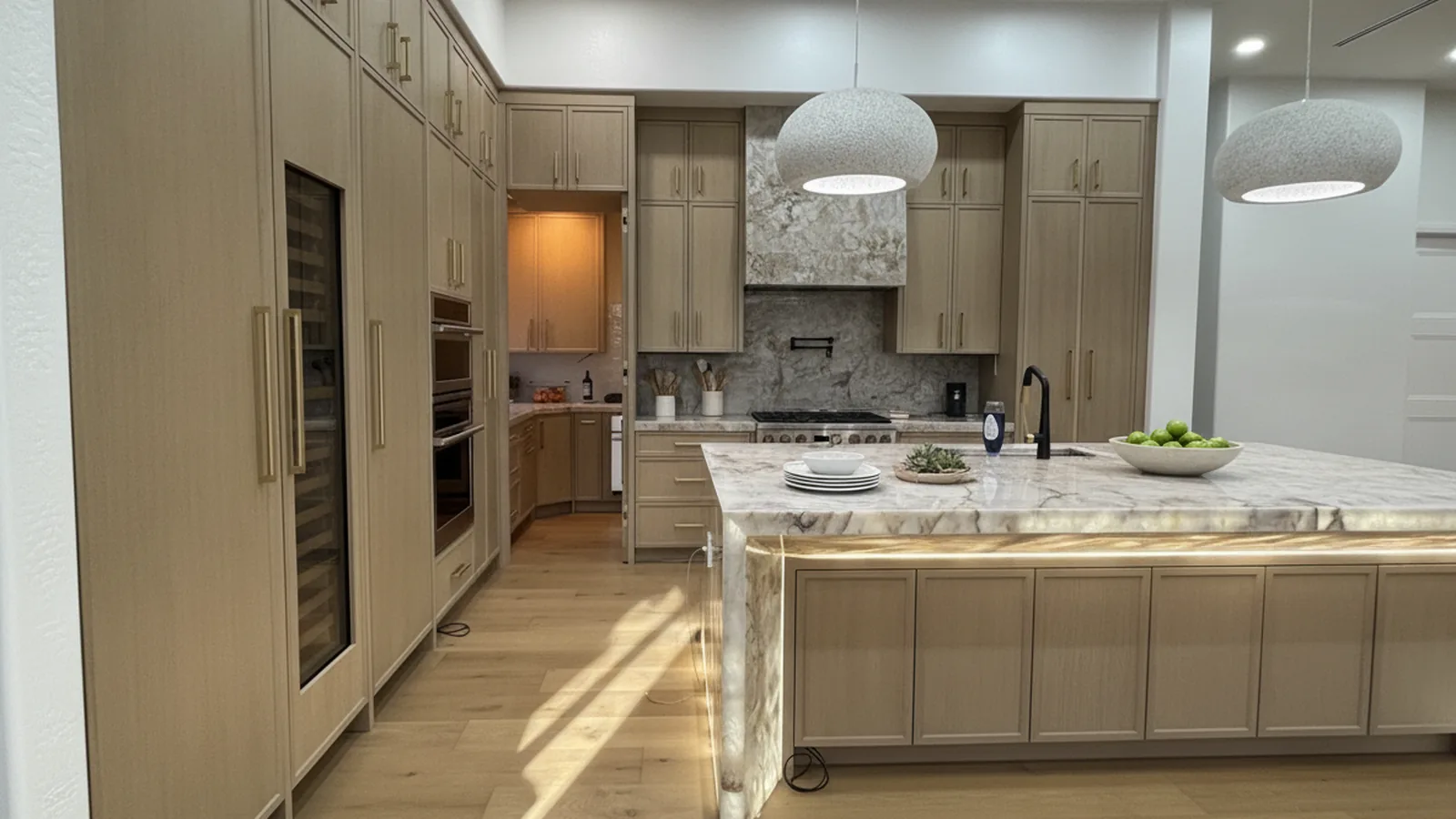
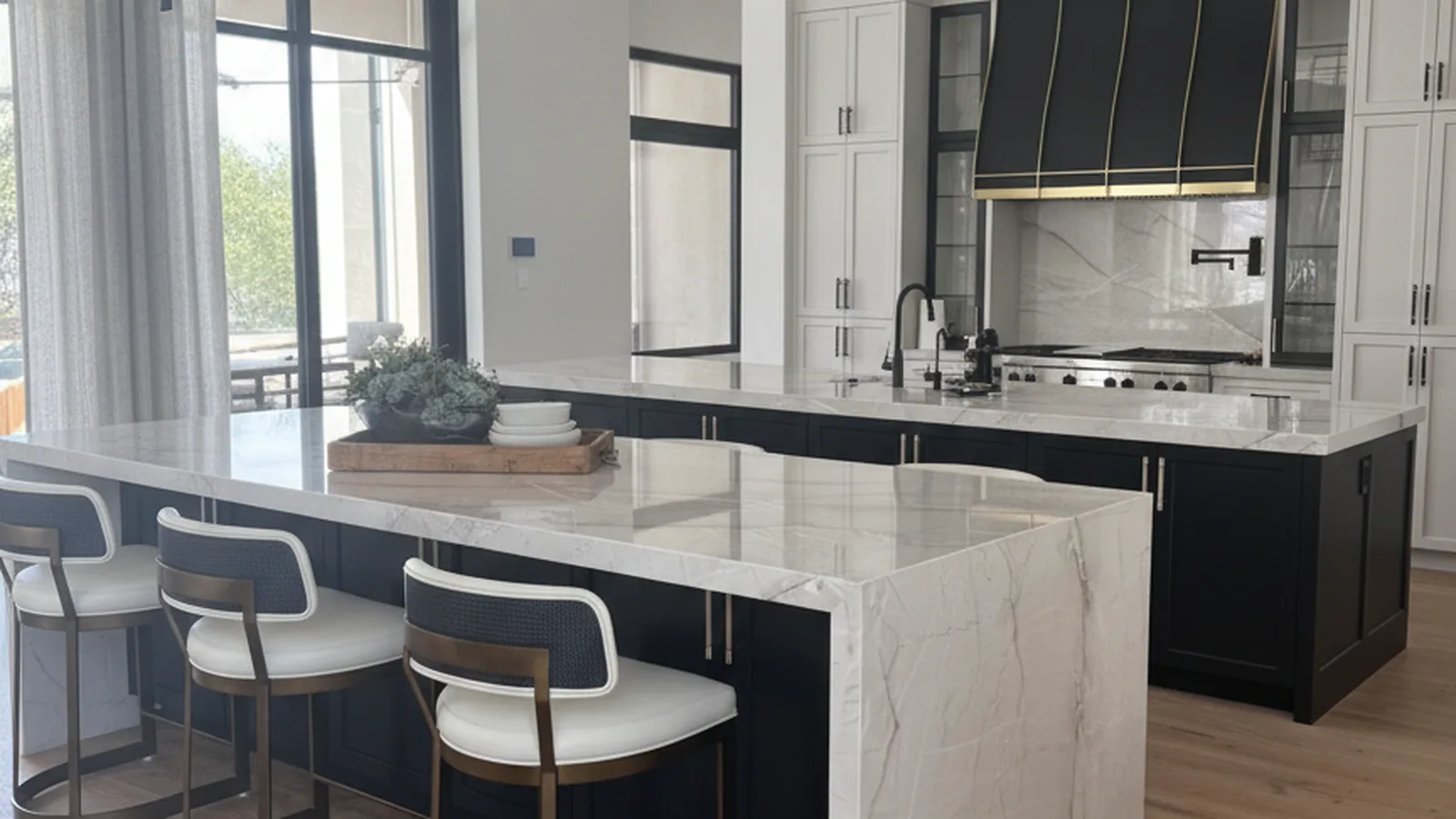
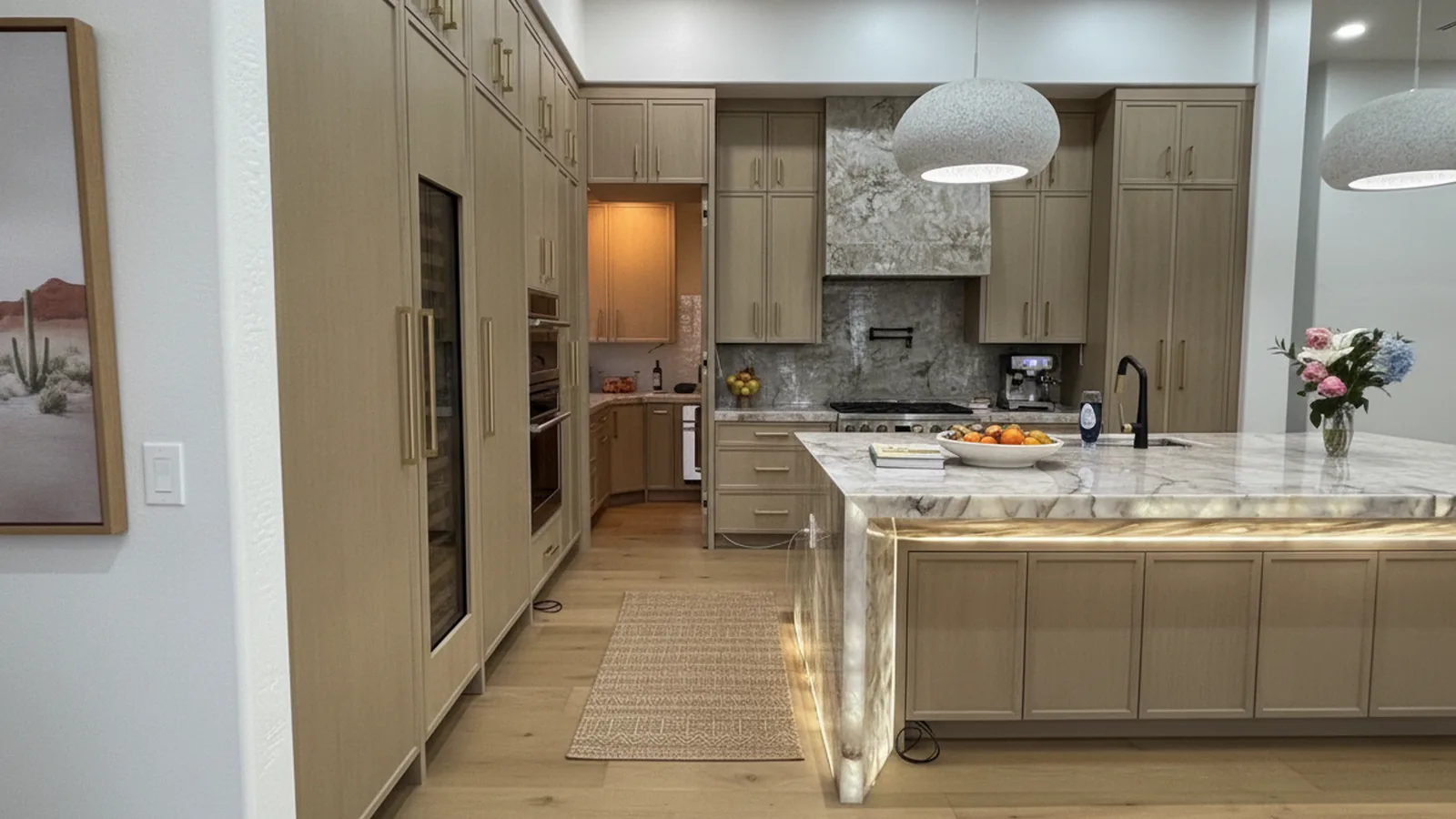
Phoenix light makes this matter even more. Our bright, high-angle sun floods kitchens with warm daylight, and that light tends to flatten subtle patterns and intensify busy ones. A slab that looks balanced under showroom fixtures can feel loud once it’s under a west-facing window in August. Whenever possible, view the actual slab in daylight, and hold up a door or drawer front from your cabinets next to it. For color and pairing ideas, browsing a gallery of finished projects helps you see how a stone reads at full scale rather than as a swatch.
One more Phoenix reality worth knowing: granite is a natural material, and homeowners occasionally ask about radon. The EPA has noted that while granite can contain trace natural radioactivity, the risk from countertops is generally very low. It’s a fair question to raise with any fabricator, not a reason to avoid the stone.
Where AZ Granite & Remodeling fits
AZ Granite & Remodeling is one Phoenix option that removes a common headache: the handoff between the company that sells the stone and the crew that installs it. AZ Granite is a design-build remodeler and in-house stone fabricator that has served the Phoenix Valley for over 20 years, cutting countertops in its own shop at 1923 W. Cheryl Dr rather than sending your slab out to a third party. When one team designs, fabricates, and installs, there’s a single point of accountability if a seam or an edge needs to be right.
That in-house setup matters most at the two moments homeowners feel it: slab selection and template day. You work one-on-one with a designer to match a slab to your kitchen, and the same operation handles the precise measuring and cutting. The crew works across the Valley, from North Scottsdale and Desert Ridge to Peoria, Sun City, and Anthem, plus the surrounding East and West Valley, so they know how local homes and HOA-era layouts are built.
If you’re weighing granite against an engineered surface, their honest quartz vs granite comparison lays out the trade-offs without pushing one over the other. And when you’re ready to talk specifics, AZ Granite offers a free, no-pressure in-home estimate through its contact page, which is also the point where you’d see current material and fabrication pricing for your exact project. You can read more on the granite countertops service page.
That’s one example of how the work gets done locally. The rest of choosing well is the same no matter who you hire, so back to the decisions.
Finishes: polished, honed, and leathered
The finish changes both the look and the daily upkeep. Polished is the classic choice: a glossy surface that deepens the color, resists staining well, and shows off veining. It’s the most common finish in Phoenix kitchens for a reason, though it does reveal fingerprints and water spots more readily on very dark stones.
Honed granite is sanded to a matte, satin surface. It reads softer and more contemporary, hides water spots better, but can show oils and needs diligent sealing because the pores are slightly more open. Leathered finish is textured, with a low sheen and a tactile surface that hides smudges and fingerprints, which many families love on darker granites. There’s no wrong answer here, only a match to how much you want to see and wipe.
Edges, seams, and the fabrication details
The edge profile is a small choice with a big visual effect. A simple eased or square edge looks clean and modern and tends to cost less. Rounded profiles like bullnose feel traditional and soften a kitchen with kids. More elaborate ogee or waterfall edges add cost because they take more time and skill to shape.
Two fabrication details deserve attention before install day. Seam placement should be planned where it’s least visible and structurally sound, and a good fabricator will show you the layout in advance. Overhang support matters for islands and bar tops, since granite is heavy and long spans need proper bracing. If you want the full pre-install checklist, the guide on what to check before install day walks through sink type, cabinet readiness, and clearances.
What drives the cost of granite in Phoenix
Granite is priced by the finished square foot, and several factors move that number. Understanding them helps you compare quotes honestly instead of chasing the lowest per-foot figure.
| Cost factor | What pushes it up | What keeps it down |
|---|---|---|
| Stone rarity | Exotic imports, heavy veining, book-matched slabs | Common domestic colors, consistent patterns |
| Square footage | Large islands, extended runs, multiple slabs | Compact kitchens, a single slab |
| Edge profile | Ogee, waterfall, mitered edges | Eased or square edges |
| Cutouts and details | Multiple sinks, cooktop cutouts, backsplash | Fewer cutouts, standard undermount |
| Fabrication path | Rush timelines, complex layouts | Simple layout, standard lead time |
Two ways to stretch a budget: choose a widely available color rather than a rare import, and consider remnants for a smaller project like a vanity or a bar. Remnants are leftover offcuts from full-slab jobs, sold as one-of-a-kind pieces, and they can be a genuine bargain for the right size. The remnant shopping guide explains how to find and use them.
Choosing a fabricator, not only the slab
A great slab installed poorly still disappoints, so vet the fabricator as carefully as the stone. Ask whether they fabricate in house or subcontract the cutting, since an in-house shop keeps accountability under one roof. Ask to see the slab you’re buying, not only its color name, and confirm they’ll template digitally and show you seam placement before cutting.
Also ask about sealing and care. Most granite benefits from periodic sealing, and the Natural Stone Institute publishes straightforward care guidance you can hold any fabricator’s advice against. Finally, read recent local reviews and look at finished projects in homes like yours. If you’re planning the whole kitchen, not only the counters, pairing this with a kitchen and cabinet planning guide keeps the layout, storage, and surfaces working together.
Frequently asked questions
Should I pick granite from a sample or a full slab?
Always approve a full slab in person when you can. Granite is natural, so color, veining, and movement vary from slab to slab and even within one piece. A small sample only shows the color family, not the scale of the pattern or how the light in your kitchen will read across seven feet of counter.
Does Phoenix heat or sun damage granite countertops?
No. Granite is quarried rock and is highly heat and UV stable, so it won’t fade in a sunny kitchen or scorch from a hot pan the way some surfaces can. The desert’s tougher tests are hard water spotting and dust, both of which are handled by routine cleaning and periodic sealing rather than anything special to the stone.
How much do granite countertops cost in Phoenix?
Cost is quoted by the finished square foot and depends on the stone’s rarity, your total square footage, the edge profile, and how many cutouts you need, so there’s no single fair number to publish. The most accurate way to know your figure is a measured, in-home estimate for your actual layout and slab.
Is granite or quartz the better choice for an Arizona home?
It depends on your priorities. Granite gives you a genuinely unique natural slab and excellent heat resistance, while quartz offers consistent color and no sealing. Neither wins outright, which is why comparing them side by side for your specific kitchen, budget, and cooking habits is the honest approach.
How do I make a busy granite pattern work in a bright kitchen?
View the slab in daylight and consider a honed or leathered finish, which softens how much the pattern jumps out. Pairing a heavily veined stone with simpler cabinetry and quieter backsplash also keeps the room balanced. The key is judging the full slab under real light, not a chip under showroom bulbs.
Do I need to seal granite, and how often?
Most granite should be sealed on a schedule, though the interval varies by the stone’s density and finish. A quick water test tells you when it’s time: if water beads, the seal is holding; if it soaks in and darkens the stone, it’s due. Denser, darker granites often need it less often than lighter, more porous ones.
Can I use a granite remnant for a bathroom vanity?
Yes, and it’s often the smartest move for a small surface. Remnants are leftover pieces from larger jobs, sold individually, so a vanity or bar top can use a high-end stone for far less than a full slab. Inventory rotates and is one of a kind, so bring your measurements and view what’s currently available.
What should I have ready before install day?
Have your cabinets set and level, your sink and faucet on hand or specified, and your appliance cutouts confirmed. A good fabricator templates the space precisely and reviews seam placement with you first. Sorting these details in advance is what keeps a granite install to a single, clean visit.
Ready to choose your slab?
The best granite decision is the one made in front of the actual stone, in your own light, with a crew that will cut and install it accountably. If you’d like a hand matching a slab to your Phoenix kitchen or bath, AZ Granite & Remodeling offers a free, no-pressure in-home estimate. Start at the contact page or browse the materials options to see what’s possible.