You found the perfect leftover slab for your bathroom vanity, and now you want to know one thing: how long until it’s actually installed and you can put your toothbrush back down. The honest answer is that a remnant project is usually one of the fastest stone jobs you can do, but “fast” still has a few moving parts, and skipping past them is how people end up disappointed.
This guide walks through the real Phoenix timeline stage by stage, what makes a remnant job move quickly or slow down, and roughly what you’ll pay, so you can plan a small project without guessing.
Quick answer: A granite remnant project in Phoenix typically takes about one to two weeks from the day you pick your piece to install day, and a simple vanity top can sometimes be done in a few days. Because the stone is already in the shop, remnants usually skip the slab-ordering wait that full-slab jobs carry.
Key takeaways
- Most remnant projects run one to two weeks start to finish, faster than a full-slab job because the material is already on hand.
- The clock really starts once you’ve selected the piece and it’s measured, not the day you first start browsing.
- Fabrication and a firm schedule, not the size of the stone, are what usually set the pace.
- Remnants are one-of-a-kind and viewed by appointment, so the biggest delay is often just finding a piece that fits your layout.
- A single-piece project (one vanity, a bar top) installs in half a day or less.
What is a granite remnant project?
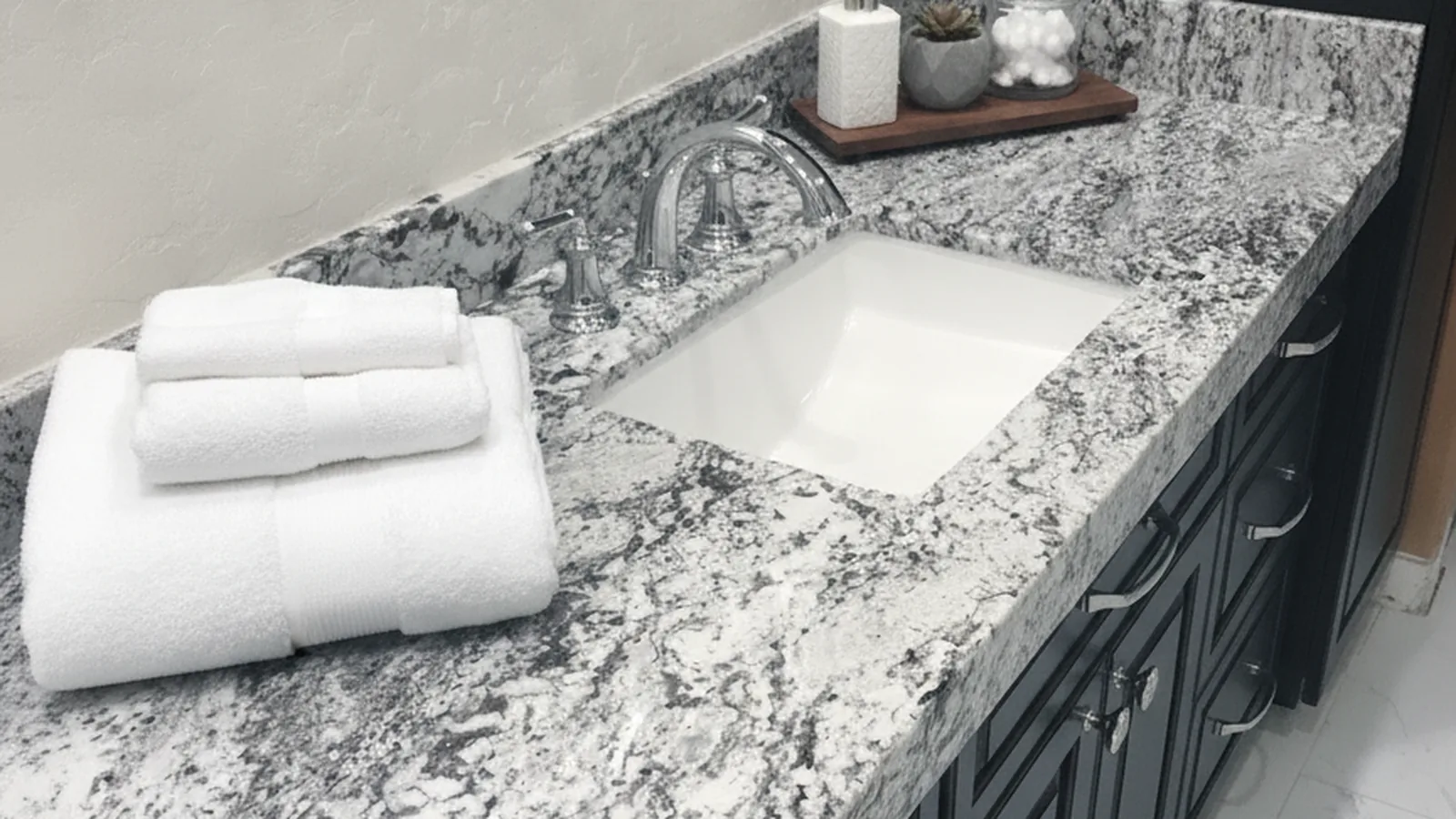
A granite remnant is a usable offcut left over after a fabricator cuts a full slab for a larger job, most often a kitchen. Instead of scrapping the extra stone, shops keep these pieces on a rack and sell them for smaller projects. A “remnant project” just means building your countertop from one of those pieces rather than buying a whole new slab.
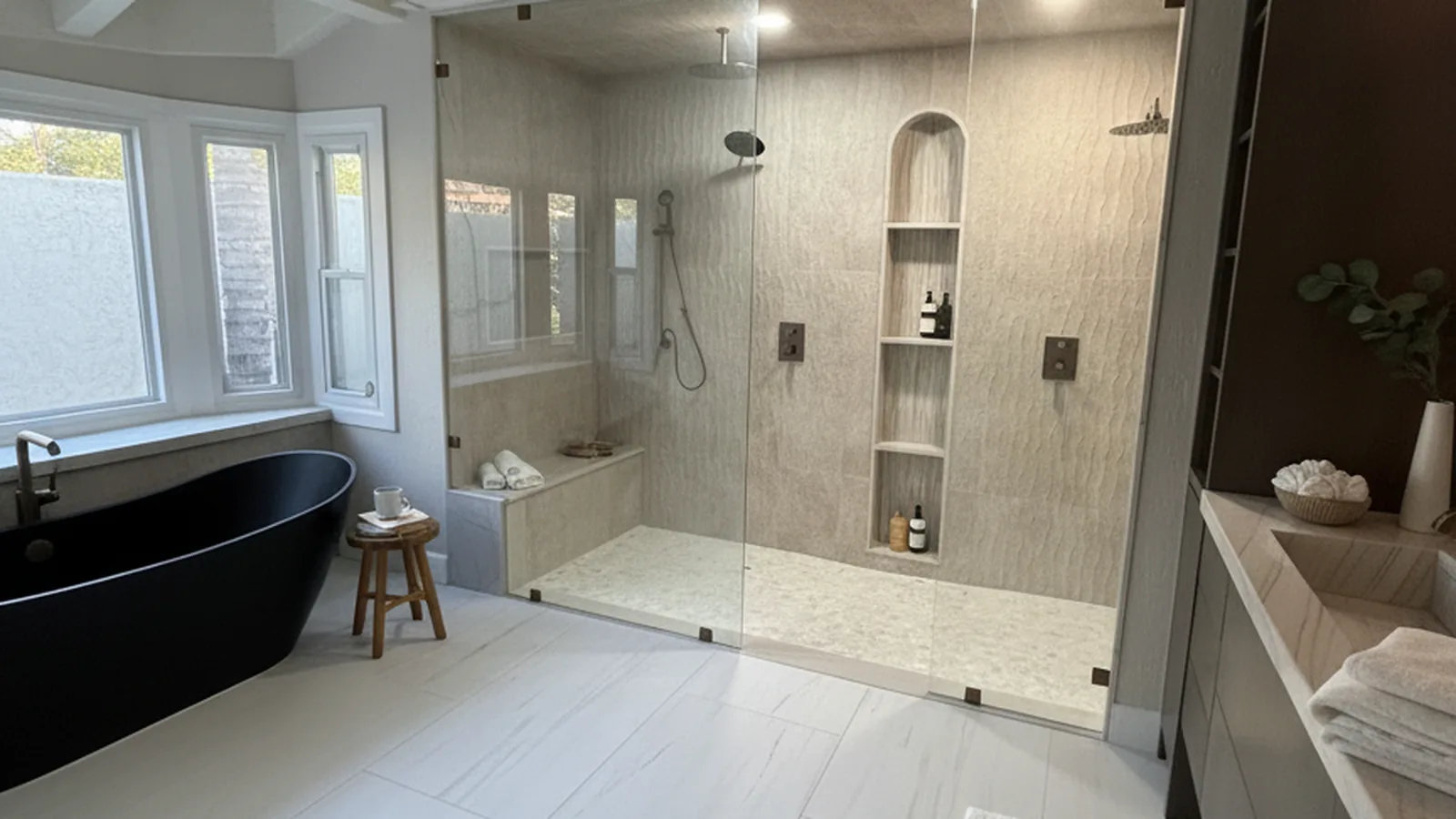
Remnants suit small footprints: a bathroom vanity, a laundry counter, a fireplace surround, a small island, a bar top, or a set of matching shelves. The trade-off is that inventory is whatever happens to be in the shop that week. You’re shopping a rotating, one-of-a-kind selection rather than ordering a specific color on demand, which is exactly why remnants cost less and why availability drives your timeline more than anything else. If you want the deeper background on the stone itself, the granite material overview covers how it wears in a desert climate.
The realistic timeline, stage by stage
Here’s where the time actually goes on a typical Phoenix remnant job.
- Finding and selecting your piece (day one). Because remnants are viewed by appointment, this often happens in a single visit. You look at what’s in stock, confirm a piece is big enough for your layout, and reserve it.
- Template or measure (a few days in). A fabricator confirms exact dimensions, sink and faucet cutouts, and your edge choice. On small jobs this can happen the same week you select the stone.
- Fabrication (a few days to about a week). The shop cuts the piece to size, shapes the edge, and prepares the cutouts. Small single pieces move quickly.
- Install day (half a day). For one vanity or a small counter, installation is usually a morning, not a multi-day event. Old tops come off, the new piece goes in, and seams and sink connections get finished.
Add it up and most remnant projects land in that one-to-two-week window. Compare that with the full quartz countertop timeline, where ordering a specific slab can add time up front, and you can see why remnants appeal to anyone in a hurry.
How granite remnants work at AZ Granite & Remodeling
At AZ Granite & Remodeling, remnants come from the company’s own in-house slab jobs, so the pieces on the rack are offcuts from real kitchens fabricated in the Phoenix shop at 1923 W. Cheryl Dr. That in-house setup matters for your timeline: the same team that designs and fabricates full slabs also cuts the remnant, so your small piece doesn’t get shipped out or handed to a third party and stuck in someone else’s queue.
The granite remnants inventory is a rotating, one-of-a-kind selection viewed by appointment, which is the honest reason a remnant timeline can vary. If the right size and color are sitting in the shop the day you visit, you’re moving. If nothing quite fits your vanity, waiting a week or two for new offcuts to come in can be smarter than forcing a piece that’s too small and ends up with an awkward seam.
Because AZ Granite is a design-build fabricator with 20-plus years in the Valley, the same crew handles the measure, the cut, and the install in one shop. That’s the practical advantage of keeping everything under one roof, fewer handoffs where a small job tends to slip. If you want a firm read on how quickly your specific piece could be done, the fastest route is a free, no-pressure in-home estimate, where you can talk through your layout and current inventory. Everything below applies whether you work with this crew or any reputable shop in Arizona.
What makes a remnant job faster or slower
The size of your stone is rarely the deciding factor. These are:
- Inventory match. The single biggest variable. A remnant is only fast if a piece that fits your layout is already in stock. No match means waiting for the rack to turn over.
- Layout complexity. A rectangular vanity with one sink is quick. Multiple pieces, tricky angles, or a matched seam add fabrication time.
- Sink and faucet type. An undermount sink needs more careful cutout work than a drop-in, which adds a little time.
- Edge profile. A standard eased edge is quick. Fancier ogee or mitered edges take longer to shape.
- Scheduling, not the stone. Often the real wait is simply the next open install slot on the crew’s calendar, especially in busy remodeling seasons.
- Your own decisions. Sitting on an edge choice or a sink model is the delay homeowners most control.
Remnant timeline vs. full-slab timeline
The clearest way to see why remnants are quick is to line them up against a standard full-slab project.
| Stage | Granite remnant project | Full-slab project |
|---|---|---|
| Material sourcing | Already in the shop, pick same day | Order and receive a specific slab, adds days to weeks |
| Best for | Vanities, bar tops, small counters | Full kitchens, large islands |
| Fabrication | Short, usually a single piece | Longer, multiple large pieces and seams |
| Install | Often half a day | Typically most of a day or more |
| Typical total | About 1 to 2 weeks | Often 2 to 4 weeks |
| Color/size choice | Whatever’s in stock | Choose almost any slab available |
The takeaway: you trade unlimited selection for speed and a lower price. If your project is small and you’re flexible on exact color, a remnant is hard to beat.
How to keep your remnant project moving
A few habits shave real days off:
- Bring measurements to your appointment. Rough dimensions of your vanity or counter let a fabricator tell you on the spot whether a piece works.
- Decide your edge and sink early. These are the choices that stall fabrication when left open.
- Stay flexible on color. The homeowners who move fastest are the ones open to two or three stones rather than one exact look.
- Book the measure and install together when you can, so you’re not waiting for a second opening on the calendar.
- Clear the space before install day. Empty cabinets and a clear path let the crew work without delay.
What a granite remnant project roughly costs in Phoenix
Remnants are the budget-friendly path to natural stone, which is much of their appeal. Because the piece is leftover material, the stone itself usually costs less per square foot than a full slab, and small projects use little material to begin with. That said, actual pricing depends on the piece, the size, the edge, and cutouts, so anyone who quotes a firm number sight unseen is guessing.
Cost drivers to keep in mind: the specific remnant and its rarity, total square footage, edge complexity, sink cutout type, and whether an old top needs removal and haul-away. For a real figure on your project, walk your layout with a fabricator and get it measured. In the Valley, a free in-home estimate is the honest way to turn “roughly” into an actual number.
One more Arizona note: granite is a natural stone and benefits from periodic sealing to resist stains, and our hard water can leave mineral spots if counters aren’t wiped down. The Natural Stone Institute publishes plain-language care and sealing guidance worth a read before install day.
Frequently asked questions
How long does a granite remnant project take in Phoenix?
Most take about one to two weeks from selecting your piece to install, and a simple single-piece vanity can be finished in a few days. The material is already in the shop, so you usually skip the slab-ordering wait that stretches full-slab jobs.
Is a remnant faster than ordering a full slab?
Yes, generally by a week or more. The time savings comes almost entirely from sourcing: a remnant is already on the rack, while a full slab often has to be selected and brought in before any cutting starts.
Why do remnant timelines vary so much?
Because inventory is one-of-a-kind and rotates. If a piece that fits your layout and color is in stock the day you visit, you move quickly. If nothing fits, the honest delay is waiting for new offcuts, not the fabrication itself.
How big a project can a remnant cover?
Remnants suit small footprints: bathroom vanities, laundry counters, bar tops, fireplace surrounds, small islands, and matching shelves. A full kitchen usually needs full slabs, though a large remnant occasionally covers a compact galley counter.
Do I need an appointment to see remnants?
Yes. Remnant inventory is viewed by appointment so you can see current pieces in person and confirm size before committing. Bringing rough measurements to that visit lets a fabricator tell you on the spot whether a piece works.
Can install really happen in half a day?
For a single piece like one vanity or a small counter, usually yes. Removing the old top and setting the new piece is a morning’s work. Multiple pieces, matched seams, or tricky layouts push it longer.
Does a remnant need sealing like a full granite counter?
Yes. A remnant is the same natural granite as a full slab, so it benefits from the same periodic sealing to resist stains, and the same wipe-downs to avoid hard-water spotting common across Arizona homes.
Will a remnant have a visible seam?
Small single-piece projects like a vanity often have no seam at all. Larger or L-shaped layouts may need a seam, and a good fabricator will place and match it to keep it discreet.
Ready to see what’s on the rack?
A granite remnant is often the quickest, most affordable way to put real stone in a bathroom or small kitchen, and in most cases you’re looking at a week or two, not a month. The fastest way to nail down your own timeline is to see the current pieces and get your space measured. Browse the rotating remnant inventory or book a free, no-pressure in-home estimate with the AZ Granite & Remodeling team in Phoenix at (602) 759-9000.