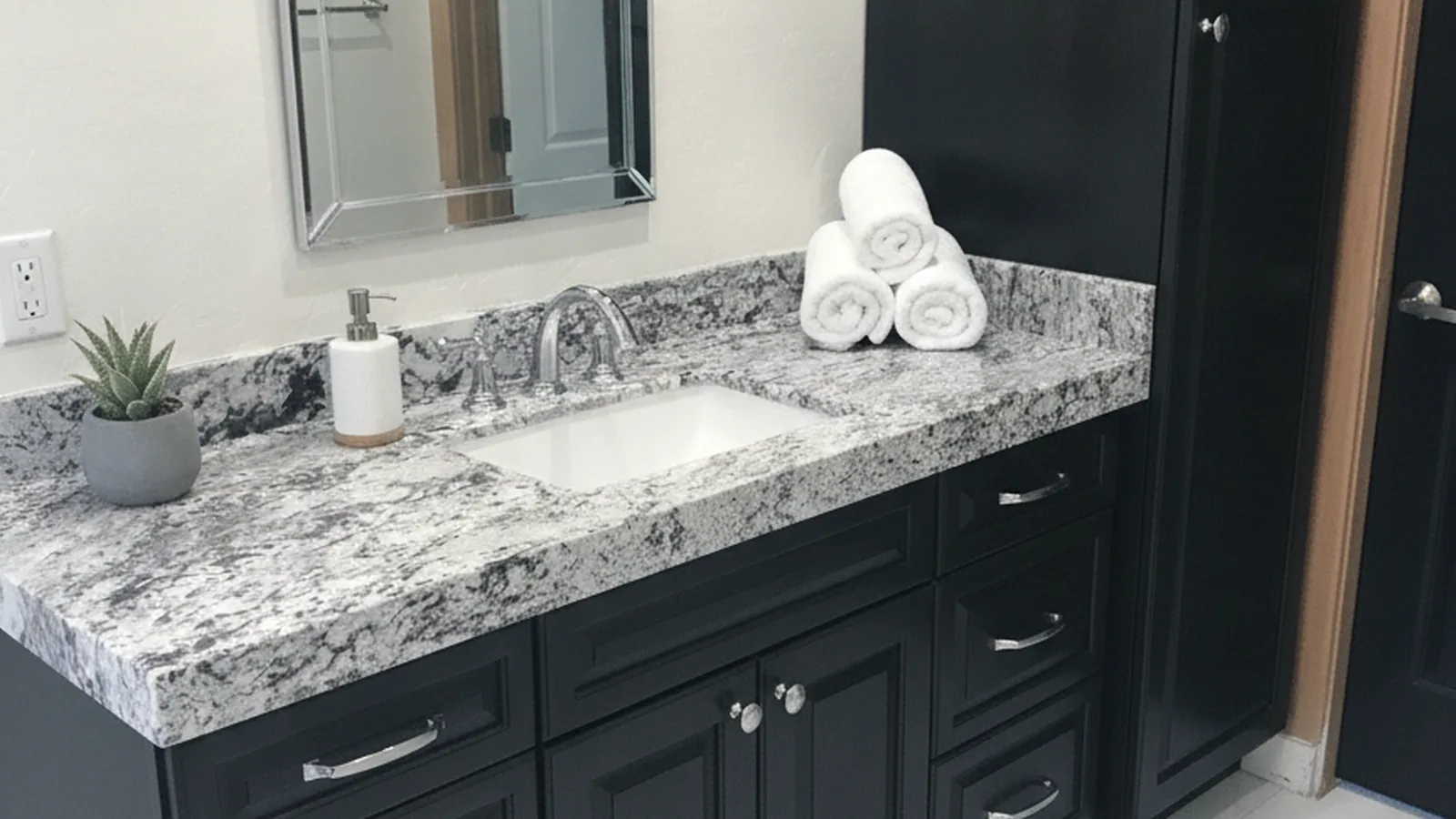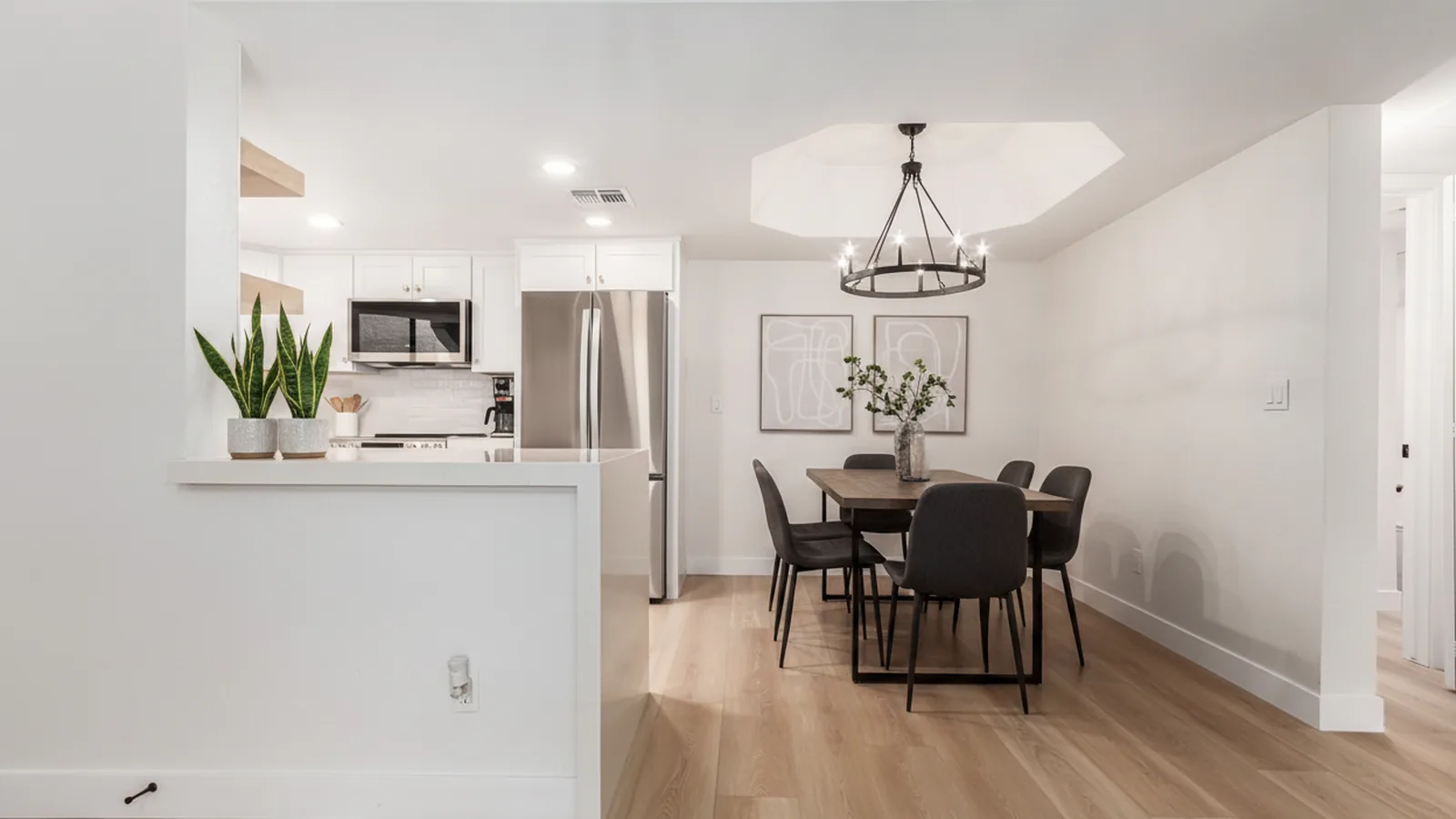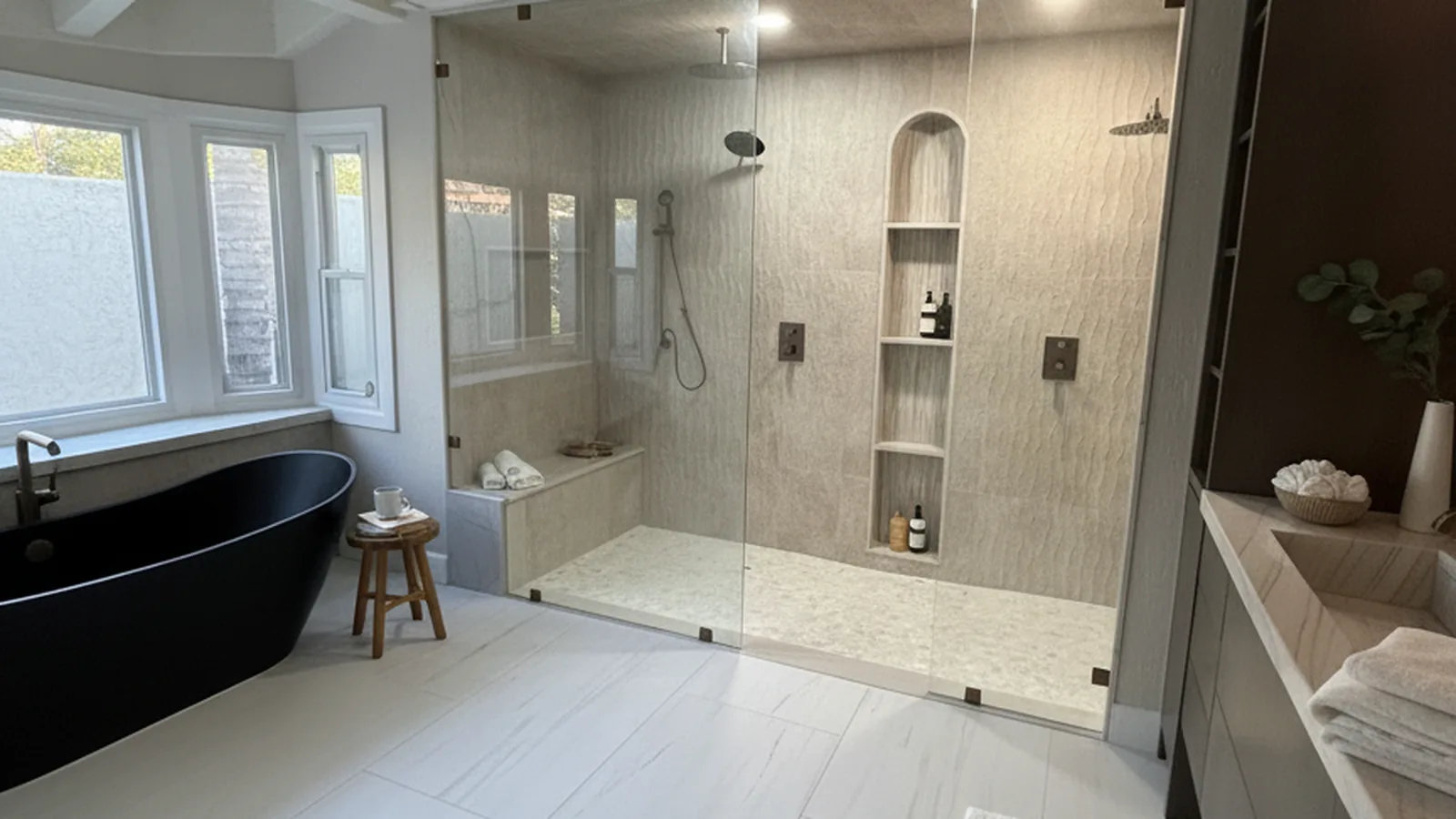
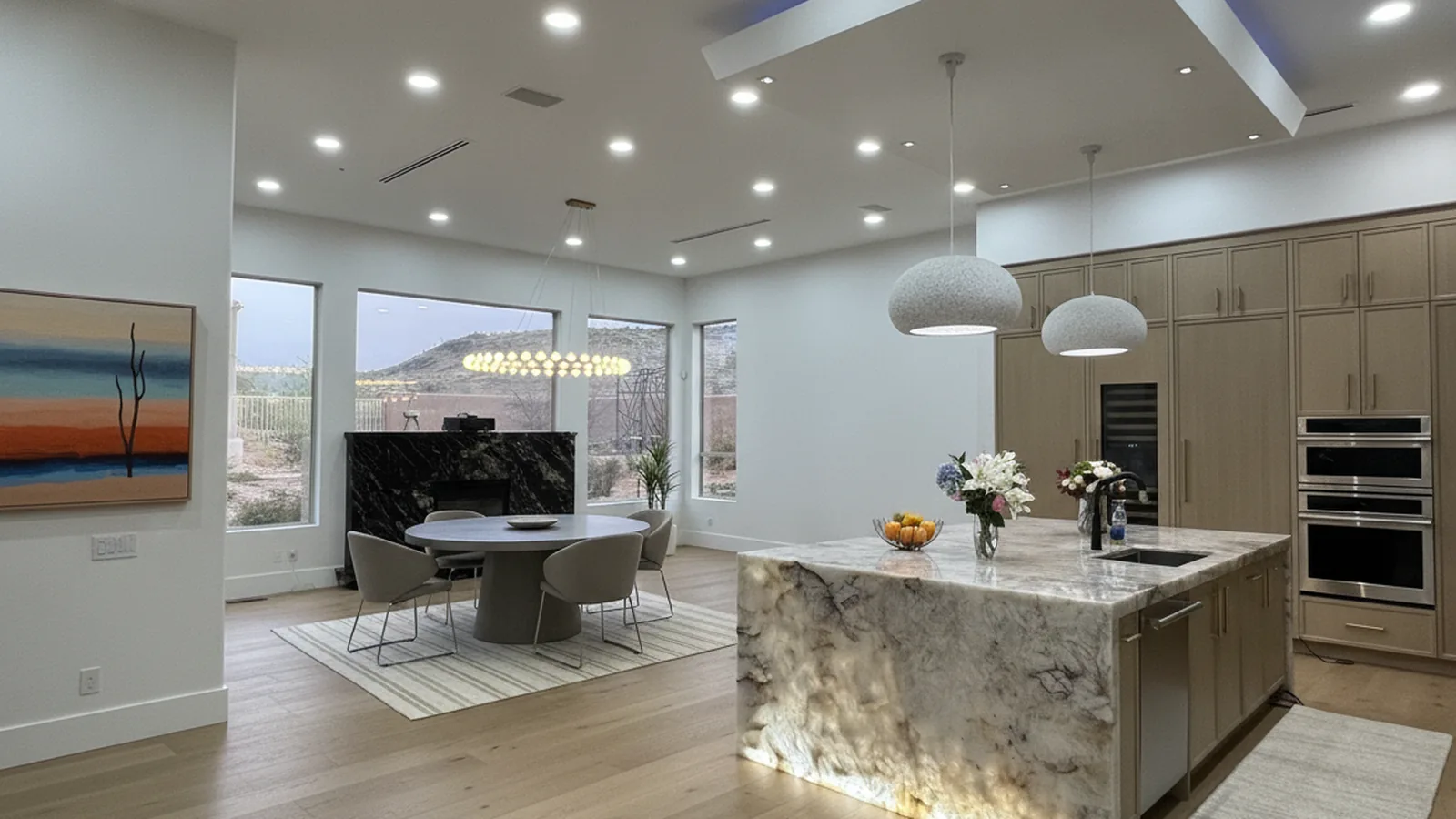
Countertops in the Valley live a harder life than the glossy showroom slabs let on. Between afternoon sun pouring through west-facing windows, mineral-heavy tap water, and a kitchen that doubles as an indoor-outdoor gathering spot half the year, the surface you pick has to earn its keep. Quartz is one of the most popular answers homeowners land on, and for good reason. But it is not the right call for every room in every house.
Quick answer: Quartz countertops work very well in most Arizona homes because they are nonporous and low-maintenance, never need sealing, and handle hard-water minerals and daily wear better than many natural stones. The one real caution is direct, all-day sun and outdoor heat, where prolonged UV and high temperatures can affect the resin that binds quartz. Indoors, in a normal Phoenix kitchen or bath, that is rarely a problem.
Key takeaways
- Quartz is engineered stone: ground natural quartz bound with resin, giving a consistent, nonporous surface.
- Its biggest Arizona advantage is zero sealing and easy cleanup, which shrugs off hard-water spotting.
- Its one weakness is long-term direct UV and outdoor heat, so it is an indoor surface first.
- Installed cost is driven by slab grade and square footage, plus edges and seams, not the material name alone.
- The fabricator matters as much as the brand: clean edges and seam placement decide how it looks in five years.
What are quartz countertops, exactly?
Quartz countertops are an engineered stone, not a slab cut straight from the earth. Manufacturers grind natural quartz crystal, one of the hardest common minerals, and blend it with roughly 7 to 10 percent polymer resin and pigment, then press and cure it into slabs. The result looks like stone and wears like stone, but it behaves more predictably than most natural material.
That engineering is where the practical benefits come from. Because the surface is nonporous, it does not absorb liquids, which means it resists staining and never needs to be sealed. The color and pattern are also consistent slab to slab, so what you approve is close to what gets installed, without the surprise veining you sometimes get with natural stone. If you want the deeper technical and care picture, the Natural Stone Institute publishes plain-language guidance on how engineered and natural surfaces differ in maintenance.
Why Arizona homes are hard on countertops
The desert puts three specific stresses on a countertop, and knowing them is how you choose well. First is hard water. Phoenix tap water carries a heavy mineral load, which the City of Phoenix water-quality program documents, and those minerals leave chalky spots and film on any surface they dry on. Second is sun and UV, which pours in through the big windows common in Valley builds and beats down on any patio surface. Third is heat and temperature swings, from a 400-degree pan set down after dinner to a covered patio that hits 115 in July.
A good countertop for an Arizona home answers all three. It should ignore mineral spotting, hold its color under bright indoor light, and take normal kitchen heat without complaint. Quartz clears the first two easily. The heat question is where you have to be honest about where the counter lives, which is the trade-off the rest of this guide walks through.
Where AZ Granite & Remodeling fits in
If you would rather not gamble on an online-only order or a middleman markup, a design-build fabricator is worth a look, and AZ Granite & Remodeling is one local example of that model. They have worked on Valley homes for over 20 years, and the difference from a big-box countertop program is that they cut and finish the stone in their own Phoenix shop rather than subcontracting it out. One team handles the design conversation, the cutting, and the install.
For a quartz project, that in-house control matters in ways you feel later. Seam placement and edge profiles get decided by the people actually cutting the slab, and you work one-on-one with a designer instead of a call center. They carry quartz alongside granite, marble, quartzite, porcelain, and other surfaces, so the recommendation is not forced to be quartz just because that is all that is in stock. You can browse the full range on their materials overview or the dedicated quartz countertops page, and they offer a free, no-pressure in-home estimate through their contact page so measurements and cost come from your actual kitchen, not a guess.
Their service area covers the Phoenix Valley broadly, from North Scottsdale and Desert Ridge to Peoria, Sun City, and Anthem, plus the surrounding East and West Valley. That is the AZ Granite piece. The rest of what follows applies no matter who you hire.
What quartz countertops cost in the Valley
Quartz pricing is driven by a handful of factors, not a single sticker number. As a general market range, installed quartz commonly runs from the low $50s to well over $100 per square foot depending on the choices below. Where you land inside that range comes down to:
- Slab grade and brand. Entry-level solid colors sit at the bottom; designer patterns that mimic marble veining cost more.
- Square footage and layout. A large island with an overhang uses more material and more labor than a galley run.
- Edge profile. A standard eased edge is included on most jobs; mitered, waterfall, or ogee edges add fabrication time.
- Seams and cutouts. Sink types, cooktop cutouts, and how many seams your layout needs all move the number.
- Removal and disposal of the old top, plus any counter or cabinet leveling.
Because those variables swing the total so much, avoid trusting a per-foot quote sight unseen. An in-home measure is the only way to get a real figure. For a wider look at how quartz stacks up against other desert-friendly surfaces on both cost and durability, the guide to the best countertops for Arizona heat is a useful companion read.
Quartz vs. other countertops for an Arizona home
No single surface wins every room. Here is an honest comparison of the materials Valley homeowners most often weigh against quartz.
| Surface | Sealing needed | Hard-water resistance | Heat tolerance | Direct-sun / outdoor use | Best fit |
|---|---|---|---|---|---|
| Quartz | Never | Excellent (nonporous) | Good, use trivets for hot pans | Indoors only; UV can affect resin | Kitchens and baths with normal indoor light |
| Granite | Periodically | Very good once sealed | Excellent | Handles sun and outdoor kitchens well | Sunny rooms, patios, heavy cooks |
| Marble | Frequently | Etches with acids and minerals | Good | Poor, stains and etches | Low-use baths, statement areas |
| Quartzite | Periodically | Excellent | Excellent | Handles UV and heat well | Sun-drenched kitchens wanting a marble look |
The pattern is clear. Quartz is the low-maintenance indoor champion, and it is hard to beat for a busy kitchen you do not want to fuss over. But if your counter runs into a wall of west glass all afternoon, or you are building an outdoor kitchen, a natural stone like quartzite or granite is the safer pick. Many Valley homes end up using quartz inside and a UV-stable stone outdoors.
How to choose the right quartz slab
Once you have decided quartz is your indoor surface, the decisions that actually shape the result are smaller than the brand name.
- Match the pattern to the light. Busy veining hides crumbs and water spots; a solid white shows everything. In a bright Arizona kitchen, a mid-tone or lightly veined slab is the practical middle ground.
- See a full slab, not a sample chip. A two-inch sample cannot show how the veining flows across a whole island. Ask to view the actual slab.
- Talk through seams before install. Where a seam lands is a design decision. A good fabricator plans it around the sink or a corner, not the middle of your prep zone.
- Pick the edge with cleaning in mind. Simpler edges collect less grime and cost less; save the dramatic profiles for where they show.
Caring for quartz in a hard-water climate
Daily care is genuinely simple, which is much of quartz’s appeal in the Valley. Wipe it with mild soap and water, and skip abrasive pads or harsh chemicals that can dull the finish over time. Because the surface is nonporous, hard-water minerals sit on top rather than soaking in, so a quick wipe after dishes prevents the chalky film that plagues other surfaces.
Two habits protect it long-term. Use a trivet under hot cookware rather than setting pans straight down, since sudden heat can shock the resin. And keep it out of relentless direct sun where you can, or choose a lighter color that shows UV change less if a window is unavoidable.
Frequently asked questions
Do quartz countertops fade in Arizona sun?
Indoors, fading is rare in a normal kitchen. Quartz can gradually shift color under years of intense, direct UV, which is why it is not recommended for patios or outdoor kitchens. If a counter sits under strong west-facing glass all day, a UV-stable natural stone is the safer choice.
Is quartz or granite better for a Phoenix kitchen?
It depends on the room. Quartz wins on low maintenance and never needs sealing, making it ideal for busy indoor kitchens. Granite wins on heat and sun tolerance, so it suits outdoor kitchens and sun-drenched spaces. Neither is universally better; the right pick is room-specific.
Can you put a hot pan on quartz?
Briefly, yes, but you should not make a habit of it. Quartz handles warmth well, but sudden high heat can damage the resin binder and leave a mark. A trivet or hot pad is cheap insurance and the manufacturer-recommended practice.
Does quartz need to be sealed?
No. Because quartz is nonporous engineered stone, it never needs sealing, unlike granite or marble. That is one of its biggest advantages in a hard-water region, since minerals cannot soak in and there is no annual maintenance step to remember.
How long does quartz last in a desert home?
Decades, when installed and cared for properly. Quartz is extremely hard and durable indoors, and its finish holds up to daily use far longer than laminate or wood. The main thing that shortens its life is heat damage or long-term direct UV, both of which are avoidable.
Is quartz good for bathroom vanities in Arizona?
Yes, and often better than a kitchen in one way: bathrooms usually get less direct sun. The nonporous, easy-clean surface resists toothpaste, cosmetics, and hard-water spotting, and a smaller vanity top keeps the material cost down compared with a full kitchen.
How do I get an accurate price for my project?
Book an in-home measure. Because cost depends on square footage, edges, seams, and slab grade, a per-foot number online is only a rough guess. A fabricator who measures your actual space, like AZ Granite & Remodeling with its free in-home estimate, gives you a figure you can trust.
AZ Granite & Remodeling · 1923 W. Cheryl Dr, Suite 2, Phoenix, AZ 85021 · (602) 759-9000 · Serving the Phoenix Valley for over 20 years.