Search “shower remodel cost” and you’ll get a number like “$3,000 to $15,000” that’s technically true and completely useless. The spread is that wide because a shower remodel can mean swapping one acrylic panel over a weekend, or gutting the space down to studs, moving plumbing, and tiling floor to ceiling. Those are different projects with different budgets, and the average of the two won’t tell you what yours costs.
This guide breaks the price down the way a real project does: by what you’re actually building, which decisions move the number, and what changes here in the desert. By the end you should be able to look at a quote and know whether it’s fair.
Quick answer: Most shower remodels in the Phoenix area land between $4,000 and $18,000, depending on whether you keep the existing footprint. A prefab acrylic surround replacement runs the low end. A fully tiled, custom walk-in shower with new plumbing and frameless glass runs the high end. The single biggest cost driver is whether you move the plumbing.
Key takeaways
- The shower type sets your budget more than any other choice: prefab surround, tiled walk-in, or curbless wet room are three price tiers.
- Moving drains or valves is the most expensive change you can make; keeping the existing layout keeps costs down.
- Tile, waterproofing, and glass are where mid-range budgets are won or lost, and where cutting corners shows up first.
- Arizona hard water and heat make material and sealing choices matter more here than national averages suggest.
- The only way to get a real number is an in-home measure; online calculators can’t see your plumbing or your walls.
What is a shower remodel?
A shower remodel is the demolition and rebuild of the shower enclosure, and the cost depends entirely on how far into the wall the work goes. At the simplest level you’re replacing surfaces a plumber never touches. At the deepest level you’re rebuilding the waterproof shell the whole shower depends on.
Most projects include some mix of these line items: demo and haul-away of the old shower, a new shower pan or tiled base, waterproofing behind the walls, the wall surface itself (tile or a solid surround), a new valve and showerhead, glass (a door or a fixed panel), and any plumbing or electrical changes. Labor is usually the largest single share of the total, because a shower is a wet, tight, code-regulated space that has to be built in a specific order to keep water out of your walls for the next 20 years.
That last point is the one homeowners underestimate. In the desert we think about water less than people in wetter climates do, but a shower leak behind tile causes the same rot and mold here as anywhere. Waterproofing is not the place to save money, and a good contractor will tell you the same.
The three tiers of shower remodels (and what each costs)
There are really three versions of this project, and knowing which one you want narrows the price fast.
Tier one, the surround swap (around $4,000 to $7,000). You keep the exact layout and replace the shower with a prefabricated acrylic or fiberglass surround and a molded pan. It’s the fastest, cheapest, cleanest option, and for a tired guest bathroom it’s often the smart call. The trade-off is limited style and a look that reads “builder-grade.”
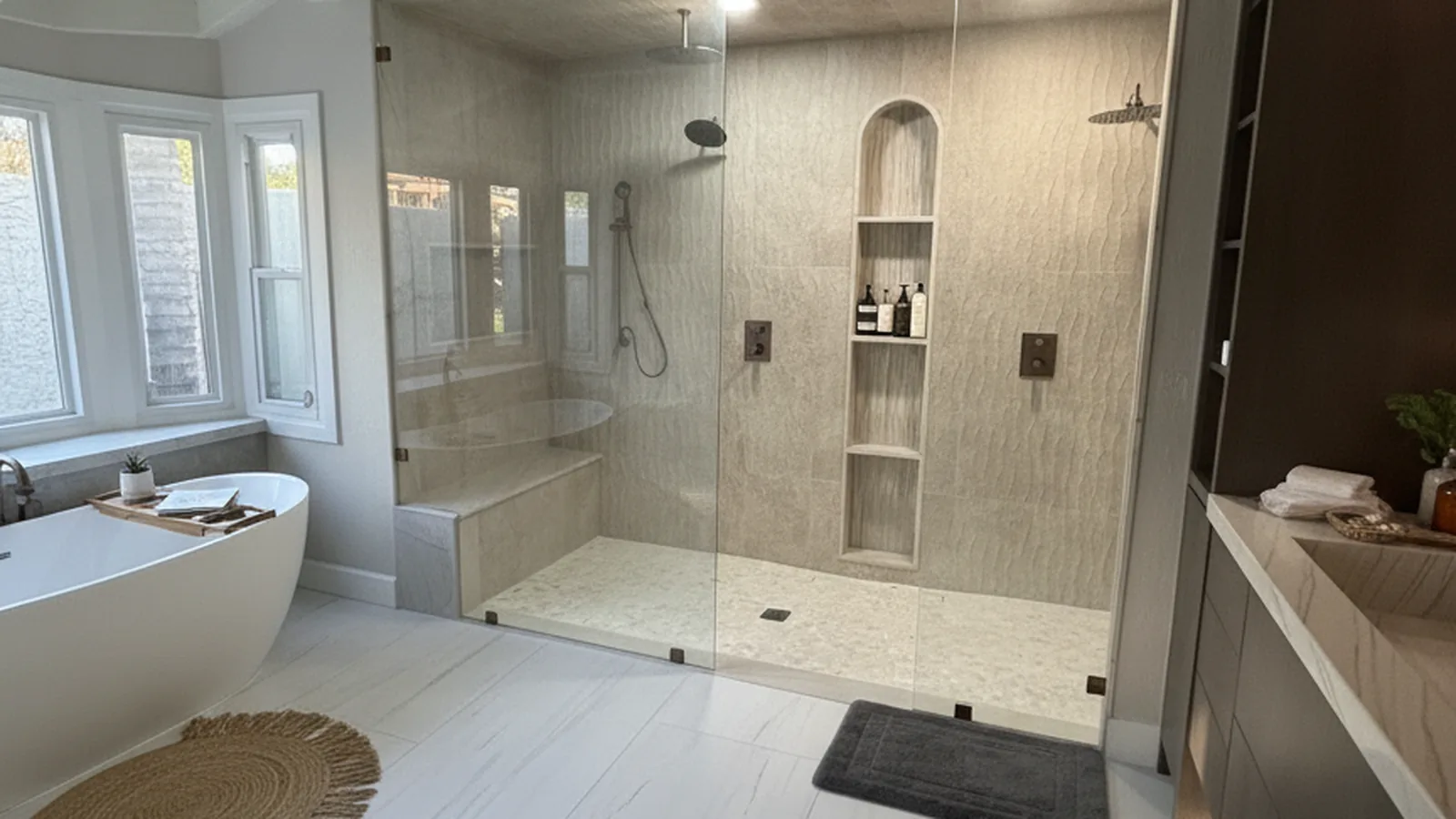
Tier two, the tiled walk-in (around $8,000 to $15,000). This is the most common real remodel. You demo to the studs, waterproof properly, and build a fully tiled shower with a custom base, a niche for bottles, and usually a glass door or panel. You get design freedom and a finish that lifts the whole room. Most of the budget swing inside this tier comes from tile choice and glass.
Tier three, the custom or curbless build (around $15,000 to $25,000 and up). Here you’re changing the footprint: a curbless walk-in or a wet-room layout, relocated plumbing, a bench, larger-format tile or a natural-stone feature wall, and frameless glass. This is aging-in-place friendly and genuinely custom, and it costs accordingly because nearly every trade touches it.
If you want to see how these tiers play out across a whole bathroom, our bathroom remodel ideas guide walks through layouts and materials that hold up in Arizona homes.
Where AZ Granite & Remodeling fits
AZ Granite & Remodeling is a design-build contractor and in-house stone fabricator that has served the Phoenix Valley for over 20 years, and a shower remodel is squarely the kind of project where that structure earns its keep. Because the same team designs the space, fabricates any stone, and installs it, a shower with a natural-stone bench or a slab feature wall doesn’t get handed off between a designer, a separate fabricator, and an install crew who’ve never spoken. That’s usually where scope and cost quietly balloon.
The work starts with a free, no-pressure in-home estimate. Someone comes to your house, measures the actual space, looks at the existing plumbing, and talks through what you want before any number gets written down. That matters for shower pricing specifically, because so much of the cost lives behind the wall where an online calculator can’t see it. You can book that estimate here or read through the full bathroom remodeling services to see the range of what’s possible.
What AZ Granite won’t do is quote you a price for your shower sight unseen, because an honest number depends on your layout, your tile, and what’s behind your current walls. The company serves homeowners across the Valley, from North Scottsdale and Desert Ridge out to Peoria, Sun City, and Anthem, plus the surrounding East and West Valley, with the shop and stone fabrication based in Phoenix. Everything after this section goes back to helping you plan the project, whoever you end up hiring.
The factors that move your number most
Two showers of the same size can differ by thousands of dollars. Here’s what drives that gap, roughly in order of impact.
- Plumbing changes. Keeping the drain and valve where they are is cheap. Moving the drain (say, converting a tub to a walk-in shower) means opening the floor and re-running lines, and it’s often the single most expensive decision in the project.
- Tile versus surround. A solid acrylic surround is a few hundred dollars in material and goes up in hours. Tile is far more material and far more labor, and the labor climbs with smaller tile, mosaics, and intricate patterns.
- The shower pan. A molded pan is inexpensive and quick. A custom tiled base with a proper slope and waterproof membrane is skilled, time-consuming work, and curbless bases cost more still.
- Glass. A framed sliding door is the budget option. Frameless glass is thicker, custom-cut, and can add meaningfully to the total on its own.
- Fixtures. A basic valve and showerhead versus a rain head, body sprays, and a thermostatic valve is a real spread, and premium finishes add up.
- Surprises behind the wall. Old plumbing, past water damage, or out-of-code wiring can’t be seen until demo. A good contractor builds a small contingency into the conversation instead of pretending it won’t happen.
Comparing the main shower options
Here’s how the common builds stack up on cost, effort, and how they hold up in the desert.
| Shower type | Typical Phoenix range | Install time | Design freedom | Arizona notes |
|---|---|---|---|---|
| Acrylic/fiberglass surround | $4,000–$7,000 | 2–4 days | Low | Easy to clean; resists hard-water etching well |
| Tiled walk-in | $8,000–$15,000 | 1–2 weeks | High | Waterproofing quality is everything; seal grout |
| Curbless / wet room | $15,000–$25,000+ | 2–3 weeks | Very high | Great for aging in place; needs precise slope |
| Tub-to-shower conversion | $6,000–$12,000 | 1–2 weeks | Medium | Cost depends on whether the drain moves |
Ranges are general Valley figures for planning, not a quote. Your real number depends on your layout and finishes.
How do you keep shower costs down in the desert?
The best savings come from smart planning, not cheap materials. A few that genuinely work:
Keep the footprint. If you don’t move the drain and valve, you skip the most expensive category of work entirely. A dramatic style change is very possible inside the same footprint.
Spend on waterproofing, save on flash. Put the money where failure is expensive (the membrane, the pan, the valve) and economize on the visible extras like a second showerhead you’ll rarely use.
Choose materials for hard water. The Valley’s water is famously hard, and mineral scale etches and clouds some surfaces faster than others. Quartz and porcelain shrug off hard water better than polished marble, which is worth knowing before you fall for a marble sample. Low-flow fixtures help too; the EPA’s WaterSense program certifies showerheads that cut water use without killing pressure, which matters on a desert water bill.
Consider a remnant for a bench or niche. A small stone accent doesn’t need a full slab. Offcuts, like the rotating granite remnants from AZ Granite’s own full-slab jobs, can deliver a custom-stone look for a fraction of a new slab.
Get more than one in-home estimate. Written quotes from contractors who’ve actually seen your space beat any online average. If a bigger renovation is on your mind, our budget bathroom remodel guide covers where the money really has to go.
Frequently asked questions
How much does a shower remodel cost in Phoenix?
Most land between $4,000 and $18,000. A prefab acrylic surround replacement sits at the low end, a fully tiled custom walk-in at the high end. Whether you keep the existing plumbing layout is the biggest single factor separating those two numbers.
Is it cheaper to remodel a shower or replace it entirely?
Replacing just the shower is almost always cheaper than a full bathroom remodel, because you’re touching one fixture instead of the vanity, flooring, and toilet too. A surround-only swap is the least expensive path since it leaves plumbing and walls largely intact.
How much does a tub-to-shower conversion cost?
Generally $6,000 to $12,000 in the Valley, and the swing depends almost entirely on the drain. A tub and a shower drain sit in different spots, so if the plumbing has to move, expect the higher end. If a new shower can use the existing drain location, you save meaningfully.
Why is a tiled shower so much more than an acrylic one?
Because tile is far more labor and far more material. An acrylic surround is a few large panels installed in hours, while a tiled shower needs waterproofing, a sloped base, and hours of setting and grouting small pieces. The labor, not the tile itself, drives most of the difference.
Do I need a permit to remodel a shower?
Often yes, especially if plumbing or electrical work is involved. Cosmetic surface swaps sometimes don’t require one, but moving a drain or valve usually does. A licensed contractor handles permitting as part of the job, which is one reason hiring one matters for anything beyond a simple surround.
What shower material handles Arizona hard water best?
Porcelain, quartz, and glazed surfaces resist mineral etching and scale better than polished marble or untreated natural stone. Grout should be sealed and maintained, since hard water is tough on it. Materials picked for the desert stay looking new longer, which protects the money you put into the remodel.
How long does a shower remodel take?
A surround replacement can be done in 2 to 4 days. A tiled walk-in typically runs 1 to 2 weeks once demo, waterproofing, tile, curing, and glass are accounted for. Curbless and wet-room builds run longer because more trades are involved and the base has to be precise.
Can I get an exact price without an in-home visit?
Not a reliable one. So much of a shower’s cost lives behind the wall, in the plumbing and the condition of the framing, that any online figure is a guess. A free in-home measure is the only way to price your specific space, which is why reputable Valley contractors offer them.
AZ Granite & Remodeling · 1923 W. Cheryl Dr, Suite 2, Phoenix, AZ 85021 · (602) 759-9000 · veny@azgranite.us · Design-build remodeling and in-house stone fabrication serving the Phoenix Valley for 20+ years.