If your Phoenix home came with a builder grade bathroom, you probably already know the signs: a cultured marble top with a hairline stain, a fiberglass shower that flexes when you step in, a chrome faucet that grows a crust of white scale every few weeks. Bathroom remodeling in Phoenix can fix all of it, but a builder grade upgrade is a range, from swapping a few fixtures to gutting the room, and the right size depends on what is actually failing.
This guide covers what builder grade really means, why it ages faster in the desert, how the three upgrade tiers compare, what to replace first, and how to pick who does the work. Most of it applies no matter who you hire.
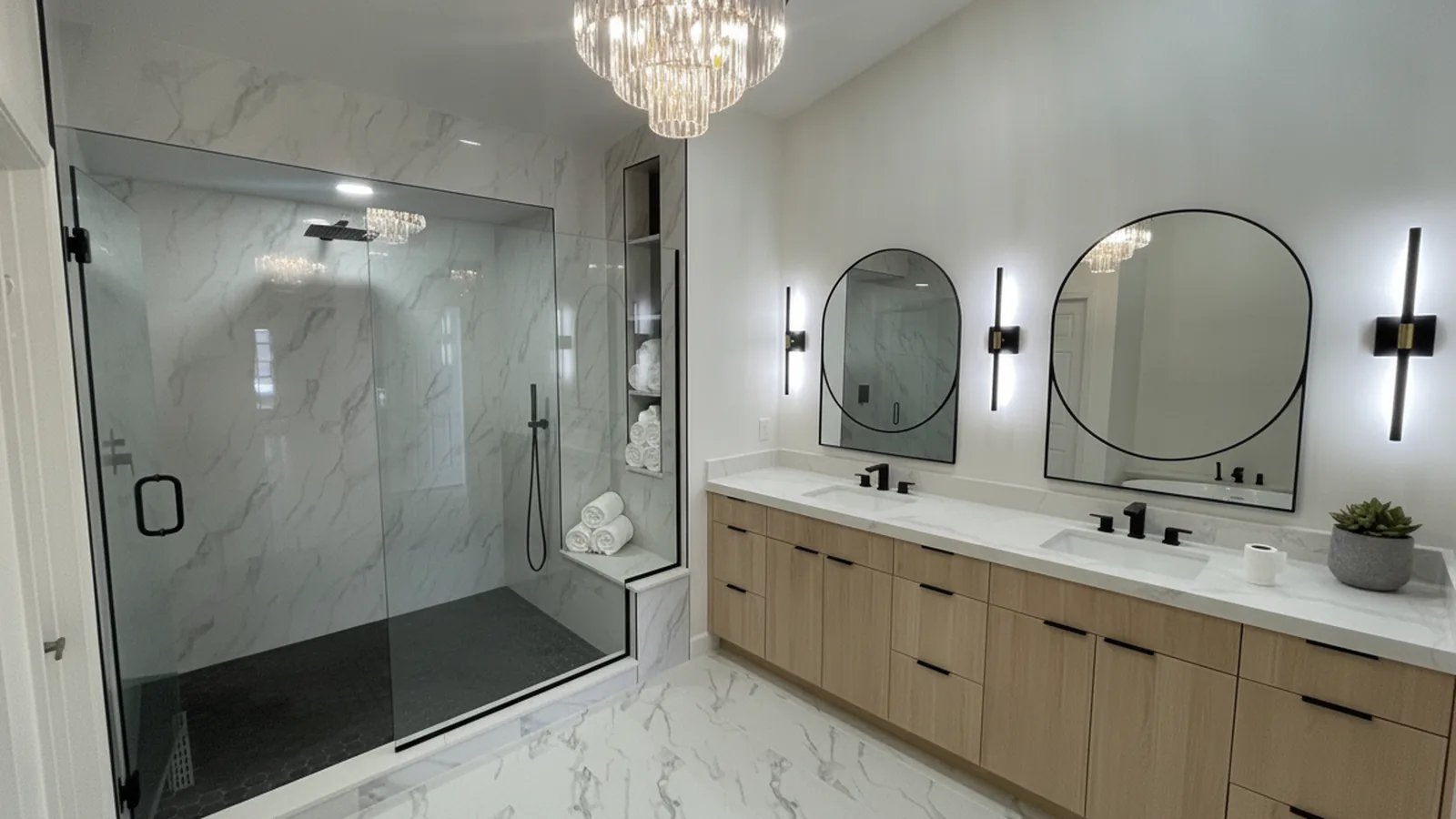
Quick answer: Start a builder grade upgrade with the parts that touch water every day: the shower surface, the faucet and valve, and the vanity top. Those wear fastest in Phoenix, and replacing them changes how the room looks and performs more than any decorative swap. Walls, plumbing, and layout are where cost climbs sharply, so leave them alone unless something is failing.
Key takeaways
- Builder grade means built to a price, not defective, so keep any part that still seals, drains, and sits level.
- A stone vanity top is usually the biggest visual change per dollar, provided the cabinet beneath it is sound.
- Cost steps up at three points: moving plumbing, rebuilding the shower, and hidden water damage found at demolition.
- In most upgrades, labor, tile, and stone make up more of the bill than faucets and hardware.
What is a builder-grade bathroom?
A builder-grade bathroom is one finished with the lowest-cost standard materials a home builder uses to hit a sales price, chosen for fast installation rather than long-term wear. The typical set looks like this:
- A cultured marble or laminate vanity top with a molded-in sink
- A particleboard or thin MDF vanity cabinet
- Chrome-plated faucets and a basic shower valve
- A one-piece fiberglass tub or shower insert
- Small ceramic floor tile and plain painted drywall
- A flat plate mirror, a single light bar, and a bare-bones exhaust fan
None of that is automatically a flaw. Builder grade describes how the room was priced, and plenty of it holds up for years if it stays dry and level. What matters is which pieces are near the end of their life and which ones Arizona wears out faster than the builder planned for. Production-built homes across the Valley often share the same short list of builder-line parts, which is why the same handful of upgrades comes up in so many houses.
Why builder grade wears out faster in Phoenix
Builder grade wears out faster in Phoenix mainly because of hard water, dry heat, and humidity that lingers after showers. Hard water is the biggest factor. Valley tap water carries plenty of dissolved calcium and magnesium (the USGS explains how water hardness works), and that mineral load leaves scale on chrome, clouds shower glass, and stains porous surfaces like cultured marble.
Dry heat does its own damage. Caulk and flexible sealants shrink and crack sooner in low humidity, which opens a path for water behind the tub or around the vanity. A thin exhaust fan that is undersized or poorly vented leaves moisture hanging in a small room, which is hard on particleboard cabinets. The practical rule is to treat anything that touches water daily as the first candidate for an upgrade and treat decorative pieces as optional. A separate guide on hard water in Phoenix bathrooms goes deeper on glass, fixtures, and materials.
How AZ Granite & Remodeling handles a builder grade upgrade
AZ Granite & Remodeling treats a builder grade upgrade as a design-build job: one team plans the room, fabricates the stone in its own shop, and installs the finished pieces.
It is a Phoenix remodeling contractor and in-house stone fabricator with over 20 years serving Arizona homeowners and a 5.0-star rating. The only location is the shop at 1923 W. Cheryl Dr, Suite 2, Phoenix, AZ 85021. The team serves North Scottsdale, Desert Ridge, Peoria, Sun City, and Anthem, plus the surrounding East and West Valley.
Builder grade upgrades tend to go wrong at the handoffs. The stone gets cut to a measurement taken before the cabinet changed, or the sink cutout doesn’t match a faucet set someone bought online. When the same company designs the room, fabricates the stone, and installs it, those questions get answered in the shop instead of by phone tag between three vendors. In practice that looks like this:
- One-on-one work with a designer who helps sort what to replace from what to keep
- Custom fabrication and installation done in house, so a vanity top is cut to your cabinet instead of picked from a stock size
- A material list covering granite, marble, quartz, quartzite, dolomite, porcelain, onyx, and natural quartz
- Granite remnants, which are offcuts from the shop’s own full-slab jobs, viewed by appointment at the Phoenix shop and often a good match for a small vanity top
- A free, no-pressure estimate at your home, so the price reflects the bathroom you actually have
Bring photos of the problem areas, a rough budget range, and a list of what annoys you every day. That conversation is where a designer can tell you whether your bathroom needs a fixture refresh or something bigger.
It is not the right call for every upgrade. If you only want a new faucet and fresh paint, a plumber or handyman is faster and cheaper. A design-build contractor earns its fee when stone, tile, a shower rebuild, or several trades are involved. The bathroom remodeling page lays out the services, and you can request a free in-home estimate to find out which tier fits.
Three ways to upgrade a builder grade bathroom in Phoenix
There are three realistic tiers for a builder grade upgrade: a fixture refresh, a surface upgrade, and a full gut. Where your bathroom lands depends mostly on whether water has already gotten behind the finishes.
| Factor | Fixture refresh | Surface upgrade | Full gut |
|---|---|---|---|
| What changes | Faucet, shower trim, mirror, lighting, hardware, fresh caulk and paint | New vanity and stone top, toilet, shower surround or tile, flooring | Walls to studs, new layout, new plumbing and waterproofing, every finish replaced |
| General ballpark | Low four figures | Mid four figures to low five figures | Five figures, often well into them |
| Disruption | Low, the room stays mostly usable | Moderate, out of service for a stretch | High, out of service for weeks |
| Permits | Often none for like-for-like swaps | Depends on whether plumbing or electrical changes | Commonly required, so confirm with your city |
| Fixes hidden water damage | No | Only what shows when surfaces come off | Yes, because everything is opened up |
| Best when | The room is sound and just looks tired | Fiberglass and cultured marble are wearing out | The layout fails, leaks are active, or nothing is worth keeping |
The ranges are general market ballparks for Valley homes, not a quote for your project. What moves a job from one column to the next is bathroom and shower size, how much tile is involved, the stone you pick, whether plumbing moves, and what demolition uncovers. The Phoenix bathroom cost breakdown walks through ranges by scope in more detail.
What to replace first, and what can wait
Replace the wet-zone parts first: the shower surface, the valve and fixtures, and the vanity top. Everything decorative can wait for a later, cheaper round.
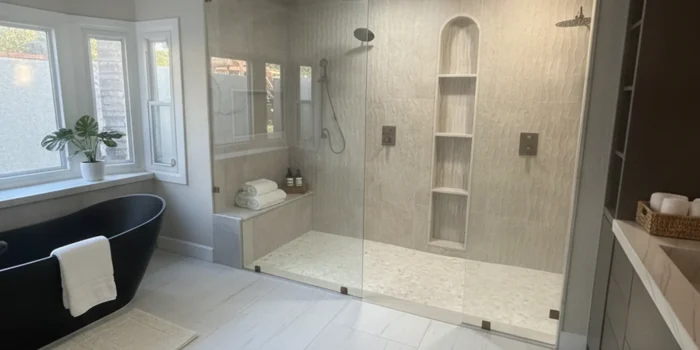
- Shower or tub surround. A flexing fiberglass insert or a crack in the gel coat can let water behind it. Tile, porcelain, or solid-surface panels last longer, and this change does more than any cosmetic swap.
- Valve, showerhead, and faucets. Scale wears out cartridges and plated finishes. If a wall is open anyway, replace the valve then, because it costs little compared with reopening tile later. The EPA WaterSense label is worth looking for: toilets at 1.28 gallons per flush or less, bathroom faucets at 1.5 gallons per minute or less, and showerheads at 2.0 gallons per minute or less.
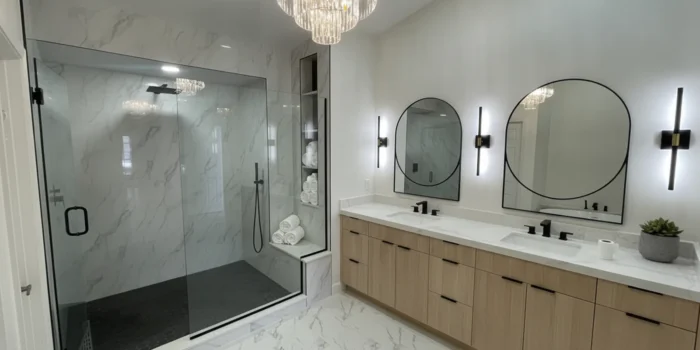
- Vanity top and sink. Swapping cultured marble for stone is usually the largest visual change for the money, because the top is what you see and touch every day.
- Vanity cabinet. Keep it if it is solid, level, and dry. Replace it if the base is swollen from leaks, since a stone top is heavy and needs a sound cabinet under it.
- Exhaust fan. A quiet fan that vents to the outdoors protects everything else in the room.
- Mirror, lighting, paint, and hardware. These are the cheapest swaps and can happen in any order, even years later.
Choosing a surface for the vanity top and shower
Quartz or granite is the safest vanity top for most Arizona bathrooms, with porcelain and quartzite close behind. Each has a trade-off to know before you pick a sample.
- Quartz is engineered and non-porous, so it needs no sealing and resists hard-water staining. Keep very hot styling tools off it, because the resin can scorch.
- Granite is natural and hard. It needs periodic sealing, and every slab differs, so choose the actual piece, not a catalog photo.
- Quartzite is a natural stone with a marble-like look and tougher wear, though pricing varies widely by pattern.
- Porcelain resists heat and stains, and thin slabs suit shower walls because they leave few grout lines for scale to cling to.
- Marble is lovely, but it etches and spots, especially under hard water, so it suits a low-use guest bath better than a primary.
- Onyx is translucent and soft, best saved for accents instead of a daily-use top.
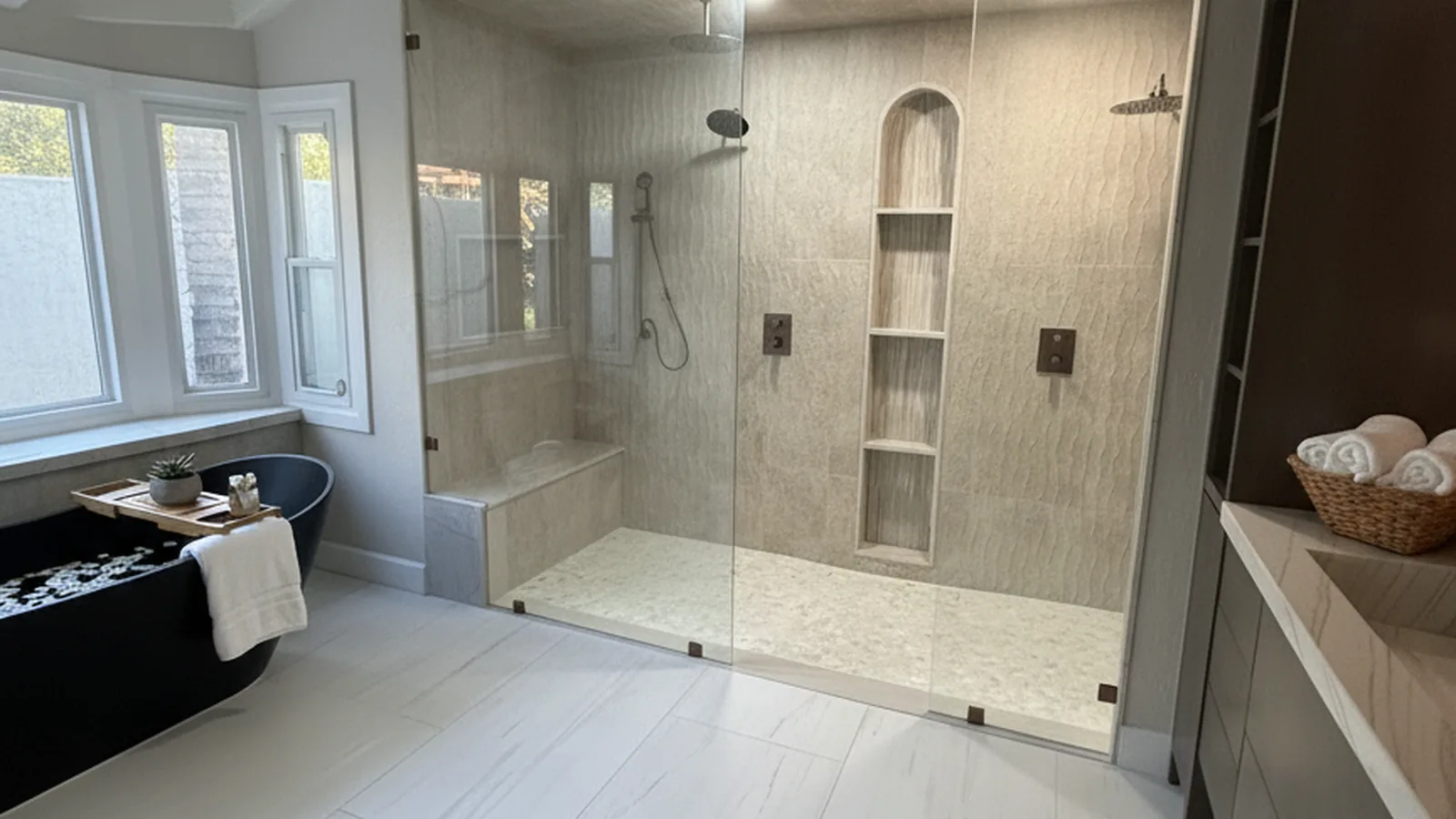
Because a vanity top is small, a remnant can sometimes cover one, which trims the stone cost. Ask any fabricator whether offcuts are in stock, since remnant inventory rotates, and look at the piece in person before you commit.
What builder grade can hide behind the finish
Expect at least one surprise at demolition, because builder grade hides its problems behind the finish. Common finds include particleboard swollen from a slow supply leak, a soft subfloor beneath the tub, thin waterproofing at the shower curb, a fan duct that never reached the outdoors, and supply lines at the end of their service life.
That is why a firm price on a gut job before the walls are open deserves a question. A realistic estimate separates fixed items from allowances and says in writing how hidden damage will be priced and approved.
How to choose who does the work
Choose on paperwork first: a valid license, a written scope, and an estimate that itemizes materials. Then check these:
- Verify the contractor’s license on the Arizona Registrar of Contractors website before signing anything.
- Ask who fabricates and installs the stone, and whether the countertop is templated after the cabinets are set.
- Ask which permits apply. Requirements vary by city, and a contractor should know the local rules without guessing.
- Request photos or addresses of similar, recently finished bathrooms, then compare the scope line by line.
- Get at least two in-person estimates, because a bathroom cannot be priced accurately from photos alone.
Frequently asked questions
Is a builder grade upgrade worth it before selling?
A targeted one often is, but a full gut rarely pays back dollar for dollar. Buyers notice stone tops, a clean updated shower, and fresh fixtures, so a surface upgrade usually gives the best return. Match the finish level to your neighborhood, and ask a local agent what comparable homes sold with.
Do I need a permit to replace a vanity and toilet?
Usually not for a like-for-like swap, but moving plumbing, adding circuits, or changing fan venting often does. Rules differ by city across the Valley, so ask the contractor which permits apply and who pulls them. A skipped permit can surface at resale.
Should I refinish or replace a fiberglass tub or shower?
Replace it if it is cracked, soft, or flexing, because refinishing only changes the surface. Refinishing is the cheapest way to freshen a sound tub, but scrubbing off hard-water scale tends to wear the coating, so expect to redo it sooner than new tile or solid surface.
Which bathroom should I upgrade first?
Start with the one showing the most wear or leaks, which is often the primary bath. A hall bath used by kids and guests takes the hardest daily abuse, so durable surfaces matter more there than luxury ones. If you plan to sell, favor the bathrooms buyers see first.
Can builder-grade cabinets support a granite or quartz top?
Usually yes, if the cabinet is dry, level, and structurally sound, because vanity tops are small. Swollen particleboard, sagging bases, and weak corners are the warning signs. A fabricator should check the cabinet during templating and tell you if it needs shimming or replacing before the stone goes on.
How much should I set aside for surprises?
Plan on roughly 10 to 20 percent above the estimate for a surface upgrade or full gut, held back for hidden damage. Older homes lean toward the higher end. If demolition finds nothing, you keep the money. A fixture refresh seldom needs that cushion.
What is the difference between builder grade and custom?
Builder grade is a standard, lowest-cost package chosen for price. Custom means materials and sizes chosen or fabricated for your bathroom, such as a stone top cut to your cabinet or a shower sized to the space. Mid-range, sometimes called contractor grade, falls between the two.
Ready to plan your builder grade upgrade?
A smart bathroom remodeling plan in Phoenix, Arizona starts with a short list: what is failing, what is merely dated, and how much of the room you want to touch. Targeted upgrades to the wet zones and the vanity top usually deliver the most for the least disruption, while a full gut is worth it when the layout or the structure behind the walls is the real problem.
If you would like someone to look at your actual bathroom, AZ Granite & Remodeling offers free, no-pressure in-home estimates across the Phoenix Valley. Request one through the contact page, call (602) 759-9000, or email veny@azgranite.us.