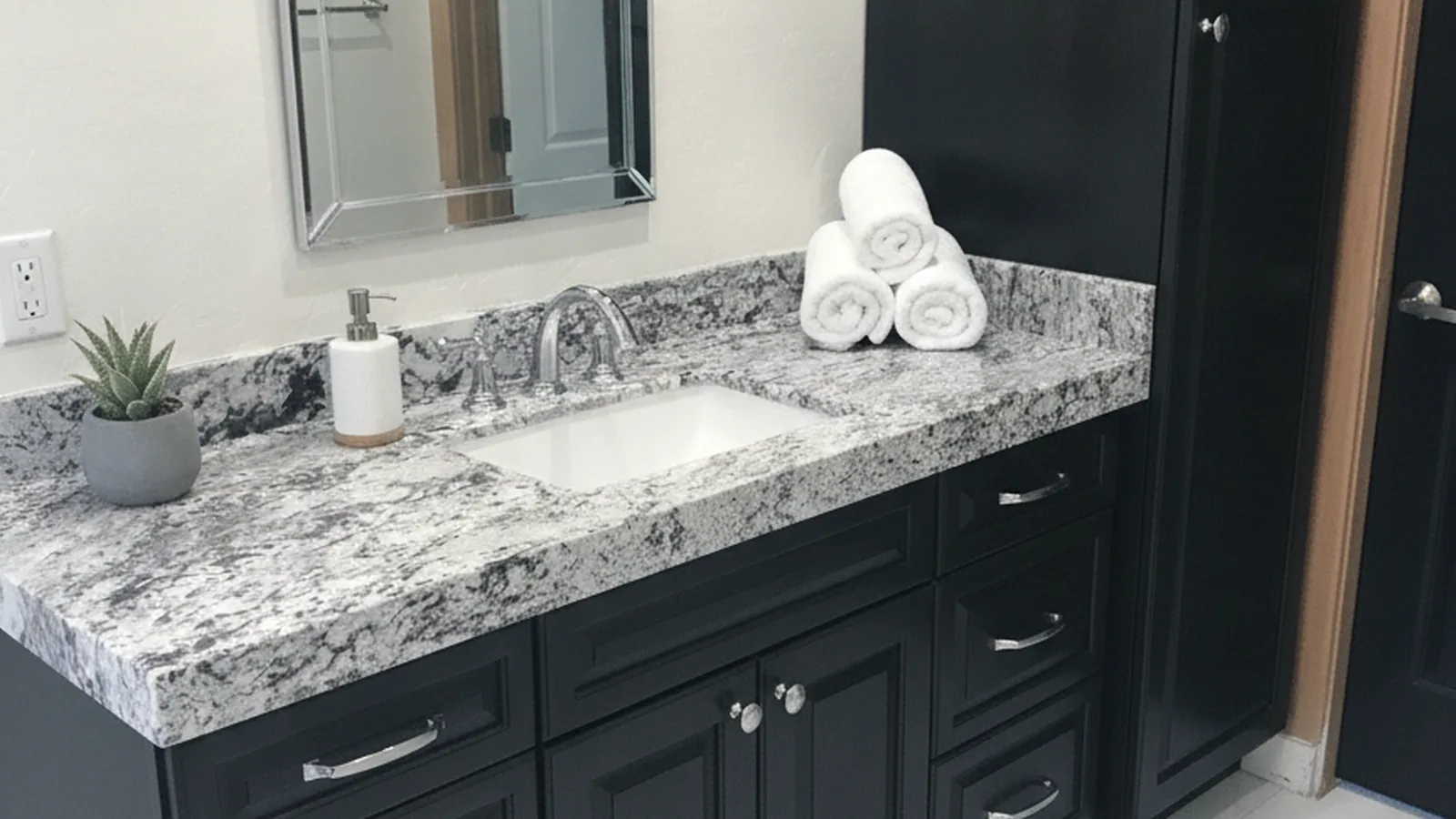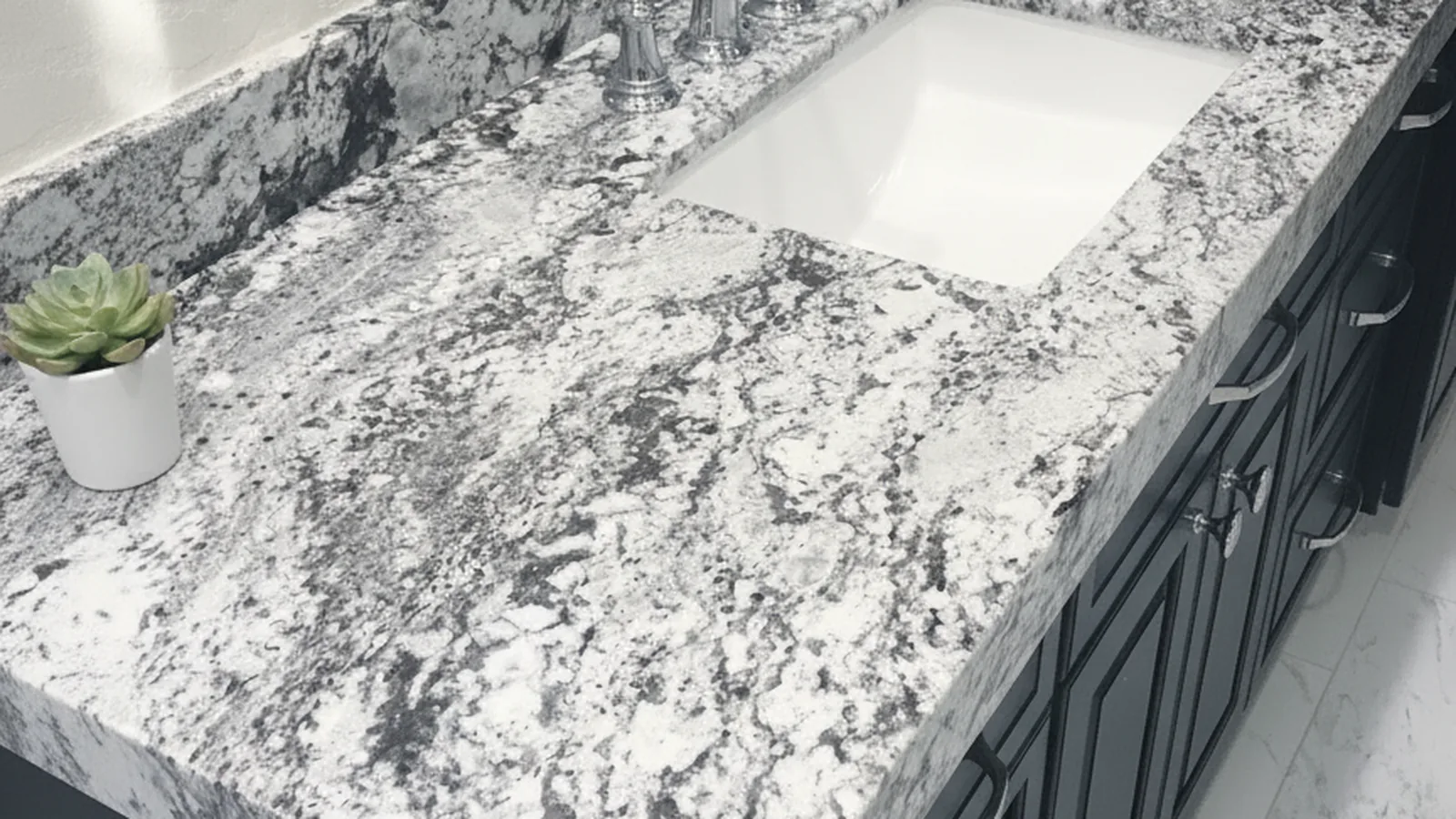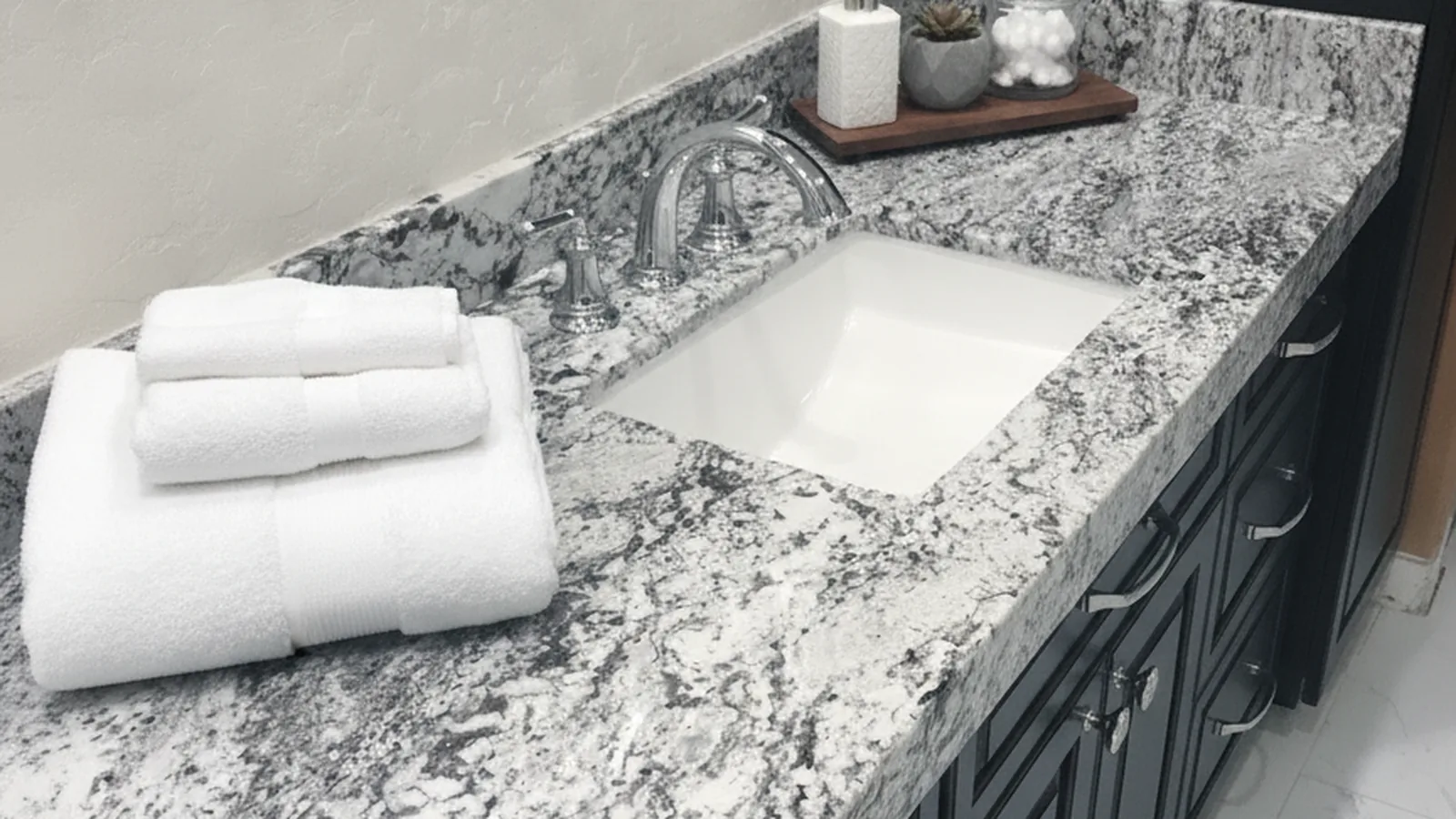
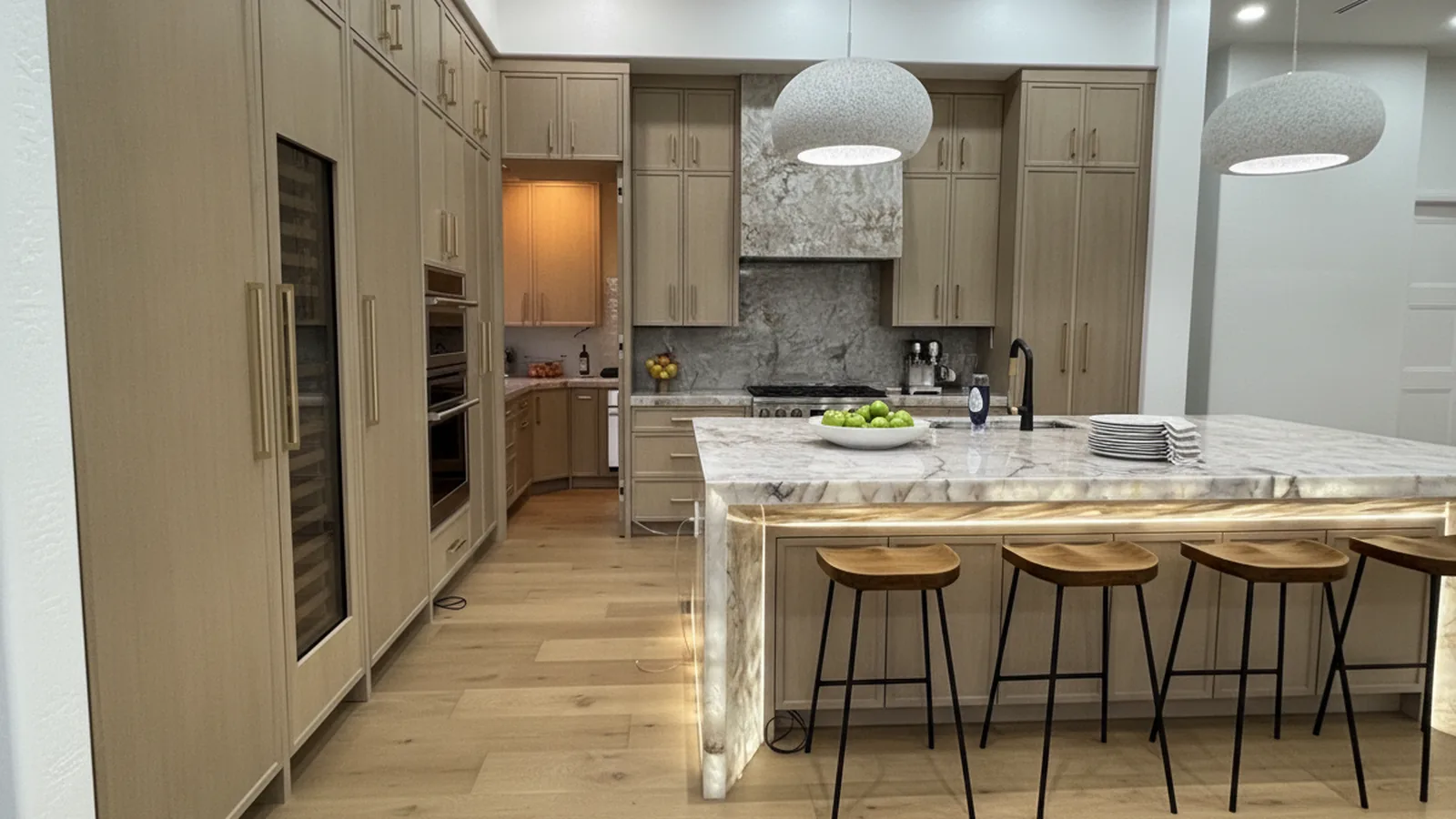
If you’re weighing granite for a kitchen or bath in the Valley, the real question underneath the search isn’t “is granite nice.” It’s whether a natural stone survives what a Phoenix home throws at it: 115-degree afternoons, relentless UV through big west-facing windows, hard water that leaves a white ring on everything, and monsoon dust that finds every surface. Those conditions genuinely change which countertop is the smart pick, and they change how you should shop for one.
Quick answer: Yes, granite is one of the best-suited countertops for Arizona homes. It’s a natural igneous stone, so desert heat and direct sun don’t fade, warp, or scorch it the way they can affect some man-made surfaces. The two things to plan for in the Valley are periodic sealing and hard-water spotting, both easy to manage once you know they’re coming.
Key takeaways
- Granite handles heat and UV better than most surfaces, which is exactly why it earns its keep in Phoenix.
- The Arizona-specific things to plan for are sealing and hard-water mineral spots, not cracking or fading.
- Slab quality, thickness, and edge work drive both looks and longevity more than the stone’s name does.
- Buying from a local fabricator who templates and installs avoids the seam and overhang problems that show up later.
- Cost in the Valley moves with slab grade, square footage, and edge profile, so get a measured, in-home estimate before you budget.
What are granite countertops, and why do they suit the desert?
Granite countertops are slabs of natural igneous rock, quarried in one piece and cut to fit your cabinets. Because granite forms under extreme heat and pressure, it comes to your kitchen already hardened against the two things that wreck softer surfaces: high temperatures and abrasion. That geology is the whole reason it works in Arizona.
In practical terms, a granite top won’t fade in direct sun, which matters in a Valley home with wide windows and skylights. It shrugs off a hot pan set down in a hurry, resists scratches from daily prep, and holds its color through decades of desert light. Every slab is one of a kind, so the movement and grain you pick is yours alone. The tradeoff is that granite is porous by nature, so it needs a sealer to stay stain-resistant, which is where Arizona’s dry air and hard water enter the picture.
How granite handles Phoenix heat, UV, and hard water
Granite’s weak spot in the Valley isn’t the sun. It’s the minerals in the water. Phoenix tap water is genuinely hard, and the USGS classifies much of central Arizona’s groundwater as hard to very hard. Left to air-dry, that water leaves chalky white spots on a polished granite surface. The stone isn’t damaged, but the film builds up if you never wipe it, so a quick dry-off after dishes keeps a dark granite looking sharp.
Heat and UV are where granite quietly wins. Set a pot down and nothing scorches. Park an island in the path of a July sunbeam for years and the color holds. That’s a real advantage over some engineered surfaces, whose resins can be more sensitive to sustained sun and heat. One point worth knowing rather than fearing: natural stone can contain trace natural radioactivity, but granite countertops are generally not a meaningful radon or radiation concern in a home, and reputable fabricators work with slabs that are a non-issue on that front.
The other Arizona factor is sealing cadence. Dry desert air doesn’t change how often granite needs sealing so much as how easy it is to forget. A simple water-drop test tells you when it’s time. If the surface soaks up a drop within a few minutes, reseal. Most Valley kitchens land somewhere in the once-a-year range, and our own guide to how low-maintenance granite really is in Phoenix walks through the exact routine.
Where a design-build fabricator like AZ Granite fits
A countertop that lasts in the desert depends as much on who fabricates and installs it as on which slab you pick. That’s the case for working with a local, in-house shop, and it’s where AZ Granite & Remodeling fits into this decision. AZ Granite is a design-build contractor and stone fabricator that has served the Phoenix Valley for over 20 years, cutting countertops in its own Phoenix shop rather than shipping the work out to a third party.
That in-house setup matters for a practical reason. When one team handles design, fabrication, and installation, the seam placement, edge profile, and cutouts get decided by the same people who measure your kitchen, so there’s no handoff where details get lost. You work one-on-one with a designer, see the actual slabs, and the crew templates the real cabinets before anything is cut. It’s the same team across granite, quartz, quartzite, marble, and porcelain, so the recommendation is about what suits your home, not what’s easiest to sell.
AZ Granite serves homeowners across the Valley, from North Scottsdale and Desert Ridge to Peoria, Sun City, and Anthem, plus the East and West Valley. They offer free, no-pressure in-home estimates, which is the honest way to price a countertop since the number depends on your specific slab and layout. If you want to see how the finished work looks or hear from past clients, the granite countertops page is the place to start, and you can request an in-home estimate here. Every section from here on goes back to the countertop itself.
What granite countertops cost in the Valley
Granite pricing in Phoenix is a range, not a sticker, and it moves with a handful of levers. The biggest is slab grade. Common, widely quarried colors sit at the affordable end, while rare or heavily veined exotic slabs cost more per square foot. After that, the drivers are your total square footage, the edge profile you choose, the number of cutouts for sinks and cooktops, and whether the job needs seams in visible spots.
A budget-friendly path that many homeowners miss is remnants, the leftover offcuts from full-slab jobs. For a bathroom vanity, a small island, or a laundry counter, a remnant can deliver real granite at a fraction of the slab price. Because these are one-of-a-kind pieces from previous jobs, inventory rotates, so it’s a shop-when-you’re-ready option rather than a guaranteed match.
Because those variables swing the final number so much, no honest fabricator quotes a firm price sight unseen. The reliable move is a measured, in-home estimate where someone sees the real space. It’s worth budgeting a little above the slab cost, too, since edge upgrades and extra cutouts add up.
How to choose a granite slab that holds up here
Picking granite well comes down to a few checks that matter more than the stone’s name. Start with the actual slab, not a sample chip. Movement and color vary wildly across a single quarry, so approve the full slab you’re getting. Look at it under different light, because desert sun through a window reads a stone very differently than a showroom bulb.
Next, think about finish. A polished surface shows hard-water spots more readily but resists staining best. A honed or leathered finish hides water marks and fingerprints, which some Valley homeowners prefer for a busy kitchen. Then confirm thickness and edge. A standard three-centimeter slab feels substantial and needs less support than a thinner top with a built-up edge.
Finally, ask who templates and installs. A crew that laser-templates your real cabinets and sets the seams deliberately will give you a top that fits clean and lasts. If you’re still torn between materials, our honest granite versus quartz comparison for Arizona homes lays the two side by side.
Granite vs. other countertop options for Arizona homes
No single surface wins every kitchen. Here’s how granite stacks up against the materials Valley homeowners most often compare it to, judged on the things that actually matter in the desert.
| Surface | Heat & UV in AZ | Maintenance | Best fit |
|---|---|---|---|
| Granite | Excellent — won’t fade or scorch | Seal periodically; wipe hard-water spots | Homeowners who want a natural, heat-proof, one-of-a-kind top |
| Quartz (engineered) | Great indoors; keep out of direct all-day sun | Very low; no sealing | Busy kitchens wanting a consistent, low-upkeep look |
| Quartzite | Excellent — natural and very hard | Seal like granite | Marble lovers who need real durability |
| Marble | Good on heat; softer and etch-prone | High; acid-sensitive | Baths and low-traffic accent areas |
| Porcelain | Excellent heat and UV resistance | Low | Modern, large-format looks and outdoor kitchens |
The short version: granite and quartzite are the standout natural picks for a hard-working Arizona kitchen, quartz is the low-maintenance favorite, and marble is best kept to spots that don’t see daily abuse. You can compare all of them on the materials hub.
Caring for granite in a low-humidity, hard-water climate
Granite care in the Valley is simple once you build two small habits. First, wipe up standing water so hard-water minerals don’t dry into a film. A microfiber cloth after dishes is enough for a dark polished top. Second, reseal on schedule, roughly yearly for most kitchens, and confirm with the water-drop test rather than a calendar alone.
For daily cleaning, skip acidic or abrasive cleaners and use warm water with a pH-neutral stone soap. Vinegar and citrus cleaners can dull the polish and stress the sealer over time. Cutting on a board rather than the stone keeps your knives happy, and while granite laughs off hot pans, a trivet under a slow cooker running for hours is a courtesy that never hurts. Done this way, a granite top stays looking new for decades of Phoenix summers.
Frequently asked questions
Do granite countertops crack in Arizona heat?
No. Granite forms under intense geologic heat, so a hot pan or a sunny window won’t crack or warp it. Cracks in the field almost always trace back to installation stress or an unsupported overhang, not the climate, which is one more reason careful templating and install matter more than the weather.
Does the Arizona sun fade granite countertops?
No, granite does not fade in direct sun. Its color comes from minerals locked into the stone, not a surface dye or resin, so years of desert UV through a big window won’t lighten or yellow it. This UV stability is a real edge granite holds over some man-made surfaces.
How often do I need to seal granite in Phoenix?
Most Valley kitchens need sealing about once a year, but test rather than guess. Drop a little water on the surface; if it soaks in within a few minutes, it’s time to reseal. Dense, dark granites sometimes go longer, while lighter porous stones may want it more often.
Why does my granite get white spots, and is it damaged?
Those spots are hard-water mineral deposits, not damage to the stone. Phoenix water is mineral-rich, so droplets left to air-dry leave a chalky film. Wiping the surface dry prevents them, and existing buildup lifts with a stone-safe cleaner. The granite underneath is unharmed.
Is granite or quartz better for a Phoenix home?
Both work well; the tiebreaker is your priorities. Granite gives you a natural, heat-proof, one-of-a-kind surface that needs occasional sealing. Quartz gives a consistent look with almost no upkeep, though it’s happiest out of all-day direct sun. Kitchens that value zero maintenance lean quartz; those wanting natural stone and top heat resistance lean granite.
How much do granite countertops cost in the Valley?
It depends on slab grade, square footage, edge profile, and cutouts, so ranges vary widely. Common colors sit at the affordable end and exotic slabs cost more. Remnants can cut the price sharply on small projects. A measured, in-home estimate is the only way to get a real number for your kitchen.
Can I set a hot pan directly on granite?
Yes, granite tolerates direct heat without scorching, which is one of its best desert traits. That said, a trivet under something running hot for hours, like a slow cooker, is a sensible habit that protects the sealer over the long haul.
How long do granite countertops last?
With basic care, granite lasts for decades and routinely outlives the kitchen around it. Because it resists heat, scratches, and UV, the surface holds up through daily use and Phoenix summers alike. Periodic sealing and wiping away hard-water spots are all it asks in return.
AZ Granite & Remodeling · 1923 W. Cheryl Dr, Suite 2, Phoenix, AZ 85021 · (602) 759-9000 · veny@azgranite.us · Serving the Phoenix Valley for 20+ years with in-house stone fabrication and free, no-pressure in-home estimates.